


Most "sustainable" bikinis are designed for poolside posing, not for the crushing weight of a winter swell in challenging waters. When debating econyl vs repreve swimwear, you need to know which one won't lose its shape after three dives. It’s frustrating to invest in recycled fabric only to have it feel like limp, salt-stiff rags by the second surface interval. We all want to ditch the guilt of ocean plastic without sacrificing the performance we need for a 45 minute dive.
Here at Ocean Motion Wear, we'll help you navigate the technical differences between these two leading recycled materials so you can choose gear that actually survives the salt. You deserve a suit that passes the BS test for experienced divers and stays secure when the current picks up. I've seen too many suits fail while the 6am boat coffee is still warm. I'll make sure your next purchase is a true investment that protects both you and the reef.
We'll break down the science of how these fibers are made, from reclaimed fishing nets to plastic bottles. You'll learn why one might feel softer while the other offers a different kind of durability. I'll also explain how our built-in UPF 50+ protection works, which is like having a car's window tint for your skin. Let's get into what you're actually buying before your next ocean adventure.
Key Takeaways
- Learn why the choice between recycled nylon and polyester determines if your gear survives winter swells or loses its shape.
- Discover why Econyl is the superior choice for comfort and flexibility when you're layering under a thick wetsuit.
- See how Repreve transforms plastic bottles into durable, UV-resistant gear that handles the harsh salt of the Kona coast.
- Use this econyl vs repreve swimwear guide to select the right material for your specific performance needs and diving style.
- Understand why made-to-order production is essential for ensuring your sustainable gear doesn't contribute to the global textile waste problem.
The Sensation of Salt and Sun
There is a specific, unpleasant feeling that comes with low-quality gear. It is that salt-stiff fabric that chafes against your skin during a long day on the boat. Premium recycled nylon feels different. It retains its handfeel even after repeated exposure to the elements. We use a strict BS test for everything we design. If a high waisted bikini cannot handle a heavy shore break at Tunnels on Kauai’s North Shore, it does not make the cut.
We also consider the reality of a 45 minute surface interval. When you are out on the water, the wind can be biting even in the tropics. We choose fabric weights that provide enough substance to feel secure without staying soggy for hours. This balance is critical when comparing econyl vs repreve swimwear for active use. You need a material that moves with you during a dive but dries efficiently before you go back down. It is about feeling prepared for the next descent rather than shivering on the deck.
The Problem with Fast Fashion in the Surf
Traditional swim fabrics lose their shape in 78 degree water faster than most people realize. Heat, salt, and chlorine act as a triple threat to elastic fibers. Virgin polyester production is deeply tied to the oil industry, which is a cycle we are determined to break. Gear that fails after a few months is just more waste. This is the core of the econyl vs repreve swimwear discussion. It is not just about where the fiber comes from, but how it stands up to the reality of the sea.
We view performance as an environmental choice. When your gear lasts for years instead of weeks, you are keeping trash out of the ocean. Our goal is to create gear that helps you express a deep passion for marine life without harming it. By choosing recycled performance fibers, we turn waste into something functional and beautiful. It is about finding the harmony between high-level athletic needs and a deep respect for the natural world.
Econyl: Turning Ghost Nets into High-Performance Gear
I've spent enough time untangling line from coral to know that ghost nets are a nightmare for marine life. Econyl takes those abandoned fishing nets, along with old carpets and industrial waste, and turns them into something functional. It's a regenerated nylon that closes the loop. The trash that threatens our favorite reefs becomes the gear that protects you while you're on them. This isn't just a marketing gimmick. It's chemically identical to virgin nylon, so you don't lose any strength or stretch when you choose it over traditional options.
We use this regenerated nylon for pieces in our Whale Shark collection because it handles high-activity days perfectly. Whether you're ducking under a winter swell at Tunnels on Kauai’s North Shore or managing gear during a long surface interval, you need fabric that won't sag. It keeps its shape because the fibers are built to last. When you're looking at econyl vs repreve swimwear, you'll find that Econyl offers a specific kind of resilience that divers and swimmers can rely on for years.
How Ghost Nets Become Your Bikini
The magic happens through a process called depolymerization. Think of a complex Lego castle. Instead of just melting it into a blob, the process breaks it down into its individual basic bricks. These bricks are then rebuilt into new nylon that's as good as new. This allows for infinite recycling without the material quality degrading over time. It's a massive win for the ocean. Removing 640,000 tonnes of fishing gear from our seas every year is a goal we can all get behind. It turns a massive environmental problem into a high-quality solution for our active lives.
The Performance Profile of Regenerated Nylon
Econyl is famous for its incredible four-way stretch. This is vital when you're moving freely during a dive or climbing back onto a boat with heavy gear. It has a smooth, almost buttery feel that stays comfortable against your skin even after hours in the salt. It also resists chlorine and sun cream better than standard nylon. We rely on this for our Abalone collection because we need that specific durability. For anyone looking for performance-driven sustainable swimwear, this material sets a high bar for what recycled gear can achieve. It feels premium because it is. You get the same luxury handfeel of high-end nylon without the environmental cost of virgin plastic production.
Repreve: Transforming Plastic Bottles into Ocean-Ready Apparel
I've seen plastic bottles floating over the reef at Tunnels on Kauai’s North Shore. It's a gut punch every time. Repreve is the world’s leading brand of recycled performance fiber made from those very bottles. While Econyl focuses on regenerated nylon, Repreve is a recycled polyester. We often choose Repreve for our recycled fabric windbreakers because it's exceptionally good at wicking moisture. When you're weighing econyl vs repreve swimwear, the choice often comes down to how the fabric handles moisture and light.
I've found that polyester based gear has a slightly different role in my kit than nylon. It provides a crispness and structure that's perfect for outer layers or specific swim pieces. We don't just want to remove waste. We want to turn it into something that outperforms the virgin alternatives. Repreve allows us to do that while keeping thousands of bottles out of the landfills and waterways we frequent.
The Bottle-to-Bikini Pipeline
The journey starts by chopping post-consumer bottles into small flakes. These flakes are melted into high-quality resin and extruded into fiber. One thing I love about this process is that performance technology is embedded at the raw material level. It isn't just a surface coating that washes off in the salt. Repreve also uses a special "fingerprint" technology called FiberPrint. This allows them to verify that the recycled content is actually real. It passes the BS test because you can trace exactly where the material came from. We've all seen brands make big claims, but this traceability provides the transparency we value.
Why Polyester is a Secret Weapon for Sun Protection
Polyester naturally resists UV rays better than nylon. Think of it as built-in armor for long days on a boat under the intense sun. It acts like a high-quality window tint for your body. It also holds its color brilliantly. This is essential for our vibrant, ocean-inspired artwork that needs to stay sharp after dozens of dives. The quick-dry nature of Repreve is another huge win. It prevents what I call "chilly boat syndrome." That's the shivering feeling you get after you peel off your wetsuit and the wind hits your damp gear. By wicking moisture away from the skin, it keeps you warmer during those 45 minute surface intervals. Whether you're in 78 degree water or braving a winter swell, staying dry on the deck is a matter of comfort and safety.
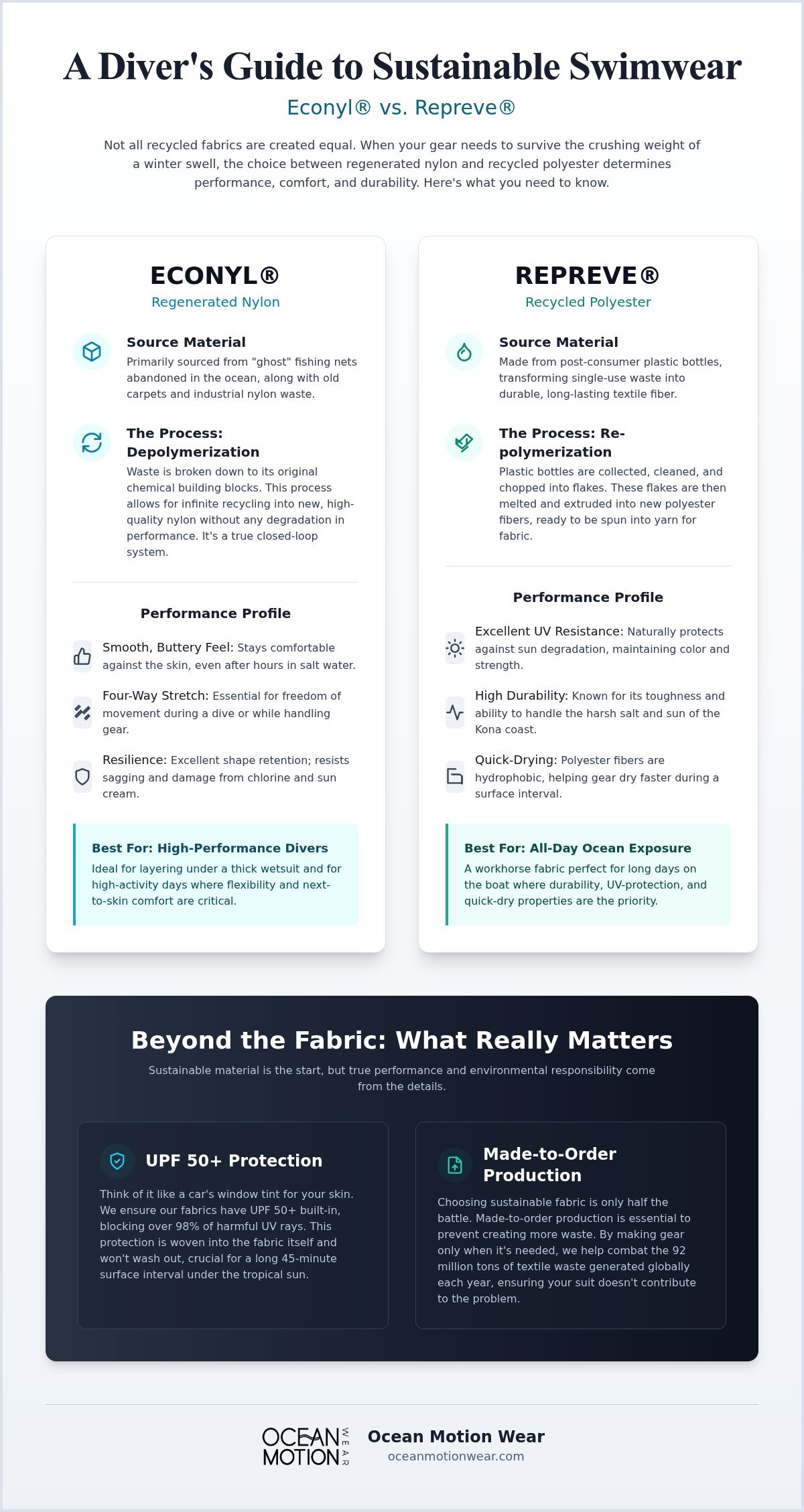
Econyl vs Repreve: The Diver’s Comparison Guide
I get asked which fabric is "better" almost every time I am on a boat. The truth is that the right choice depends entirely on your mission in the water. When evaluating econyl vs repreve swimwear, you are choosing between two distinct types of performance. Econyl (Nylon) is usually softer and stretchier. It is the clear winner for comfort when you are layering under a tight wetsuit. Repreve (Polyester) is tougher and dries faster. This makes it ideal for sun shirts and activewear on the shore.
Both fabrics offer built-in UPF 50+ protection. Think of it as a high-quality car window tint for your skin. This protection is vital during a 45 minute surface interval when the sun is reflecting off the water. Whether you are in 78 degree water or navigating winter swells at Tunnels on Kauai’s North Shore, you need gear that guards you. I rely on these materials because they don't just look good (they actually perform when the conditions get demanding).
Hand-Feel and Fit in the Water
Econyl feels like a second skin. It is the reason we use it for the Whale Shark High-waisted Bikini ($82). It does not bunch or pull when you are moving through the water. Repreve has a more structured feel. It provides the support needed for active sports where you might be moving more aggressively. I have found that both fabrics handle the transition from the ocean to a windy deck without losing their integrity or becoming heavy with water.
Durability Against Salt and Sun
Recycled nylon is a champion at resisting the "thinning" that ruins cheap suits. We have all seen suits turn transparent after just a few weeks of sun and salt. Our Hammerhead Bikini Top ($48) stays vibrant and secure through every dive. It passes the BS test because it maintains its elasticity even after repeated exposures. For more on versatile water performance, you can read our kayaking gear guide.
Find the gear that matches your next adventure in our collection of performance sustainable swimwear. We focus on the details so you can focus on the reef. Choose the fabric that fits your specific needs and get back into the water with confidence.
Why Sustainable Fabric is Only Half the Battle
We didn't start Ocean Motion Wear to be just another clothing brand. We started because we needed gear that actually worked under pressure. Choosing between econyl vs repreve swimwear is a great first step, but it's only half the battle. If a company produces 10,000 recycled suits that no one buys, those suits still end up as waste. True sustainability requires a rethink of how we produce and consume gear. It is about making sure every piece has a purpose.
Our made-to-order process ensures that your gear is created specifically for you. We don't believe in unnecessary warehouse stock that eventually clogs a landfill. Every piece we make is inspired by real marine life encounters. We've watched humpbacks during the winter season in Hawaii and spotted eagle rays gliding over the reef. These experiences drive our design and our commitment to a cleaner ocean. We want our gear to reflect the beauty of the environments we protect.
The Power of Made-to-Order
This model eliminates the "end-of-season" waste common in the fast fashion industry. When you order from us, you might wait a few extra days for your gear to be cut and sewn. That wait is a deliberate choice for a healthier ocean. It allows us to maintain inclusive sizing and provide personal service as a small, independent business. We don't want to be part of the overproduction cycle that treats the ocean like a dumping ground. We prioritize quality over quantity every single time. It is a methodical approach to craftsmanship.
Protecting Your Gear (and the Reef)
Once you have your gear, how you care for it matters. We recommend hand washing your recycled swimwear in cold water. This simple step helps prevent microfiber shedding and keeps the fabric's elasticity intact. It ensures your investment lasts through years of dives rather than just one season of sun and salt. Gear that lasts longer is gear that stays out of the trash. It's a simple cause-and-effect relationship that every diver understands.
We also believe a physical barrier is better than any chemical. Choosing a rash guard provides consistent protection without the need for reef-damaging sunscreens. It's about being proactive and protective in demanding environments. Whether you're a dive instructor with 500 dives or a beginner catching your first wave, your gear should be a reliable partner. I invite you to explore our full collection of sustainable swim apparel and join a community that values both high-level performance and the planet.
Gear Up for Your Next Descent
Choosing between econyl vs repreve swimwear isn't about finding a single winner. It's about matching the fabric to your specific mission on the reef. I've found that having the right tool for the job makes all the difference when you're facing a 45 minute surface interval in the wind. Whether you need the buttery stretch of regenerated nylon under your wetsuit or the quick-dry structure of recycled polyester, you're making a choice that protects the ocean we love.
We've built every piece with the technical specs we need as divers. Our gear features built-in UPF 50+ protection to act as a barrier against the sun. Because we use a made-to-order process, we ensure your gear is crafted specifically for you without creating unnecessary waste. This is gear designed by divers for divers who refuse to compromise on performance or ethics. We've spent the time in 78 degree water to ensure these suits pass the BS test.
Shop our full collection of recycled, ocean-inspired swim apparel and find your new favorite suit. I'll see you out past the break.
Frequently Asked Questions
Is recycled swimwear fabric as durable as regular nylon?
Recycled fabrics like Econyl are just as durable because they are chemically identical to virgin nylon. You don't have to worry about your gear failing during a heavy shore break at Tunnels on Kauai’s North Shore. In my experience, these fabrics actually resist thinning and salt-damage better than cheap, mass-produced alternatives. They pass the BS test for any diver who spends hours in 78 degree water and needs gear that stays secure.
What is the main difference between Econyl and Repreve?
The core of the econyl vs repreve swimwear debate is the base material and its source. Econyl is a regenerated nylon made from ghost nets and old carpets, offering incredible stretch and a soft hand-feel. Repreve is a recycled polyester made from plastic bottles, providing a more structured fit and faster drying times. We use both because each has a specific role in high-performance gear depending on your mission in the water.
Does recycled fabric feel different on the skin?
Most divers find that premium recycled fabrics actually feel better than standard options. Econyl has a buttery, smooth texture that feels like a second skin under your gear. Repreve feels slightly more structured and crisp, which is perfect for active shirts. You won't feel any difference in quality; you'll only feel the confidence that your gear isn't a petroleum-based product shedding plastics into the reefs you are currently exploring.
How does UPF 50+ protection work in these fabrics?
Think of UPF 50+ protection as a high-quality window tint for your body. The protection is built into the fiber itself, not just sprayed on as a temporary coating. This means it won't wash off after a few dives in the salt. It blocks 98 percent of harmful UV rays, which is essential when you're sitting on a boat deck during a 45 minute surface interval under the intense tropical sun.
Can I wear recycled swimwear under a wetsuit?
You absolutely can, and Econyl is actually my favorite choice for this. Its four-way stretch and low-profile seams mean it won't bunch up or chafe under a tight wetsuit. I've worn our high waisted bikinis on two-tank dives in Kona and they stay perfectly in place. The smooth surface makes it much easier to slide your suit on and off, especially when you're damp and salty between your dives.
Why is made-to-order better for the ocean?
Made-to-order production is the only way to ensure we don't contribute to the global textile waste problem. Standard brands often produce thousands of suits that end up in landfills if they don't sell. By creating your gear specifically for you, we eliminate that unnecessary overstock. It takes a few extra days to arrive, but it's a deliberate choice to keep our oceans cleaner and our business practices more intentional and respectful.
How should I wash my sustainable swimwear to prevent microplastics?
To keep your gear in top shape and protect the reef, always hand wash your swimwear in cold water. Avoid the dryer at all costs, as high heat can damage the elastic fibers and increase microfiber shedding. I like to rinse my suit in fresh water immediately after a dive to remove the salt. This simple routine ensures your gear lasts for many seasons while minimizing the impact on the marine life.
Is Econyl or Repreve better for vibrant prints?
Repreve is often the secret weapon for vibrant, detailed prints. Polyester fibers hold onto dye exceptionally well, which is why we use it for our most intricate ocean-inspired artwork. It ensures that the colors of a whale shark or hammerhead design stay sharp and bright even after repeated exposure to salt and sun. Econyl also takes color beautifully, but polyester is the industry standard for long-term color brilliance in high-performance, sun-drenched apparel.
