


The most important step in how to wash swimwear happens before laundry: rinse it promptly in cool, fresh water. Salt, pool water, sunscreen, and sand can linger on the fabric, so make rinsing part of your routine after a swim.
Care instructions can vary because swimwear is made with different fabrics, linings, seams, and elastic details. Check the garment’s care label before choosing a washing method, and treat it as the final word over general advice.
This guide covers what to do after an ocean, pool, or beach day, how to wash a suit when its label allows, and how to dry and store it with care. Follow the steps from the first rinse to your next time in the water.
Key Takeaways
- Check the care label first, then rinse swimwear promptly after ocean, pool, or beach days.
- Learn how to wash swimwear gently, following the garment’s specific instructions.
- Rinse away surface salt, pool-water residue, sunscreen, and sand after swimming.
- Choose between handwashing and machine washing based on the label and the garment’s construction.
- Remove excess water gently and air-dry your swimwear if the care label allows it.
How to Wash Swimwear After the Ocean, Pool, or Beach
Start by checking the care label. Rinse promptly, wash gently as directed, and dry according to the garment’s instructions. Swimwear can look similar while differing in fabric blend, lining, seams, and other construction details, so don’t assume that one item’s care routine suits another.
Gentle swimwear care means following the garment’s instructions and avoiding unnecessary friction, heat, and stretching.
A rinse and a full wash serve different purposes. A prompt rinse with cool, clean water helps remove loose residue after swimming. Wash the garment when the label calls for it or when it needs cleaning after wear. Don’t treat a rinse as a replacement for washing if the care instructions specify otherwise.
What should you do right after swimming?
When practical, rinse the garment with cool, clean water, even if you can’t wash it fully until later. If sand is caught in the fabric, shake or gently lift away what comes loose. Avoid rubbing grains into the material, since that adds friction.
Try not to leave wet swimwear compressed in a beach bag for an extended period. If you can’t rinse or wash it right away, take it out of the bag when practical and follow the care label as soon as you’re able.
Does every swimwear item need the same washing routine?
No. A rash guard, swim leggings, and a swimsuit may use different fabric blends or construction, so one item’s washing method may not suit another. For background on the range of swimsuit materials, see this overview, then rely on the specific garment’s label for care instructions.
Whether you’ve been snorkeling in a rash guard or spending the afternoon at the beach in a swimsuit, check the label before choosing a wash method. Don’t assume every piece is machine washable or that every piece needs handwashing. Use the gentlest method the instructions permit. The steps below explain how to wash swimwear without treating different garments as if they were identical.
How Salt, Chlorine, Sunscreen, and Sand Affect Swimwear Care
After an ocean swim, pool session, or beach afternoon, consider what may be left on the fabric. Salt can dry on swimwear, pool water may contain chlorine, and sunscreen, body oils, and sand can cling to the surface. Rinsing is a useful first step, not a guarantee against wear or a replacement for the garment’s care instructions.
A rinse with clean water helps carry away surface salt, pool-water residue, loose sunscreen, body oils, and sand before they dry or get pressed further into the fabric. Rinse soon after swimming when practical, while keeping expectations realistic: a rinse won’t necessarily remove every mark or residue.
How should you rinse swimwear after saltwater or chlorine?
After ocean use, rinse away salt. After pool use, rinse away pool water and any residue left on the garment. These exposures aren’t identical, but both make a clean-water rinse a sensible next step. Follow the care label if it gives specific post-swim directions.
If you can only rinse the garment at first, treat that as an initial step, then wash it as directed when practical. For broader guidance on sorting and handling laundry by fabric, see Consumer Reports’ best laundry practices. For swimwear, the garment’s own label still takes priority.
What should you do about sunscreen, sand, and body products?
Sunscreen and body products can leave residue, but they won’t necessarily stain or damage every swimsuit. Before treating a mark, check the garment label and the cleaning product’s fabric-safe directions. Avoid stain removers, bleach, or other treatments unless the label approves them, and don’t scrub hard enough to add unnecessary friction.
For sand, shake the garment or gently lift grains away before washing. Rubbing can drag particles across the fabric, so a careful first pass is better than aggressive scrubbing. Let the care instructions guide the next step, since the right way to wash swimwear depends on the item’s fabric and construction.
Handwashing vs. Machine Washing: Which Is Safer for Swimwear?
Start with the care label. If it recommends handwashing, keep the garment out of the machine. If it permits machine washing, follow the garment’s directions and the washing machine’s instructions. Gentle handling helps avoid unnecessary friction and agitation that can stress delicate fabric, seams, straps, and other garment details.
Use this comparison as a quick reference. The label still has the final say.
Method
When to use it
Key caution
Handwashing
When the label recommends it, or as a cautious option if handwashing is allowed.
Move the garment gently. Don’t scrub, twist, or wring it.
Machine washing
Only when the garment label permits it.
Follow the label and machine instructions for cycle, temperature, and preparation.
When is handwashing the better choice?
If the label calls for handwashing, use clean water and move the garment gently through it. Handwashing gives you more control than a wash cycle and can limit unnecessary agitation. Handle residue carefully rather than rubbing hard. Scrubbing isn’t a substitute for using the care method the label recommends.
After washing, don’t twist or wring the garment to squeeze out water, since that can pull at the fabric and construction. Instead, follow the label’s directions for removing excess water. The next section explains how to dry swimwear with care.
Can you put swimwear in the washing machine?
Yes, if the garment’s care label says machine washing is suitable. Check the label for cycle, water temperature, and any preparation instructions, then follow the machine’s guidance too. Don’t assume settings that work for one swimsuit will suit another, even if the garments look similar.
If you’re washing several items, check each label and separate colors when appropriate. Iowa State University Extension discusses laundry and how to prevent color bleeding, but rely on each garment’s instructions for swimwear care.
For how to wash swimwear, there isn’t one method that fits every item. Let the label set the method, then handle the garment gently to avoid unnecessary stress.
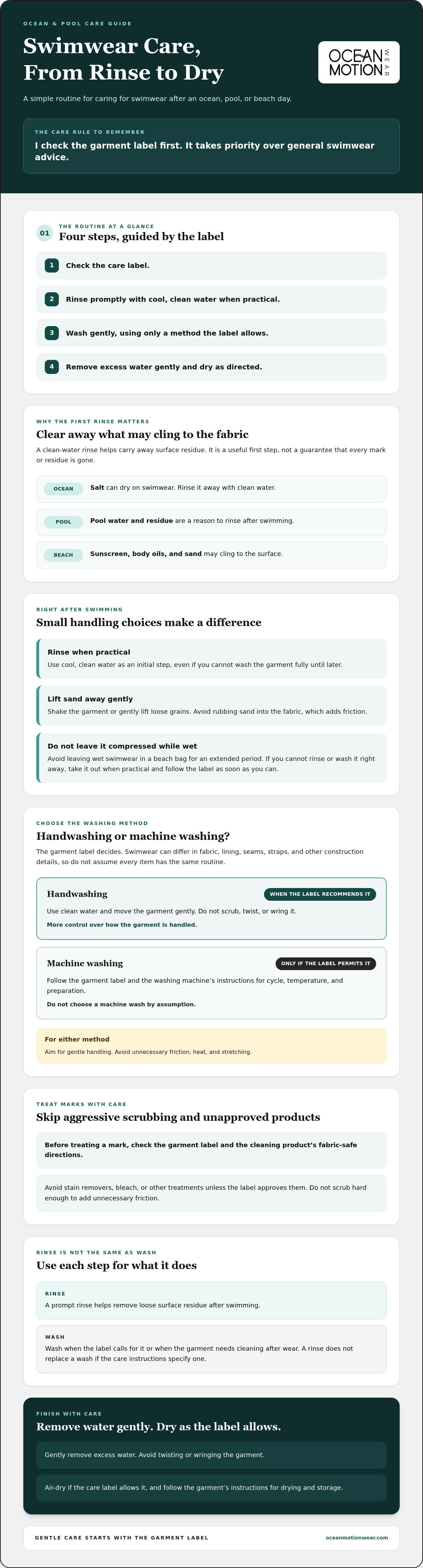
How to Wash Swimwear Step by Step and Dry It Properly
A simple routine makes swimwear care easier to repeat after a beach day or pool session. Use the care label as your guide at every stage, especially if it gives instructions that differ from general advice.
Check the label, rinse away residue, wash as directed, remove water gently, and dry the garment as instructed.
- Check the care label. Confirm the recommended washing method and any directions about water, detergent, and drying before you start. Don’t assume a routine suitable for one swimsuit also suits a rash guard or swim leggings.
- Rinse the garment. Use clean water to help remove surface salt, pool residue, and other loose material. Rinsing is a useful first step, but follow the label if it gives more specific post-swim care.
- Wash as directed. Choose handwashing or machine washing only as the label allows. If handwashing is recommended, use a product suitable for the garment according to its label, and move the fabric gently rather than scrubbing it.
- Remove excess water carefully. Follow any label directions. If you need to remove water by hand, press the garment gently instead of twisting or wringing it, which can strain fabric and seams.
- Air-dry as directed. Lay the garment flat or hang it, depending on the care label. Avoid direct heat unless the label specifically says otherwise, and let the piece dry fully before putting it away.
What are the steps for washing a swimsuit by hand?
Start with the label, then wash by hand only if that method is recommended or permitted. Use clean water and a suitable product only as directed, moving the garment gently to avoid unnecessary friction. Rinse thoroughly, then press out excess water without twisting. If the label gives different instructions, follow those instead.
How should you dry and store swimwear?
Use the drying method on the care label. If it recommends flat drying, support the garment’s shape on a clean surface. If it recommends hanging, choose a way that doesn’t pull or stretch the fabric. Keep swimwear away from direct heat unless its instructions allow otherwise. Store it only once fully dry, so damp fabric isn’t packed away.
With how to wash swimwear, the safest routine isn’t a universal setting. It’s a label-led sequence with gentle handling from rinse to storage.
How Better Swimwear Care Supports Longer Use
A reliable care routine can fit easily into an ocean, pool, or beach day: rinse swimwear after use, check its care label before choosing a washing method, and follow the drying directions. If you can’t wash it right away, avoid leaving it bundled and damp in a bag. Rinse and air it when practical, then clean and dry it according to the label.
Thoughtful care supports continued use, but it can’t guarantee how long a garment will last. Fabric, construction, frequency of wear, and exposure all play a part. Follow the garment’s own instructions rather than relying on a generic rule that may not suit its material or design.
What swimwear-care habits are worth keeping?
Keep the routine simple and repeatable. Rinse after swimming, and check the label whenever you try a different washing method or care product. If a piece is still damp after a session, don’t leave it packed away longer than necessary. These small choices help you care for the garment without assuming that every swimsuit needs identical treatment.
The useful habit isn’t memorizing one universal set of rules. It’s pausing to read the label, then handling the garment accordingly. That matters for swimwear, rash guards, and swim leggings because items in the same general category can have different fabric blends and construction.
Where can you find swimwear made for time in the water?
Ocean Motion Wear offers swim leggings, swim tops, and rash guards for time in and around the water. The brand’s products use quick-drying fabrics, and many items are made with recycled materials. Those details describe the garments, not a special care routine, so check each item’s label for washing and drying instructions.
Care is one part of getting continued use from what you own. Ocean Motion Wear also uses made-to-order production as part of its approach to limiting overproduction. Choosing thoughtfully and caring for a garment according to its label are practical steps, without assuming either one guarantees a specific lifespan.
Ready to explore options for your next day by the water? Explore ocean-inspired swimwear.
Make Swimwear Care Part of Your Post-Swim Routine
After an ocean, pool, or beach day, keep the routine simple: rinse away surface residue, check the care label, and wash and dry the garment as directed. If the label allows more than one method, choose the gentler option you can follow consistently. Avoid rough handling, and don’t assume one swimsuit’s instructions apply to every piece.
That’s the practical answer to how to wash swimwear: let the care label lead, and treat careful washing as a way to support continued use, not a guarantee of a particular lifespan. Salt, pool water, sunscreen, and sand are all reasons to rinse, but each garment’s fabric and construction still matter.
Ocean Motion Wear creates ocean-inspired swimwear and accessories, including items made with quick-drying fabrics and many pieces made with recycled materials. If you’re looking for swimwear for your next day in the water, explore ocean-inspired swimwear.
Frequently Asked Questions
How soon should you wash swimwear after swimming?
Rinse swimwear with clean water as soon as practical after swimming, then wash it according to its care label. A rinse helps remove surface salt, pool-water residue, sunscreen, and sand, but it may not replace a full wash when the garment needs cleaning. If you can’t rinse right away, take the wet item out of a tightly packed bag when practical and follow its care instructions as soon as you can.
Should you wash swimwear in hot or cold water?
Use the water temperature specified on the care label. If the label doesn’t make the temperature clear, check the garment maker’s instructions rather than guessing based on generic advice. Water that’s hotter than recommended may place avoidable stress on some fabrics or construction, while a cooler rinse is a practical first step after swimming. For a full wash, follow the label rather than assuming one temperature suits every swimsuit.
How do you remove sunscreen from a swimsuit?
Rinse the area with clean water and handle any sunscreen residue gently. Check the garment label and the cleaning product’s directions before applying detergent or another treatment. Avoid scrubbing hard, since friction can stress the fabric, and don’t use bleach or stain removers unless the label approves them. Sunscreen products vary, so there’s no single treatment that’s right for every mark or swimwear fabric.
Can you dry swimwear in a dryer?
Don’t put swimwear in a dryer unless its care label specifically allows it. Dryer heat can be harsh on elastic components and delicate construction, so air-drying is a cautious choice when the label permits it. Follow its directions to lay the garment flat or hang it, and keep it away from direct heat unless instructed otherwise. Make sure it’s fully dry before storing it.
Do you need to wash a swimsuit after every swim?
Rinse it with clean water after each swim when practical, especially after ocean or pool use. Whether it needs a full wash every time depends on the garment, how it was worn, and what its care label says. A rinse helps clear surface residue, while a wash cleans the item more thoroughly. Don’t treat rinsing and washing as interchangeable if the label gives specific cleaning instructions.
How do you keep swimwear from stretching or fading?
Follow the care label, wash with gentle handling, and avoid twisting or wringing the garment. Use the drying method it recommends, and keep swimwear away from direct heat or prolonged direct sun if the instructions don’t say otherwise. These habits can reduce unnecessary strain, but they can’t prevent all wear or guarantee a garment’s lifespan. For how to wash swimwear, the best starting point is always the item’s own care label.
