


What if your best sun protection for a long snorkel isn’t another layer of sunscreen? If you’ve surfaced with a burning back, a sore hairline, or stinging eyes from sunscreen runoff, you know lotion alone can be hard to rely on in the water. How to protect your skin from the sun while snorkeling starts with covering the areas most exposed to direct and reflected sunlight, then using sunscreen where clothing can’t reach.
Make UPF 50+ clothing your first line of defense, with sunscreen as backup. Fabric provides coverage without washing off or running into your eyes, and can reduce how much sunscreen you need in the water. Still, “reef-safe” isn’t a regulated label, so check a sunscreen’s active ingredients and the rules at your destination.
This guide explains how to build a comfortable coverage plan with a rash guard, swim leggings, and a headband for your scalp and hairline. You’ll also learn how to choose sunscreen thoughtfully, reduce runoff, and stay focused on the reef instead of worrying about your next painful burn.
Key Takeaways
- Learn why a face-down snorkeling position leaves your back, scalp, and hairline especially exposed to the sun.
- Protect your skin from the sun while snorkeling with UPF 50+ clothing as your first line of defense and sunscreen as backup.
- Build a coverage kit with a rash guard, swim leggings, and a headband, then check that each piece stays comfortably in place as you move.
- Look beyond “reef-safe” sunscreen labels and check active ingredients against the rules at your destination.
- Rinse sun-protective gear in fresh water after each session to care for the fabric.
The Snorkeler's Burn: Why Your Back and Scalp Are at Risk
Snorkeling changes how your skin meets the sun. You’re often face down, moving slowly at the surface, with your back and legs exposed while your attention stays on the fish below. The water feels cool, so it’s easy to miss the heat building on your skin. That combination can leave you with a sharp burn in places you didn’t think to check.
Water droplets on skin are sometimes said to act like tiny magnifying glasses. That isn’t a reliable explanation for snorkel burns. The bigger concern is time spent exposed at the surface, along with sunlight reflected from the water. For a practical overview of clothing designed for UV protection, see Sun protective clothing.
The Floating Exposure Factor
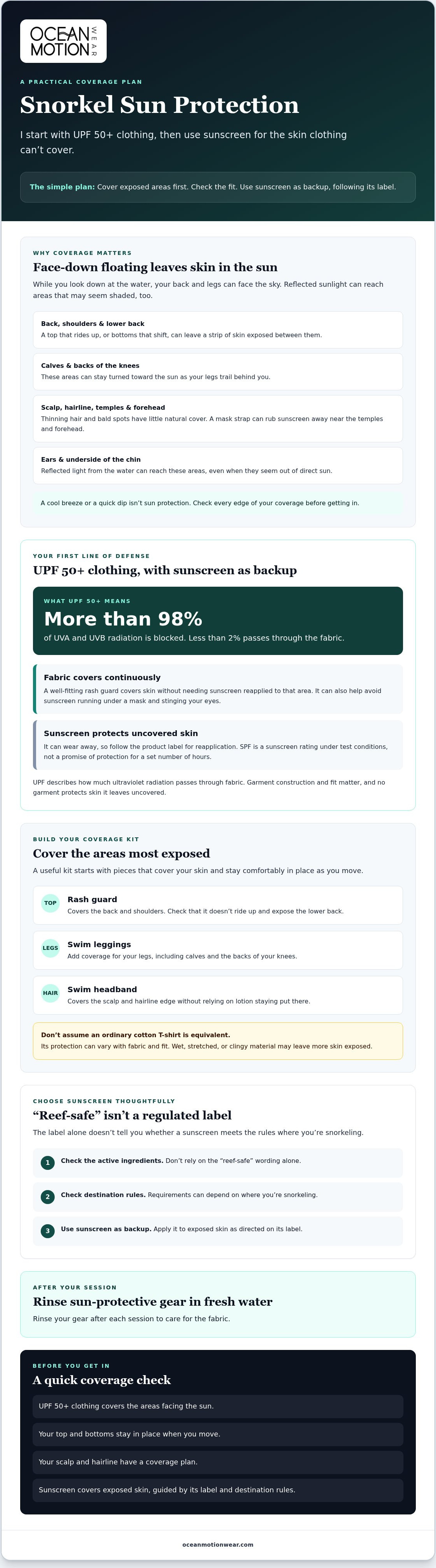
Picture your back as a solar panel: it faces the sky while you float and look down. Your calves and the backs of your knees can be exposed, too, especially when your legs trail behind you. Reflected light from the water can reach areas you might assume are shaded, including the underside of your chin and your ears. A cool breeze or a quick dip doesn’t count as protection.
Thirty minutes of snorkeling doesn’t automatically equal hours on the beach. Exposure varies with conditions, clothing, and time in the water. The practical takeaway is simpler: a long surface swim can leave exposed skin in the sun for longer than it feels.
Identifying the Vulnerable Zones
Check the edges of your coverage before you get in. The “snorkeler’s stripe” is the strip of skin between a top and swim bottoms that can show when you move. A top that rides up or bottoms that shift can leave your lower back exposed. The backs of your knees and calves also deserve attention because they can stay turned toward the sun as you kick.
Your scalp and hairline need a plan, too. Thinning hair and bald spots offer little natural cover, and a mask strap can rub sunscreen away near your temples and forehead. A swim headband can cover that vulnerable edge without relying on lotion staying put. To protect your skin from the sun while snorkeling, start by identifying every area your gear leaves open, then cover those zones before you focus on sunscreen.
How to Protect Your Skin From the Sun While Snorkeling: Choosing UPF 50+ vs. SPF
For a long snorkel, reach for a rash guard before relying on sunscreen to cover your back and shoulders. Fabric gives those areas continuous coverage while you swim, while sunscreen can wear away and needs to be reapplied according to its label. The two measures work together, but they don’t do the same job.
SPF is a rating for sunscreen’s protection against sunburn under test conditions. It isn’t a promise that the product will protect you for a set number of hours. UPF measures how much ultraviolet radiation passes through fabric: UPF 50+ allows less than 2% through, blocking more than 98% of UVA and UVB radiation. The Skin Cancer Foundation explains how UPF 50+ protection differs from sunscreen protection and why garment construction and fit matter.
Why UPF Fabric Helps in the Water
A well-fitting, sun-protective top covers skin without requiring you to reapply lotion to that area. It also avoids a familiar frustration: sunscreen running under a mask and stinging your eyes. Fabric can shift or ride up, though, so check the fit before you head out and cover exposed skin with sunscreen as directed on its label. No garment protects skin it leaves uncovered.
A regular cotton T-shirt isn’t a dependable substitute for a tested sun-protective garment. Its protection can vary with the fabric and fit, and wet, stretched, or clingy material may leave more skin exposed. Don’t assume a white tee will protect you simply because it covers your shoulders.
What the UPF Rating Tells You
UPF 50+ is the highest commonly available rating for sun-protective fabric and a strong benchmark for water sports. Weaves with fewer gaps between threads can limit UV transmission; the fabric’s construction, color, condition, and fit also affect coverage. Some garments rely on the fabric itself for protection, while others use added treatments, so check the garment information rather than guessing from appearance.
Ocean Motion Wear apparel is made with recycled materials and has built-in UPF 50+ protection in all fabrics. When comparing options, look for a clear UPF rating and a fit that stays in place as you kick and reach. That’s a more reliable starting point for how to protect your skin from the sun while snorkeling than treating any ordinary shirt as equivalent.
Building Your Snorkel Sun Kit: From Rash Guards to Leggings
A useful snorkel sun kit covers the skin that faces the sky while you float: shoulders, back, arms, legs, scalp, and hairline. Build coverage from the top down, then use sunscreen on areas clothing can’t cover. A rash guard and swim leggings provide coverage without adding the insulation of neoprene.
Fit matters as much as coverage. Before heading out, try reaching forward, kicking, and bending as if you’re duck-diving for a closer look. If a top rides up or leggings slide down during those movements, exposed strips of skin can become weak points in your plan.
Choose a Rash Guard That Covers and Stays Put
For a long session, long sleeves cover more of your arms than short sleeves, and a close-fitting neckline can help shield the back of your neck. Check that the hem stays over your swim bottoms when you stretch forward. Ocean Motion Wear makes rash guards with built-in UPF 50+ protection in all fabrics, using recycled materials. Browse the Whale Shark collection for a print option, then check the garment details and fit before choosing what works for your snorkel.
Cover Your Legs, Scalp, and Hairline
Swim leggings cover the backs of your thighs and calves, areas that can stay exposed when your legs trail behind you at the surface. They’re especially useful if you’d rather not keep reaching for sunscreen on the backs of your legs. Check the waistband and ankle openings while moving so the fabric doesn’t shift and leave gaps as you kick.
Don’t forget the top of your head. A swim headband can cover part of the scalp and hairline, which matters if you have thinning hair or bald spots. It can also help keep loose hair away from your mask seal, but make sure it doesn’t interfere with the strap’s fit.
For your ride back, choose performance swimwear that dries quickly and feels comfortable under a light breeze. Wet fabric can feel chilly in moving air, so a dry layer for after the swim can make the return more comfortable. The best answer to how to protect your skin from the sun while snorkeling is a kit that covers vulnerable skin, stays in place as you move, and leaves sunscreen for the areas clothing can’t reach.
Protecting the Reef: The Truth About Reef-Safe Sunscreen
A reef-conscious approach is to cover more skin with clothing and use less sunscreen, not to skip sun protection altogether. Less lotion on exposed skin means less product can wash off while you snorkel. A rash guard helps protect your skin while reducing how much sunscreen you need on covered areas.
Ingredient choices matter, too. Research has linked ingredients such as oxybenzone and octinoxate with harmful effects on corals, including bleaching. But “reef-safe” and “reef-friendly” aren’t regulated labels, so the words on a bottle don’t tell you everything. Check the active ingredients and local rules at your destination.
Understand the Difference Between Chemical and Mineral Sunscreens
Chemical sunscreen filters absorb UV radiation and convert it into a small amount of heat. Mineral filters, usually zinc oxide or titanium dioxide, sit on the skin’s surface and absorb or scatter UV rays. Some people prefer mineral formulas, particularly if other products irritate their skin, but skin reactions vary. No sunscreen should be described as harmless to every reef or suitable for every person.
Some destinations specify which sunscreen ingredients are permitted, and rules can differ from place to place. Read the active-ingredient list rather than relying on a marketing label. If you’re considering a mineral formula, check whether the destination has guidance about particle size, including non-nano ingredients.
Reduce Runoff with More Coverage
Fabric creates a physical barrier over covered skin, so you can use sunscreen only where clothing leaves skin exposed. That can mean less lotion washing away during your swim. A UPF-rated rash guard does two jobs: it covers your skin and helps reduce the amount of sunscreen you need in the water. To protect your skin from the sun while snorkeling and be thoughtful about reef health, combine coverage with sunscreen chosen for your skin and destination.
Mineral sunscreen isn’t a reason to apply carelessly or assume runoff has no impact. Follow the product directions, cover up where practical, and check local guidance before you travel. Those habits protect your skin without treating a “reef-safe” label as a guarantee.
If you’re looking for reef-inspired swimwear, explore the Abalone collection and consider which pieces could add coverage to your snorkel kit.
Caring for Your Sun Gear to Ensure Lasting Protection
Salt, sand, sun, and repeated stretching all put wear on swimwear. A quick rinse after snorkeling removes salt and grit before they dry into the fabric. It won’t make a garment last forever, but gentle care helps avoid unnecessary wear and keeps your sun gear ready for the next session.
Rinse your rash guard, leggings, and headband in cool, fresh water as soon as you can. Don’t leave damp gear sealed in a plastic bag in a hot car. Heat and trapped moisture can make fabric care harder, and a warm gear bag is no place for swimwear to sit until evening.
Make the Post-Snorkel Rinse Routine Simple
After you get out of the water, rinse away salt and sand, then follow the garment’s care label for washing. Don’t assume every performance fabric can handle the same detergent or wash cycle. If you’re unsure, choose the gentlest care method allowed by the label, and keep rough gear such as fins separate so their edges don’t snag the fabric.
For detailed washing guidance, read our guide on how to wash swimwear.
Dry and Store with Care
Skip the dryer unless the care label says it’s suitable. High heat can stress elastic fibers and affect fit over time. Instead, gently remove excess water without twisting the garment, then air-dry it in the shade. Direct sun is useful while you’re in the water, but prolonged exposure during drying adds more UV and heat to fabric that’s already been through a snorkel session.
Notice pilling or snags? Rough boat decks can abrade fabric, so sit on a smooth, clean surface where possible, and keep swimwear away from sharp edges. Never sit or stand on coral. It’s living habitat, not a resting place.
Ocean Motion Wear makes apparel from recycled materials, with a made-to-order process that supports a more considered approach to production. Care can help you get continued use from your swimwear, but no routine can guarantee a garment will retain its original fit or UPF performance indefinitely. Check the fabric for thinning, damage, or stretched areas, and follow the care information provided for the piece. It’s one practical part of how to protect your skin from the sun while snorkeling: choose coverage carefully, then look after it between swims.
Get Ready for Your Next Snorkel
Snorkeling keeps your back, legs, and scalp exposed while your attention is on the water below. A more dependable plan starts with coverage: choose UPF-rated clothing that stays in place, then use sunscreen as directed on skin the fabric leaves exposed. Check active ingredients and local guidance, and rinse your gear after each swim to care for the fabric.
That’s the practical answer to How to protect your skin from the sun while snorkeling: cover vulnerable areas, protect uncovered skin, and make reef-conscious choices without relying on a label alone. Ocean Motion Wear apparel is made with recycled materials and has built-in UPF 50+ protection in all fabrics, designed by women divers for active water use.
Build a kit that feels comfortable from the first kick to the ride back. Explore our UPF 50+ sun protection collection and find coverage for your next day on the water. Then head out prepared, move with confidence, and enjoy more time noticing the life beneath you.
Frequently Asked Questions
Is SPF 50 sunscreen enough for a full day of snorkeling?
No. SPF 50 doesn’t mean sunscreen lasts all day, especially during swimming, sweating, or towel drying. Follow the product label for application and reapplication, and use clothing to cover areas like your back and shoulders. Sunscreen is still useful on exposed skin, including your face, ears, and hands. For a longer snorkel, a layered plan is more dependable than relying on lotion alone.
Do rash guards actually block the sun when they get wet?
Yes, a rash guard with a stated UPF rating is designed to block UV through the fabric, including during water use. UPF 50+ fabric blocks more than 98% of UV radiation when it performs to its rating. Choose a close, comfortable fit that doesn’t stretch thin or ride up, and check the care label. Ordinary wet T-shirts aren’t a reliable substitute for rated sun-protective clothing.
What is the difference between reef-safe and reef-friendly sunscreen?
There’s no regulated, universal definition for either label, so they don’t guarantee that a sunscreen is harmless to coral or meets the rules at your destination. Read the active ingredients and check current local guidance before you travel. Oxybenzone and octinoxate have been associated with harmful effects on corals. Covering more skin with UPF clothing can also reduce how much sunscreen you need, while still protecting exposed areas.
Can I get a sunburn through my snorkel mask or goggles?
Your mask or goggles don’t protect all the skin around them. Your forehead, temples, ears, and the areas where a mask skirt doesn’t cover remain exposed, and the strap can rub sunscreen away near your hairline. Don’t treat a mask as a sun shield. Cover exposed skin with appropriate clothing or sunscreen, and remember that reflected sunlight can reach areas that seem shaded.
How do I protect my scalp from the sun if I have thin hair?
Cover the scalp and hairline with a swim headband designed for water, and use sunscreen on any exposed areas according to its label. Check that the headband sits comfortably and doesn’t interfere with your mask strap or seal. Thin hair and bald spots leave scalp skin more exposed, especially while you float face down. Recheck the hairline after adjusting your mask, since straps can shift coverage.
Do I need to wear sun protection under my rash guard?
You generally don’t need sunscreen on skin fully covered by a properly fitting, UPF-rated rash guard. Apply sunscreen to uncovered areas and to any skin exposed by gaps, rolled hems, or shifting fabric, following the product directions. A regular shirt without a UPF rating may not offer dependable protection, particularly if it becomes stretched or clingy when wet. Fit and coverage matter as much as the label.
What should I do if I already have a snorkel sunburn?
Get out of the sun and cool the affected skin with a cool shower or damp cloth. Drink water, avoid further sun exposure, and use a gentle moisturizer if it feels soothing. Don’t pop blisters. Seek medical advice for severe pain, extensive blistering, fever, chills, confusion, or signs of dehydration. Once the skin has healed, review which areas your snorkel clothing left exposed and adjust your coverage plan.
How often should I replace my UPF 50+ snorkeling gear?
There isn’t a universal replacement schedule. Follow the care label, rinse gear after use, and inspect it regularly for thinning fabric, holes, stretched areas, or damage that reduces coverage. Replace a piece if it no longer fits securely or has worn areas that leave skin exposed. A UPF rating describes tested fabric performance, but don’t assume damaged or significantly worn clothing still provides the same protection.
