


Most divers think a 78 degree ocean means they won't need much gear, but the Kona Manta Ray Night Dive is actually a thermal endurance test. It is easy to focus on the grace of the mantas and forget that sitting still for 45 minutes underwater drains your core heat fast. Then comes the boat ride back in the dark. The wind chill often turns a damp rash guard into an ice pack before you even reach the harbor.
We want you to focus on the "campfire" light show, not your chattering teeth or hair tangled in a mask strap. This Kona Manta Ray Night Dive packing list is designed to keep you comfortable from the sunny afternoon departure to the moonlit return. We will cover how to protect your skin during the ride out to Manta Village and why your layering strategy starts long before you hit the water.
This guide moves beyond the basics to give you the diver tested essentials for a seamless experience. You will learn how to stay warm despite the 90 percent sighting success rate that keeps you submerged for the full duration. We will also look at how to maintain your style for those inevitable underwater photos. Let's get you ready for one of the most iconic encounters in the Pacific.
Key Takeaways
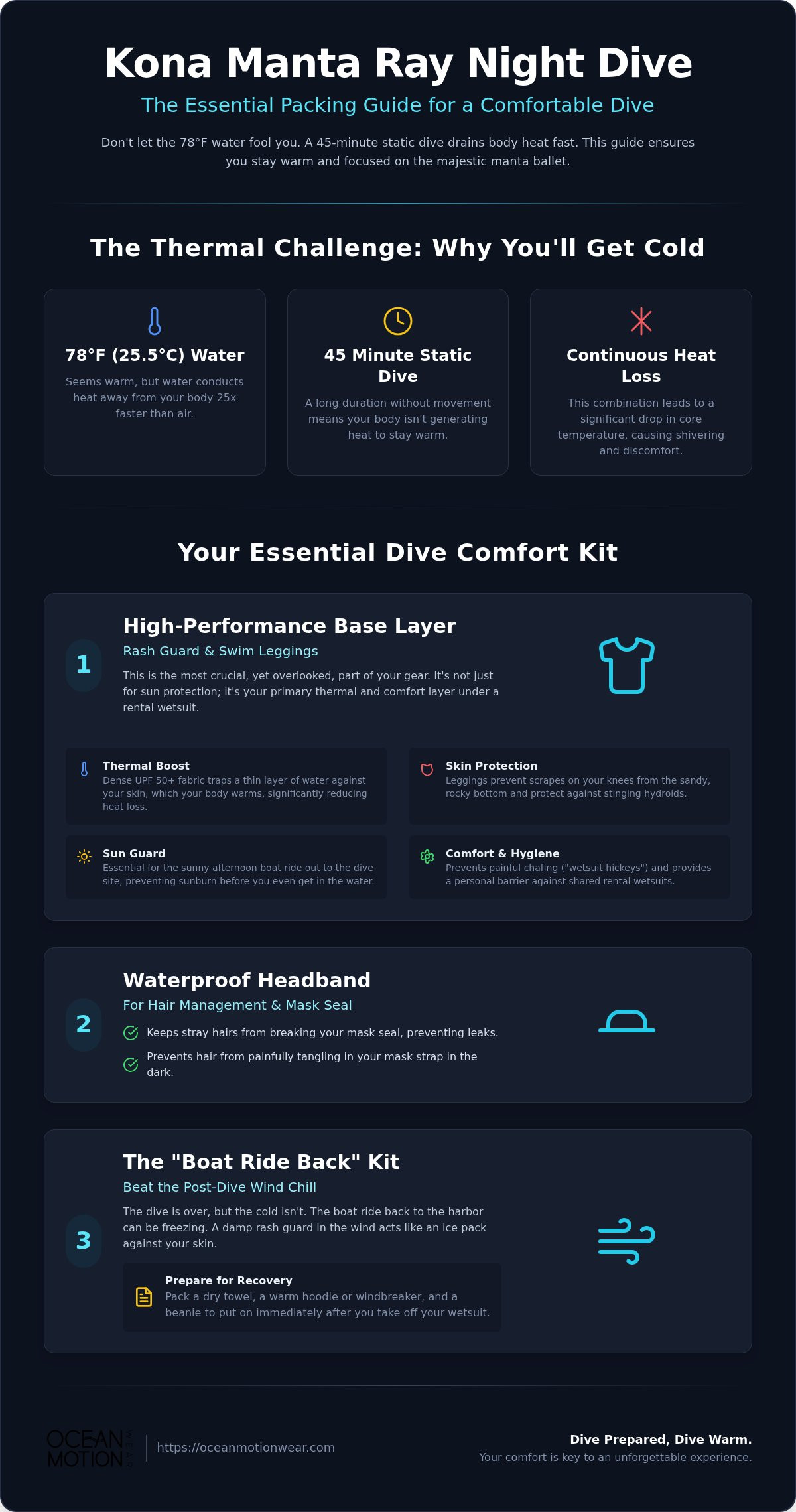
- Learn why thermal layering is essential for a 45 minute static dive even in 78 degree water.
- Discover how a waterproof headband prevents mask leaks and keeps your hair from tangling in the dark.
- Protect your skin from the afternoon sun and the sandy ocean floor with high performance swim leggings.
- Prepare for the boat ride back to the harbor by packing a dedicated post dive kit to beat the wind chill.
- Use this definitive Kona Manta Ray Night Dive packing list to ensure you stay warm and comfortable for the entire light show.
Understanding the Kona Manta Ray Night Dive Dynamics
Most people think of Hawaii as a tropical paradise where the water is always a perfect 78 degrees. While that temperature is accurate for the Kona coast, the reality of Kona's famous manta ray night dive is much more complex. The experience centers around an "underwater campfire" near the airport at sites like Garden Eel Cove. Boats gather and shine massive lights toward the bottom or down from the surface to attract microscopic plankton.
The logistics are simple, but the physical toll is real. You aren't swimming laps or exploring a reef; you are staying completely still to let the mantas do the work. This lack of movement is why your Kona Manta Ray Night Dive packing list must prioritize thermal protection. Without muscle activity to generate heat, your body loses warmth to the 78 degree water surprisingly fast during a 45 minute encounter.
The Science of the Manta Ballet
The "ballet" is actually a feeding frenzy. Tour operators use lights totaling over 33,000 lumens to create a concentrated plankton buffet. There are more than 240 resident mantas in the Kona population, and they have learned that these lights mean an easy meal. You must stay at a specific depth or hold onto a surface float to avoid bumping into these 1,000 pound giants. It is a mesmerizing sight, but sitting in the dark at 30 feet requires more preparation than a standard day dive.
Scuba vs Snorkel: Which Packing List is Yours?
Scuba divers and snorkelers see the same mantas but from different perspectives. Divers kneel on the sandy bottom and watch the mantas belly-flip just inches from their masks. Snorkelers hang onto a lighted "campfire" float at the surface, looking down at the action. Both groups need to account for different environmental stressors. Divers feel the cold more at depth, while snorkelers face more wind exposure and surface chop while waiting for the boat.
The afternoon boat ride out to the site is another factor often overlooked. You'll likely leave the harbor while the sun is still intense, meaning you need UPF 50+ protection long before the sun goes down. I always recommend the Whale Shark collection for this trip. It provides the necessary skin protection for the transit and looks incredible in the underwater photos once the night dive begins. Integrating these layers into your Kona Manta Ray Night Dive packing list ensures you don't start the dive with a stinging sunburn.
The Core In-Water Checklist: Thermal Protection and Layers
A rental wetsuit is a standard part of the experience, but it shouldn't be your only layer. I've found that a high quality base layer is the most overlooked item on a Kona Manta Ray Night Dive packing list. It adds a crucial barrier against the cold and provides a personal shield against the questionable hygiene of shared rental gear. When you're submerged for 45 minutes without moving, every millimeter of protection counts toward your comfort.
Why Sun Protective Clothing Matters at Night
It might seem counterintuitive to worry about UPF ratings for a dive that happens after dark. Think of UPF 50+ fabric like a car's window tint; it is about the density of the weave, not just the chemical finish. This density does more than block UV rays during the afternoon boat ride out to the site. It creates a micro-climate against your skin that traps a thin layer of water. This helps you stay warm during the long, static immersion when your body isn't moving to generate heat.
Using your own rash guard or swim leggings also protects you from "wetsuit hickeys." These are the painful chafing marks that occur around the neck and underarms during a dive. We also value sustainable diving practices, and wearing durable, recycled apparel reduces the need for heavy neoprene that can be harder on the environment to produce. Quick dry materials are also vital because they stop you from shivering the moment you peel off your wetsuit back on the deck.
Leggings and Rash Guards: The Perfect Combo
If you are diving, you'll be kneeling on the sandy bottom or near volcanic boulders to watch the show. I've seen many divers come up with "strawberry" scrapes on their knees because they relied on a thin rental shorty wetsuit. Swim leggings are essential for protecting your skin from these abrasions and any hidden stinging hydroids. They provide full coverage that a standard bikini or board shorts simply can't match. I always pack my leggings because they make the transition from the boat to the water much smoother.
Style matters when the videographer's lights hit you. Our Whale Shark collection mimics the patterns of the ocean's giants and looks incredible in the high-definition footage. It's the perfect way to blend functional performance with a look that honors the marine life we're there to see. For more options that handle the pressure of the Pacific, you can browse our full range of performance swimwear. Having gear that fits perfectly means you can focus on the mantas instead of adjusting your suit.
Managing the Mane: Headbands and Scalp Protection
Managing your hair during a night dive isn't just about looking good for the camera. It's about maintaining a clear field of vision during the 45 minutes you spend watching the mantas feed. When you're looking up at the surface lights or tilting your head back to track a giant ray, your hair naturally wants to float toward your face. This creates the "manta hair" problem where stray strands break the seal of your mask skirt.
A single hair trapped in your mask seal causes a slow, annoying leak. In the dark, clearing your mask is a distraction you don't want while a 1,000 pound animal is gliding inches above you. Adding a dedicated headband to your Kona Manta Ray Night Dive packing list ensures your mask stays watertight. It keeps your hair consolidated and away from the silicone edge of your gear.
The Non-Slip Headband Solution
We designed our dive headbands to stay in place even during high movement activities. Standard hair ties often fail or slip when they get wet, but a wide fabric headband provides a secure anchor. It acts as a soft barrier between your hair and the silicone mask strap, preventing that painful "silicone pull" when you take your gear off. I've seen many divers struggle with tangled knots after a night dive, but a headband keeps everything smooth and manageable.
The aesthetic is also a factor when you are part of an underwater ballet. Our designs are inspired by the ocean floor, blending functionality with a respect for the environment. You can check out our Abalone collection headbands to find a pattern that matches your style. These headbands use recycled materials that feel soft against the skin and stay snug without being too tight.
Protecting the Scalp and Neck
Bald divers and those with very short hair face a different set of challenges on the Kona coast. The mask strap can rub directly against the scalp, leading to irritation during a long immersion. A soft headband or a lightweight neck gaiter provides a layer of comfort that makes the 45 minute dive much more enjoyable. It also protects the sensitive skin on the back of your neck from the rough collar of a rental wetsuit.
Sun protection is still a priority even for a night dive trip. You will likely spend an hour or more on the boat during the sunny afternoon transit to the dive site. I've noticed many men forget that their scalp is vulnerable to "neck burn" while they are setting up their gear. Using UPF 50+ accessories ensures you are protected before the sun goes down. This proactive approach keeps you comfortable so you can focus entirely on the graceful movement of the rays.
Post-Dive Recovery: The "Boat Ride Back" Kit
The 20 minute boat ride back to Honokohau Marina is often the most challenging part of the evening. After being submerged for 45 minutes, your core temperature is lower than you realize. The night air hits your wet skin, and the boat's speed creates a wind chill that a standard cotton towel cannot block. This is why my Kona Manta Ray Night Dive packing list always includes a specific recovery kit.
Evaporative cooling is your biggest enemy here. As the water on your skin or wetsuit evaporates, it pulls heat away from your body. If you stay in your wet gear, you'll be shivering before the boat even clears the breakwater. You need a strategy that stops the wind and traps what little heat you have left. It's about moving from a state of immersion to a state of insulation as quickly as possible.
The Power of a Performance Windbreaker
A lightweight, technical windbreaker is a game changer for night dives. Unlike a bulky towel that gets damp and heavy, a windbreaker creates a solid barrier against the Pacific breeze. It stops the evaporative process immediately. I prefer a packable version that stuffs into a small corner of my dive bag, keeping my gear footprint light and efficient.
Choose a jacket with a hood to protect your ears and neck from the spray. The goal is to create a dry micro-climate as soon as you exit the water. You can shop our full range of performance layers to find the right outer shell for your next night mission. A good windbreaker is the difference between a miserable ride and a comfortable one.
The 5-Step Warm-Up Routine
Speed is essential when you're transitioning from the water to the deck. I follow a methodical routine to ensure I stay warm. First, peel off the wet neoprene immediately. Don't sit in it. Second, dry your hair and cover your head with a dry headband or hood to prevent heat loss from your scalp.
Third, don your windbreaker over a dry rash guard or sun shirt. This layering system is far more effective than a single thick layer. Fourth, hydrate with fresh water to clear the salt taste from your mouth. Finally, eat a small snack with simple carbohydrates to give your body the fuel it needs to generate heat. This proactive approach ensures you arrive back at the marina feeling refreshed instead of frozen.
The Sustainable Diver’s Final Checklist
Every time I drop into the water at Manta Heaven, I'm reminded of the fragility of this ecosystem. This experience is a privilege, not a right. Your Kona Manta Ray Night Dive packing list should reflect a commitment to the environment as much as your own comfort. We have a responsibility to protect the 450 resident rays that call these volcanic coastlines home.
Sustainability starts with what you put on your skin and what you bring on the boat. We've seen the impact of high volume tourism first hand. Choosing the right gear is the simplest way to reduce your personal impact while ensuring a magical encounter. It's about being a participant in conservation, not just a spectator.
Reef-Safe Standards in Hawaii
By 2026, Hawaii’s sunscreen regulations have become the gold standard for ocean protection. It is illegal to use products containing oxybenzone or octinoxate, but even "reef-safe" labels can be misleading. I've found that mechanical protection is always the better choice. A UPF 50+ rash guard provides a physical barrier that never washes off into the coral or the "campfire" feeding zone.
Check your personal care kit for hidden chemicals before you board at Honokohau Marina. If you must use cream, look for non-nano zinc oxide formulas. However, the more skin you cover with performance apparel, the less you need to worry about chemical runoff. It is a cleaner, more efficient way to dive that respects the delicate balance of the reef.
The Mission-Driven Gear Choice
We believe that gear should solve problems without creating new ones. That's why we use recycled ocean plastics in our collections. It feels better to wear something that actively removes waste from the environment. For dive shop owners or tour operators who share this vision, you can inquire about our wholesale partnerships to join our movement. We love working with partners who value the ocean as much as we do.
The final items on your Kona Manta Ray Night Dive packing list are the small essentials that keep the operation running smoothly. These details ensure you stay focused on the mantas instead of gear failures.
- Dive Lights: Bring a reliable primary light with a secure wrist lanyard.
- Eco-Friendly Defog: Use a biodegradable solution to keep your mask clear without stinging the mantas' sensitive eyes.
- Sea Sickness Tabs: Take these at least an hour before departure to handle the swells outside the harbor.
- Reusable Water Bottle: Avoid the single-use plastics often found on boat decks.
Preparation is the key to presence. When your gear is sorted and your footprint is minimized, you can truly lose yourself in the dance of the rays. Enjoy the light, respect the marine life, and dive with intention. This is a night you will never forget.
Dive Ready for the Manta Ballet
Crossing off every item on your Kona Manta Ray Night Dive packing list is about more than just logistics. It's about ensuring you stay warm during that 45 minute static immersion and protected during the windy ride back to Honokohau Marina. I've learned that the right base layers make the difference between shivering through the experience and actually witnessing the grace of the rays.
Remember to secure your hair with a headband to prevent mask leaks and use swim leggings to guard against the sandy bottom. These small choices protect both you and the delicate reef ecosystem. We believe gear should empower you to explore while respecting the natural world. It is about the harmony of high level performance and environmental stewardship.
Our collection is built for these specific Pacific conditions. Designed by women divers and made from recycled materials, our apparel offers UPF 50+ sun protection for the afternoon transit. Explore our ocean-inspired performance gear for your next dive and arrive at the harbor with total confidence. The mantas are waiting. See you in the water.
Frequently Asked Questions
How cold is the water for the Kona manta ray night dive?
The water temperature for the manta dive in Kona usually averages around 78 degrees. While this sounds warm for a typical swim, it feels much colder when you are kneeling on the bottom for 45 minutes without moving. Your body loses heat to the water much faster than to the air. I always tell people to prepare for a thermal endurance test rather than a tropical dip.
Should I wear a wetsuit for the manta ray dive?
Yes, you should definitely wear a wetsuit for the manta ray dive. Most tour operators provide a 3mm shorty or full suit as part of the package. I strongly recommend a full suit to protect your knees from the rocky bottom and provide maximum thermal insulation. Even if you don't usually get cold, the static nature of this dive makes a wetsuit an essential item on your Kona Manta Ray Night Dive packing list.
What is the best thing to wear under my wetsuit?
The best thing to wear under your wetsuit is a high performance rash guard and swim leggings. These layers provide a hygienic barrier between you and the rental gear while preventing painful chafing or "wetsuit hickeys" around your neck. I personally use our Whale Shark collection leggings because they add an extra layer of warmth and make it much easier to slide into a damp neoprene suit between dives.
Do I need to bring my own dive light for the manta dive?
You don't need to bring your own dive light as tour operators provide high powered lights to attract the plankton. However, many divers prefer bringing a personal primary light with a wrist lanyard for extra visibility. If you do bring your own, make sure it is fully charged and rated for the depth. Just remember that the "campfire" lights do most of the heavy lifting for the manta show.
How do I keep my hair from tangling during the night dive?
I use a dedicated dive headband to keep my hair from tangling and floating into my mask seal. Night dives involve a lot of looking up and tilting your head, which causes loose hair to drift and break your mask's watertight seal. A wide, non-slip headband keeps everything consolidated and prevents the silicone mask strap from pulling on your hair. It is a simple solution that saves you from a massive post dive knot.
What should I bring to stay warm on the boat ride back?
To stay warm on the boat ride back, you should bring a lightweight performance windbreaker and a dry change of clothes. The 20 minute transit to the harbor can be freezing once the sun goes down and the wind hits your wet skin. I always peel off my wetsuit immediately and put on a dry UV sun shirt and a packable jacket. This stops evaporative cooling and helps your core temperature recover quickly.
Is reef-safe sunscreen required in Kona?
Yes, reef-safe sunscreen is required by Hawaii law to protect the delicate coral ecosystems. It is illegal to use sunscreens containing oxybenzone or octinoxate in Kona waters. I prefer using mechanical protection like a UPF 50+ rash guard instead of creams whenever possible. If you must use sunscreen, ensure it is a non-nano zinc oxide formula that won't harm the mantas or the reef during your night dive.
Can I bring a camera on the manta ray night dive?
You can bring a camera, but I recommend only doing so if you are an experienced diver or snorkeler. Managing a camera in the dark while maintaining your buoyancy can be tricky. Most operators have strict rules against using a flash, as it can disturb the mantas and other divers. If you bring one, use a secure wrist lanyard and focus on capturing the natural light from the underwater campfire.
