


A wetsuit is your shield against the cold, but it shouldn't be a source of constant friction. We've all been there, peeling back neoprene only to find raw, stinging skin behind our knees or under our arms. It's frustrating when a gear choice distracts you from the grace of a passing ray or the quiet of the deep. Choosing the right layers for what to wear under a wetsuit is about more than modesty; it's about performance and skin health.
We believe that your base layer should be as intentional as your regulator. You deserve to feel secure and comfortable from the first giant stride to the final 45 minute surface interval. In this guide, we'll share the professional secrets to preventing chafing and managing hygiene in rental gear. We'll also look at how UPF 50+ fabrics block 98% of UV rays to keep you safe when the suit comes half-off between dives.
Discover the essential pieces that make every transition on a crowded boat feel seamless. From high-waisted swim leggings to supportive swim sports bras, we're diving into the technical layers that belong under your neoprene. Let's ensure your next underwater adventure is defined by the scenery, not the salt-stiff rub of an ill-fitted suit.
Key Takeaways
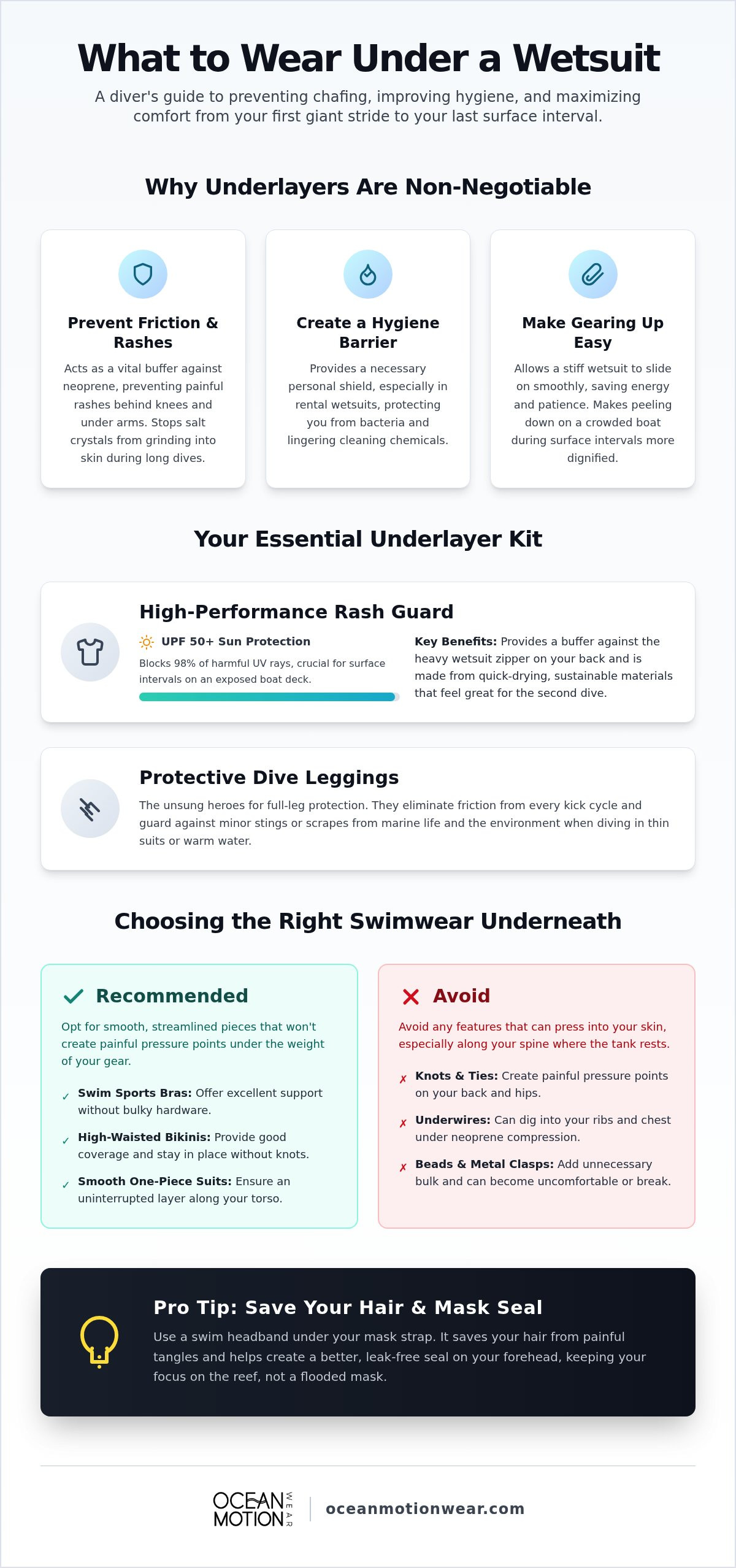
- Use thin, high-performance layers to act as a friction buffer. This prevents the painful rashes behind the knees and under the arms that I have encountered during long sessions in 78 degree water.
- Learn why we prioritize UPF 50+ fabrics for what to wear under a wetsuit to stay protected during surface intervals. These layers also provide a necessary hygiene barrier when using rental gear.
- Avoid swimwear with knots or underwires that can press into your spine under the weight of a tank. We recommend smooth, streamlined pieces like high-waisted bikinis or swim sports bras for maximum comfort.
- Discover how a swim headband can save your hair from mask-strap tangles. A clear seal is vital to prevent flooded masks and keep your focus on the reef.
- Treat your underlayers as technical equipment by choosing sustainable, quick-drying materials. A well-planned layering strategy is the key to staying comfortable from the first dive to the last.
The Functional Role of Wetsuit Underlayers
I have spent enough time in 78 degree water at Tunnels on Kauai’s North Shore to know that neoprene is not always your skin’s best friend. While a Wetsuit is essential for thermal protection, its internal texture can be surprisingly harsh against bare skin. An underlayer acts as a vital friction buffer to prevent the dreaded wetsuit hickey or those raw behind-the-knee rashes. Deciding what to wear under a wetsuit is the first step toward a distraction-free dive.
A thin layer also solves the physical struggle of donning your gear. When the fabric is salt-stiff from a previous morning session, neoprene sticks to your skin like glue. A smooth base layer allows the suit to slide on with ease. This saves your energy and your patience for the dive itself. Choosing what to wear under a wetsuit is about more than just comfort; it is about maintaining the integrity of your skin and your mood.
Friction and Rash Prevention
Neoprene pulls at body hair and sensitive skin during a 45 minute dive. I always prefer a tight-fitting layer that stays put to avoid bunching. If your underlayer shifts or folds, it creates pressure points that cause more chafing than the suit alone. Think of salt crystals as microscopic sandpaper. Without a protective barrier, these crystals trap between the suit and your skin. Every kick cycle grinds them into your legs. This leads to irritation that can sting for days after you are back on shore.
Hygiene and Thermal Benefits
We always recommend a personal layer for hygiene, especially if you are using rental gear. Rental suits are built for durability, but they have often seen hundreds of other divers before you. A personal base layer provides a necessary barrier against bacteria and lingering cleaning chemicals. Our Abalone collection offers a clean, sustainable shield that keeps you feeling secure and protected in shared equipment.
There is a functional thermal advantage as well. A rash guard provides a slight thermal boost by helping to trap an extra thin layer of water against your skin. This minimizes water circulation and helps maintain your core temperature during longer exposures. Finally, a base layer makes the wetsuit dance on a crowded boat much more dignified. It allows you to peel down comfortably during surface intervals without feeling exposed. This sense of readiness is key to a serene and professional diving experience.
Essential Gear: Rash Guards and Dive Leggings
We believe a high-quality rash guard is the most versatile piece in a diver’s bag. It is the foundation of what to wear under a wetsuit for both comfort and protection. When I am sitting on the deck during a surface interval, sipping that essential 6am boat coffee, I want my skin protected. Most divers focus only on the water, but the sun on a dive boat can be brutal.
Look for UPF 50+ ratings when selecting your gear. This rating acts like a permanent window tint for your skin, blocking 98% of UV radiation. I personally use the Whale Shark collection because the performance fabric dries before the next tank is even rigged. It is a relief to step back into dry fabric rather than a soggy, cold layer for the second dive of the day.
Why Divers Wear Rash Guards
A rash guard is a functional necessity that prevents the heavy neoprene zipper from digging into your back. During a 45 minute dive, that metal track can leave a painful mark without a buffer. They also provide essential sun protection when you have the top of your suit peeled down to your waist. This is a common mistake I see on boats; divers leave their shoulders exposed while waiting for the next site.
We prioritize recycled materials for our gear. Choosing fabrics made from recycled plastic bottles or discarded fishing nets reflects a deep respect for the natural world. It is a small but intentional choice that aligns your equipment with the health of the reefs you love to explore. If you are looking for a complete kit, you can browse our sustainable performance apparel to find your perfect match.
The Case for Dive Leggings
Leggings are the unsung heroes of a diver's wardrobe. They protect against minor stings and scrapes if you are diving in very thin suits or just skins. I have found them invaluable when navigating tight entries or rocky shorelines where a slip can result in a nasty graze. They also make pulling on a thick 7mm suit significantly easier. The neoprene just slides right over the smooth fabric, saving you from the "wetsuit dance" on a crowded deck.
I recommend the Abalone collection for this specific task. The blend of style and technical performance ensures you feel capable and secure in demanding environments. These leggings stay in place under your suit, preventing the bunching that often leads to behind-the-knee chafing. It is a streamlined solution for anyone wondering what to wear under a wetsuit to maximize their time in the water.
Choosing the Right Swimwear for Maximum Comfort
The wrong swimwear can turn a great dive into a painful experience once the water pressure kicks in. When you are descending, the air in your suit compresses and the neoprene tightens around your body. Any small lump or knot becomes a significant pressure point. I have made the mistake of wearing a bikini with a back knot; it felt like a rock pressing into my spine under the weight of the tank. It is a lesson I only had to learn once.
We suggest choosing pieces that lay flat against the skin without hardware or bulky ties. This is a critical part of what to wear under a wetsuit if you want to focus on the marine life rather than your gear. A good swim sports bra offers the support needed for boat movement without the bulk. It stays secure and comfortable, whether you are gearing up or climbing back onto the ladder.
Avoiding Knots and Underwires
Pressure at depth makes every small lump or metal ring feel magnified. Underwires are particularly problematic as they can dig into your ribs or chest under the compression of a tight suit. I always reach for high-waisted bottoms or one-piece suits that stay secure when I am pulling a suit on. This prevents the fabric from rolling down or shifting as you move through the water.
The sensation of a metal clasp pressing against the ribs under a tight wetsuit is distracting. It can even lead to bruising during long dives. Look for seamless designs or sports-style tops that distribute pressure evenly across your torso. This ensures you remain capable and secure even in demanding environments. Choosing the right foundation for what to wear under a wetsuit ensures your focus remains on the dive.
Material Matters: Why Cotton is a No-Go
Cotton is a no-go for any serious water activity. It is an absorbent fiber that holds onto water and stays soggy, which can make you much colder than you need to be. Once cotton gets wet, it loses its structural integrity. It bunches up and creates huge friction points that lead to the chafing we discussed in the earlier sections of this guide.
Synthetic, quick-dry fabrics are the only credible choice for serious water work. These materials are designed to wick moisture away and maintain their shape when saturated. They provide the durability and ease of movement required for a full day on the boat. Always prioritize technical performance fabrics that respect the needs of your body and the environment.
Solving Common Diver Problems: Hair and Scalps
Managing hair is one of the biggest frustrations for women divers and anyone with long locks. I have seen too many masks flood because a stray hair broke the seal. It is a small mechanical failure that leads to a constant, annoying trickle of water during your dive. When you are planning what to wear under a wetsuit, the focus is usually on the body, but your head needs a strategy too. A dedicated headband keeps those flyaways away from the silicone skirt of your mask.
This is not just about keeping your vision clear. It is about protecting your hair from the abrasive texture of a silicone or neoprene mask strap. Without a buffer, the strap can pull and break fine hairs, leading to a "mask hair" tangle that takes an hour to brush out. I prefer our non-slip swim headband designs because they stay put during a giant stride or a back-roll entry. They are essential for maintaining focus on the reef rather than your gear.
The Swim Headband Essential
A headband acts as a protective shield for your hairline. It prevents the salt-stiff sensation that makes brushing a nightmare after a surface interval. In Hawaii, during the humpback season or when winter swells bring cooler water, a headband provides a welcome layer of warmth for your ears. We believe that small, intentional pieces of gear make the biggest difference in your overall comfort. Our headbands are made-to-order and designed to withstand the rigors of frequent salt water exposure.
Scalp Protection for Bald Divers
For my friends who are bald, protection is even more critical to prevent scalp sunburn. The scalp is incredibly sensitive to UV rays, especially when the skin is wet and reflective. I have seen divers ignore this on the boat and end up with painful burns that ruin the rest of their trip to Kona. A high-quality rash guard women or men's equivalent provides a foundation, but you need to think about the head too.
The sun is more intense on the water than it is on land. Think of UPF 50+ fabric as a protective canopy that blocks 98% of UV radiation. Even if you aren't wearing a full hood, a lightweight layer can be pulled up to protect the neck and scalp. It is essential to be honest about the limits of sunscreen when you are constantly in and out of the water. Relying on physical barriers ensures you stay protected from the first dive to the last boat ride home. Deciding what to wear under a wetsuit should always include a plan for your most exposed skin.
Preparing for Your Next Dive Trip: A Layering Checklist
When I am packing for a trip to Kona, I always think in layers. Your choice of what to wear under a wetsuit should be as well-planned as your regulator and computer. A gear failure at depth is a safety issue, but a gear failure on your skin is a comfort issue that can end your trip early. We believe in being methodical so you can focus on the grace of the ocean rather than a stinging rash.
We recommend bringing at least two sets of underlayers. This ensures you always have a dry one for the afternoon tank, avoiding that cold, damp feeling of salt-stiff fabric from the morning session. It is a small professional habit that keeps your morale high and your core temperature stable. If you are looking to outfit a full dive team with matching technical gear, check out our wholesale page for sustainable options.
The Essential Under-Wetsuit Checklist
Your packing list should prioritize technical performance and durability. Having the right rotation of gear prevents the build-up of bacteria and ensures you are ready for multiple dives a day. I follow this specific kit list for every tropical trip:
- Two UPF 50+ rash guards (one long sleeve for maximum protection, one short sleeve for tighter suits).
- One pair of performance dive leggings or swim pants to protect against friction and stings.
- Three sets of flat-laying, sports-style swimwear to ensure you always have a dry foundation.
- Two non-slip dive headbands to manage hair and prevent mask-strap tangles.
I find that having three sets of swimwear is the sweet spot. It allows one set to be in use, one to be drying, and one as a clean backup. Salt and sand can get trapped in the fibers of your gear. Putting on a gritty suit is a recipe for the behind-the-knee chafing we discussed earlier. This redundancy is a simple way to stay capable and secure throughout your entire journey.
Post-Dive Comfort Layers
Being prepared for what to wear under a wetsuit is only half the battle. The transition out of the water is when your body works hardest to maintain its temperature. A windbreaker is vital for the boat ride back when the wind chill hits your damp skin. I have seen divers shiver through a beautiful sunset boat ride because they forgot this one essential layer. It stops the evaporation process that quickly steals your body heat.
I also pack a dry neck gaiter to protect my face from salt spray and the afternoon sun on the ride home. Remind yourself that being prepared means more time enjoying the marine life and less time fixing gear. Whether you are exploring during the humpback season or navigating winter swells, these layers are your protection. They ensure your focus remains on the quiet of the deep and the beauty of the reef.
Ready for Your Next Giant Stride
Every dive is a chance to find harmony with the natural world. You shouldn't spend that precious bottom time adjusting a bunching suit or nursing a stinging rash. We believe that technical base layers are just as essential as your primary life-support gear. By choosing high-performance fabrics and flat-laying designs, you eliminate the friction that keeps you from being fully present in the water.
Knowing exactly what to wear under a wetsuit turns a long boat day into a seamless adventure. We prioritize UPF 50+ protection and sustainable materials made from recycled ocean waste because we deeply respect the reefs we explore. Our gear is designed by divers for divers to ensure you feel both capable and secure in demanding environments. It's about being ready for whatever the ocean brings, from winter swells to humpback season.
Explore our ocean-inspired performance collection to build your technical layering kit. The right foundation allows you to focus on the quiet of the deep and the beauty of the reef. We'll see you out there on the next morning tank.
Frequently Asked Questions
Can I wear nothing at all under my wetsuit?
Yes, you can, but I don't recommend it for most dives. Going bare under neoprene often leads to painful chafing behind the knees or under the arms. It also makes the wetsuit dance on a boat very difficult during surface intervals. A thin base layer provides a hygiene barrier and makes it easier to slide into your gear. It is the smartest choice for anyone deciding what to wear under a wetsuit.
Why is cotton bad to wear under a wetsuit?
Cotton is a poor choice because it is a highly absorbent fiber. It holds onto water, which keeps you cold and heavy throughout your dive. Once it is saturated, cotton loses its shape and bunches up under your suit. This creates thick folds of fabric that rub against your skin like sandpaper. Stick to synthetic, quick-drying materials that maintain a sleek profile and protect your skin from friction.
Do I really need a rash guard if I have a thick wetsuit?
A rash guard is still essential even under a thick 7mm suit. It acts as a friction buffer against the heavy internal seams and the zipper track. I have found that a rash guard provides critical sun protection when the suit is half-off during a 45 minute surface interval. It also helps the thick neoprene slide over your shoulders much easier. Don't skip this layer if you want to stay comfortable.
What should men wear under a wetsuit instead of board shorts?
Men should avoid board shorts because the bulky fabric and waist ties bunch up under the suit. This creates pressure points that can be very uncomfortable at depth. I recommend tight-fitting swim shorts or even swim leggings for full-body protection. These streamlined options stay in place and don't interfere with the fit of your neoprene. They are the professional standard for what to wear under a wetsuit.
How do I prevent my bikini from bunching up under my suit?
To prevent bunching, choose swimwear that fits like a second skin. I prefer high-waisted bikini bottoms or a swim sports bra because they stay secure while you are pulling your suit on. Avoid any pieces with side ties, back knots, or metal hardware. These elements shift under pressure and create lumps that rub. Streamlined, athletic cuts are the best way to ensure your layers stay flat and comfortable.
Should I wear socks under my wetsuit boots?
Thin lycra socks can be a lifesaver if you are prone to blisters. They act as a friction barrier between your skin and the boot, much like a rash guard does for your body. They also make it significantly easier to slide your feet into tight wetsuit boots. If you are using rental boots, socks provide a necessary hygiene layer. I always keep a pair in my dive bag for longer trips to ensure my feet stay protected.
How do I stop my hair from getting caught in the wetsuit zipper?
Using a swim headband is the most effective way to keep hair away from your zipper. It secures those fine flyaway strands that often get caught when you reach back to pull the zip cord. I also suggest braiding long hair or securing it in a low, tight bun. This keeps your hair managed and prevents it from breaking the seal on your mask skirt. It is a simple fix for a common and painful frustration.
Is it better to wear a one-piece or a bikini under a wetsuit?
A one-piece offers the most security because it cannot shift or roll down under your suit. However, many divers prefer a high-waisted bikini for easier transitions during surface intervals. I personally use both, provided they have a flat-laying design without knots or underwires. The best choice is whatever makes you feel most capable and secure. Just ensure the fabric is a high-quality, quick-drying synthetic for the best technical results.
