


Sitting on a boat deck during a surface interval shouldn't feel like a test of endurance against the wind. We’ve all felt that bone-deep chill when a soaked shirt clings to your skin after a 78 degree dive. It’s frustrating to invest in gear that stays soggy for hours or loses its shape after just three trips to the reef. Finding a high-performance quick dry rashguard for watersports shouldn't be a guessing game.
I know how hard it is to find the right balance between technical protection and actual comfort. You want gear that dries quickly so you can focus on the marine life instead of your shivering. We’re going to help you choose a rashguard that actually dries fast, protects your skin from 98% of UV rays, and survives the relentless salt. I’ve learned the hard way which fabrics fail and which ones become a permanent part of my gear bag.
We’ll explore the science behind UPF 50+ ratings and why recycled materials are the best choice for the environment. You’ll learn exactly what to look for in fabric weight and construction to ensure your gear stays supportive for years of diving.
Key Takeaways
- Learn how a quick dry rashguard for watersports prevents post-dive chills by shedding water during your surface interval.
- Discover why UPF 50+ protection is a more reliable shield than sunscreen for long days in 78 degree water.
- Identify why flatlock seams are non-negotiable for preventing salt-chafing under your BCD or wetsuit.
- Find out how to achieve the perfect "second skin" fit that stays secure and comfortable throughout your dive.
- Understand the impact of choosing made-to-order, recycled gear that respects the marine environments we dive in.
What is a Quick Dry Rashguard and Why Does it Matter?
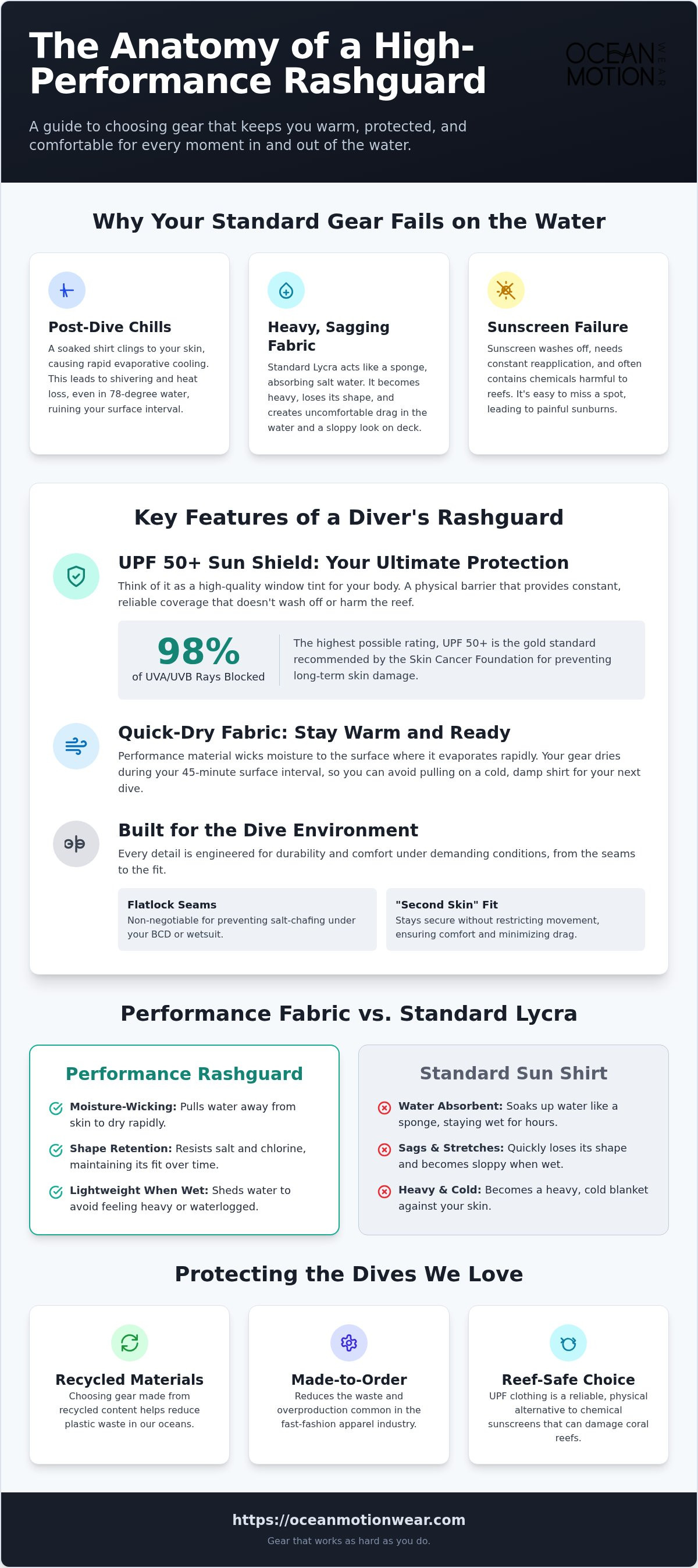
I’ve spent enough hours in 78 degree water to know that a soggy shirt is a mood killer. It’s the difference between feeling dry by the time you finish your 6am boat coffee and staying damp all morning. We focus on fabrics that move moisture away from your skin to prevent those post-dive chills. A high-performance quick dry rashguard for watersports is a top engineered to shed water rather than soak it up like a sponge.
Understanding What is a rash guard helps you realize it’s more than just a layer for sun protection. It’s a technical tool for thermal management. When you’re active, your body generates heat. When you stop, the moisture in your fabric begins to evaporate, pulling that heat away from your skin. This is why you shiver even in tropical climates.
The Problem with Standard Lycra
Traditional Lycra is great for a quick dip in a pool or a short surf session. For divers, it often holds onto water like a heavy, cold blanket. I’ve seen too many divers shivering on a 45 minute surface interval because their "sun shirt" stayed wet. Standard fabrics also tend to lose their shape and sag when they get heavy with salt water. This creates drag in the water and a sloppy look on the boat deck. Mass-produced gear often prioritizes cost over the structural integrity needed for repeated salt exposure.
How Quick-Dry Technology Changes the Game
Technical fabrics are often heat-set with water-resistant treatments to shed droplets instantly. This tech allows the fabric to remain lightweight even when you’re transitioning from the reef to the boat. It creates a barrier that helps maintain your core temperature by reducing evaporative cooling. Instead of the fabric acting as a reservoir for cold water, it acts as a shield. We use these performance materials in our Whale Shark and Abalone collections to ensure you stay warm and dry.
The magic happens through moisture wicking. The weave of the fabric pulls water to the surface where it can evaporate quickly in the breeze. It’s a purposeful design that respects your need for comfort and readiness. You aren’t just buying a shirt; you’re investing in a piece of gear that works as hard as you do. When your gear dries during the interval, you’re ready for the next descent without the dread of pulling on a cold, slimy garment.
The Science of UPF 50+ Protection in Watersports
Think of UPF 50+ as a high-quality window tint for your body. I’ve learned the hard way that sunscreen washes off, but a good rashguard never misses a spot. Whether I’m navigating the winter swells or waiting for a boat pick-up, I need protection that stays put. It provides a physical barrier that doesn't quit when things get salty.
UPF 50+ means only 1/50th of the sun’s UV radiation reaches your skin. This is a massive win for long days on the water. We use tightly woven performance fabrics that block rays physically rather than relying on chemical filters. Using a quick dry rashguard for watersports ensures you aren't absorbing unnecessary chemicals while trying to stay safe.
Why UPF is Superior to Sunscreen Alone
Sunscreen can be messy and often contains ingredients that aren't reef-safe. A rashguard provides constant, reliable coverage that doesn't need to be reapplied after every wave. I personally love the peace of mind knowing my shoulders are protected during a long snorkel session. It’s essential when you’re distracted by the beauty of the reef at Tunnels on Kauai’s North Shore.
I’ve had moments in the Kona sun where I missed a spot with lotion and ended up with a painful reminder. Gear doesn't have that human error factor. It covers vulnerable areas like your back and shoulders with 100 percent consistency. You can focus on the dive, not the clock for your next application.
Understanding the UPF Rating System
UPF measures both UVA and UVB rays, giving you a more complete picture than standard SPF. A rating of 50+ is the highest possible, blocking about 98 percent of UV radiation. For more on why this matters, read our guide on UPF 50+ sun protection. It’s the gold standard for anyone who lives for the ocean.
The Skin Cancer Foundation confirms that UPF 50+ protection is a primary defense against long-term skin damage. We prioritize this rating in every piece we make. It’s about readiness and well-being in an environment that demands both. You can browse our protective performance apparel to see how we blend safety with style.
Performance Features Every Diver Should Look For
When I'm diving the reef at Tunnels on Kauai’s North Shore, I need gear that doesn't chafe. Salt and sand are relentless. A standard shirt might look good on the beach, but it often fails under the weight of a BCD. I look for specific features that ensure my focus stays on the marine life rather than my skin. A high-quality quick dry rashguard for watersports must be built for movement and pressure.
Flatlock seams are a non-negotiable feature for me. These seams lay flat against your skin and won't rub you raw under a wetsuit or heavy dive gear. I've learned that even a small ridge in a seam can feel like a razor after 60 minutes in the water. We prioritize this construction to ensure a smooth, irritation-free experience during every descent.
Four-way stretch is another essential for the active diver. You need the freedom to reach for a tank valve or paddle through a sudden winter swell without resistance. If the fabric doesn't move with you, it will eventually pull, sag, or tear. We also prioritize chlorine resistance. This ensures your gear doesn't fall apart or lose its elasticity after a few required pool sessions or training days.
Seams and Construction
Look for "active" seams that move with your body rather than resisting your motion. I've found that cheaper shirts often use bulky overlock seams that leave deep red marks after a long dive. Quality construction ensures the shirt stays put instead of riding up your torso when you're swimming. It’s about creating a garment that feels like a second skin, providing support without restriction. This level of craftsmanship is what separates technical gear from basic beachwear.
Durability in Harsh Conditions
Salt water is incredibly abrasive. Your fabric needs to be tough enough to handle the constant friction of gear and the environment. We use premium performance fabrics that hold their color and compression over time. Many of the best options today utilize sustainable swimwear fabrics which are engineered for longevity and resilience. These materials resist the "salt-stiff" feeling that plagues lower-quality gear after it dries.
Investing in a professional-grade quick dry rashguard for watersports is an investment in gear that lasts for seasons. I’ve seen mass-produced shirts lose their shape after just one week of heavy use in Kona. Technical fabrics maintain their fit and protective qualities even after hundreds of hours in the sun and salt. It’s better for your wallet and better for the planet to buy gear that doesn't need to be replaced every vacation.
Choosing the Right Fit for Your Favorite Sport
The "perfect fit" depends entirely on whether you're under the water or on top of it. For scuba diving, I always recommend a snug, "second skin" fit to prevent the fabric from bunching under your BCD. It’s a common mistake to buy a size too large. In reality, loose fabric trapped under your gear creates annoying pressure points and drag. Choosing a quick dry rashguard for watersports that fits properly ensures you stay streamlined and comfortable.
If you're paddleboarding or grabbing lunch at the beach, a more relaxed "athleisure" fit is usually more comfortable. We've designed our collections to work across both worlds. We focus on functional style that doesn't look like a corporate uniform. A high-quality quick dry rashguard for watersports should transition from the dive boat to the cafe with ease. It’s about being ready for whatever the day brings without needing a wardrobe change.
We focus on designs that reflect the ocean, like our Abalone and Whale Shark prints. These aren't just patterns; they are an identity. When you wear gear that fits right and looks intentional, you feel more capable in the water. We avoid the neon, hyper-aggressive look of traditional sportswear in favor of something more serene and grounded. This approach respects the environment and the athlete simultaneously.
Scuba and Snorkeling Needs
A tight fit provides better thermal protection by limiting water movement against your skin. It acts like a lubricant, making it much easier to slide into a wetsuit. If you're curious about layering, check out our guide for what to wear under a wetsuit. I’ve found that a well-fitted top saves significant time and frustration when you're gearing up on a crowded boat deck. It keeps your core temperature stable during long descents.
Surfing and Paddleboarding Considerations
For surface sports, you want a bit more breathability to prevent overheating in the sun. A slightly looser fit can feel more relaxed for all-day wear on a board or in a kayak. Check out our kayaking gear guide for more on surface-based watersports. We believe gear should be as versatile as the person wearing it. This fit allows for maximum airflow while still providing that essential UPF 50+ protection.
Ready to upgrade your water wardrobe? Browse our rash guard women to find the perfect fit for your next adventure.
Why Sustainable Gear is the Best Choice for the Ocean
We believe that if you love the ocean, you should wear gear that respects it. Most mass-produced rashguards contribute to the massive problem of textile waste and overproduction. I’ve seen enough discarded, low-quality gear on the beaches of Kona to know we need a better way. Choosing a quick dry rashguard for watersports shouldn't come at the cost of the environment you're exploring.
I’m proud that we use recycled materials to turn ocean-bound waste into performance apparel. Our made-to-order process means we only create what is actually needed. This is a much cleaner way to do business than traditional manufacturing. We don't have warehouses full of unsold stock that eventually ends up in a landfill. It’s a purposeful, intentional approach to craftsmanship.
When you choose gear made with intention, you're supporting a healthier ecosystem. It’s about more than just a purchase. It’s a commitment to the blue spaces that give us so much. We want every diver to feel both capable and responsible when they hit the water.
The Power of Recycled Fabrics
Using recycled polyester reduces the energy needed for production significantly. It keeps plastic out of landfills and away from delicate reefs. I’ve found that these recycled fabrics often perform just as well, if not better, than virgin materials. They maintain their shape and provide the same high-level protection we expect from technical gear. It’s a powerful way to wear your values while you’re out exploring the deep.
The durability of these fabrics is another win for sustainability. Because they are engineered for performance, they don't need to be replaced every season. This reduces the overall cycle of consumption. You get a quick dry rashguard for watersports that survives the salt and the sun while protecting the planet.
Expressing Your Ocean Identity
Gear should tell a story and connect you to the marine life you love. Our Whale Shark collection celebrates these gentle giants with designs inspired by their unique patterns. If you prefer the subtle beauty of the reef, the Abalone collection is a personal favorite of mine. These prints are a badge of honor for those who live for the water.
We also offer wholesale opportunities for shops that share our commitment to the ocean. We want to partner with those who prioritize quality and environmental stewardship. By choosing sustainable gear, you're helping to shift the industry toward a more mindful future. Let’s protect the places we love to dive.
Gear Up for the Blue
Choosing the right equipment means you spend less time shivering on the boat and more time focused on the reef. We've seen how a quick dry rashguard for watersports transforms a surface interval from a cold wait into a comfortable break. By prioritizing UPF 50+ protection and a snug fit, you ensure your skin stays safe without the mess of constant sunscreen application. It's the difference between a gear distraction and a seamless underwater adventure.
We are proud to offer gear that is designed by divers for divers. Our eco-friendly, made-to-order production process reduces waste and respects the marine life we love to visit. You don't have to choose between high-level performance and environmental stewardship. I've found that when your gear matches your values, you feel more connected to the environment you're exploring. We believe in quality that lasts for seasons, not just one vacation.
Explore our sustainable, ocean-inspired rashguards to find your next favorite piece of gear. Whether you're chasing humpbacks or exploring a local reef, we want you to feel both protected and empowered. We'll see you in the water.
Frequently Asked Questions
How should a quick-dry rashguard fit for diving?
It should fit like a second skin. If it’s too loose, the fabric will bunch up under your BCD or wetsuit, causing painful pressure points and unnecessary drag. I’ve found that a tight fit also limits water circulation against your skin, which helps you stay slightly warmer. A proper quick dry rashguard for watersports should be snug enough to stay in place but flexible enough for a full range of motion.
Can I wear a rashguard instead of a wetsuit?
You can wear a rashguard instead of a wetsuit in tropical waters, typically 78 degrees or warmer. It provides excellent protection against the sun, jellyfish stings, and minor scrapes from the reef. However, it doesn't offer the thermal insulation of neoprene. If you're doing multiple dives or heading into deeper, cooler thermoclines, you’ll likely want a wetsuit layered over your rashguard for better warmth.
Does a quick-dry rashguard actually keep you warm?
It keeps you warm primarily by stopping the wind from hitting wet skin on the boat deck. By shedding water quickly, it reduces the effect of evaporative cooling during your surface interval. While it isn't an insulator like a wetsuit, a dry shirt is always warmer than a soggy one. I’ve spent many 45 minute intervals much happier because my gear dried before the next descent.
How do I wash my rashguard to make it last?
Always rinse your gear in fresh water immediately after every dive to remove salt and chlorine. I recommend hand washing with a mild, eco-friendly detergent and hanging it to air dry out of direct sunlight. Never put it in a dryer, as high heat will destroy the elastic fibers and ruin the fit. Proper care ensures your investment lasts for years of adventures rather than just one trip.
What is the difference between a rashguard and a swim shirt?
The main difference is the technical construction and intended use. Rashguards are designed for high-intensity activity and protection against abrasion, featuring a tighter weave and flatlock seams. Swim shirts are often looser and made for casual lounging by the pool. For diving and surfing, the durability and "second skin" fit of a technical rashguard are much more effective at preventing chafing and staying in place.
Are all rashguards UPF 50+ protected?
No, not all garments are created equal when it comes to sun protection. The level of protection depends on the density of the fabric weave and the specific materials used. Many cheap shirts lose their protective qualities when they get wet or stretched out. We ensure our gear is UPF 50+ certified, meaning it blocks at least 98 percent of UVA and UVB radiation even in demanding environments.
Why should I choose a rashguard made from recycled materials?
Choosing recycled fabrics helps keep plastic waste out of landfills and away from our delicate coral reefs. I’ve found that high-quality recycled polyester performs just as well as virgin materials in terms of durability and stretch. It’s a way to support a circular economy and protect the blue spaces we love. Our made-to-order process further reduces waste by only creating what is actually needed for our customers.
Do I need a long sleeve or short sleeve rashguard?
I almost always prefer a long sleeve quick dry rashguard for watersports because it provides maximum sun protection for my arms. It also acts as a better lubricant when I’m sliding into a tight wetsuit. Short sleeves are great if you prioritize total shoulder mobility and are spending most of your time in very warm surface conditions. Consider your specific activity and how much sun exposure you’ll face throughout the day.
