


The best sun protection doesn't come in a bottle. We've all been there, reapplying greasy lotion every hour in the Kona sun only to end up with a stinging sunburn by lunch. It's a frustrating cycle that keeps you out of the water, but investing in quality UPF clothing for beach vacations is the most effective way to break that loop. Think of a high-quality rash guard like a premium window tint for your skin. It blocks the vast majority of UV rays without the mess or the constant need for reapplication.
I know how it feels when gear takes too long to dry between activities. Nobody wants to pull on a cold, damp shirt before jumping back on the boat for the afternoon session. You deserve a wardrobe that works as hard as you do. We'll show you how to build a functional, sun-safe travel wardrobe that transitions seamlessly from the sand to the sea. We'll dive into technical fabrics that dry in minutes and explain how to pick versatile pieces that let you pack light and stay confident all day long.
Key Takeaways
- Understand why UPF ratings offer more reliable protection than chemical lotions. Fabric acts like a permanent window tint for your skin.
- Identify the best gear for your activity level. Compare compression rash guards with loose-fitting sun shirts to prevent painful chafing.
- Build a versatile travel kit using our guide to UPF clothing for beach vacations. Protect sensitive areas like your scalp and legs with headbands and swim leggings.
- Streamline your packing list with a 5-item capsule wardrobe checklist. A cohesive color palette ensures you transition seamlessly from the boat to the bistro.
- Support ocean conservation by choosing sustainable, made-to-order performance gear. High-level protection meets a deep respect for our fragile marine ecosystems.
Understanding UPF 50+ and Why Your Beach Vacation Needs It
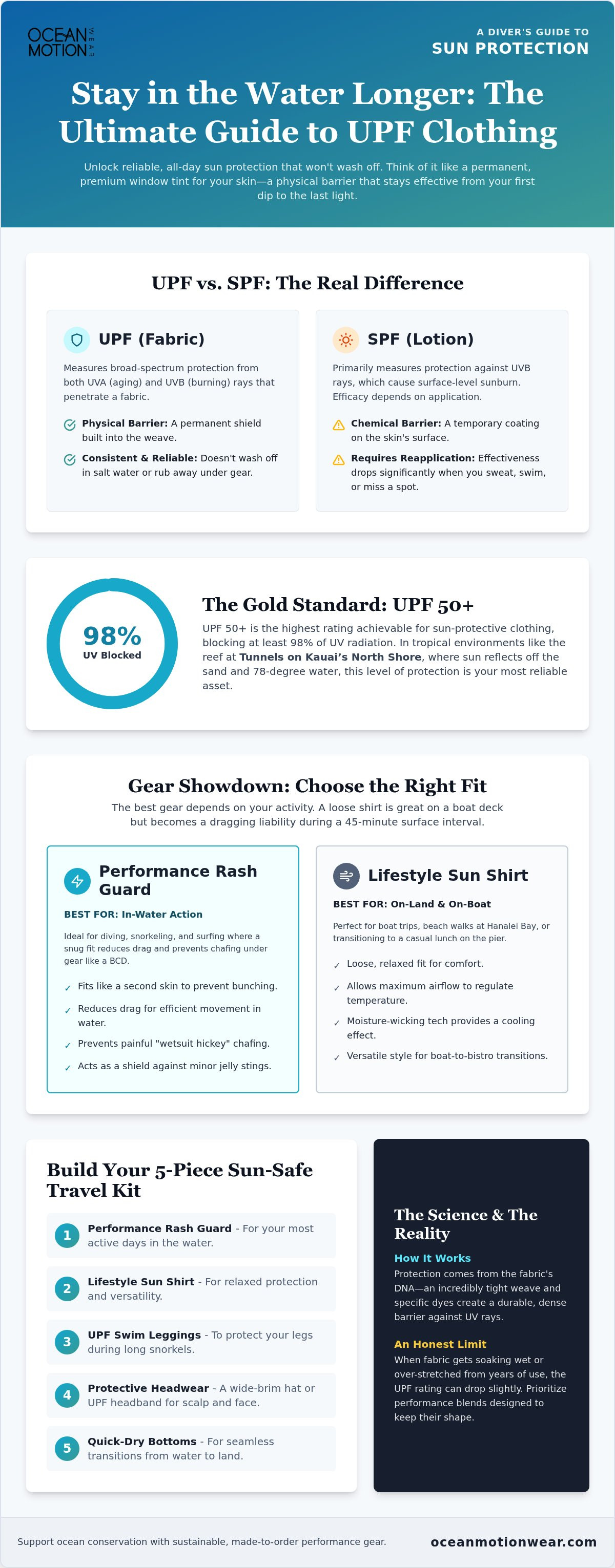
Think of UPF like a high-quality window tint for your car. You don't apply it every hour. It's built into the glass to block the glare and the heat. UPF clothing for beach vacations works exactly the same way. It provides a physical barrier that stays effective from your first dip in the morning until the sun dips below the horizon.
If you've ever spent a morning at the reef at Tunnels on Kauai’s North Shore, you know the sun is relentless. The reflection off the water is intense. Relying on lotion alone in these conditions is often a losing game. You might miss a spot, or it washes off in the 78 degree water. This is where a physical barrier becomes your best asset.
UPF vs. SPF: What is the Difference?
UPF is a technical rating that measures the amount of UV radiation that penetrates a fabric and reaches your skin. Most people are familiar with SPF, but that rating only measures protection against UVB rays. UVB causes the surface burn, but UVA rays penetrate deeper and cause long-term skin damage. UPF covers both.
Fabric protection is simply more reliable than lotion. Sunscreen requires a thick, even application and frequent re-upping to stay effective. It's easy to forget when you're distracted by a passing pod of dolphins or a sea turtle. Sun protective clothing is a permanent shield. It doesn't wash off in the salt water or rub away under your dive gear.
The Science of the Weave
The protection doesn't come from a chemical coating that will eventually disappear. It's built into the DNA of the garment. High-quality pieces use incredibly tight weaves and specific dyes to create a dense barrier. This structural protection is what makes the gear durable enough for years of travel.
It's important to be honest about the limits, though. When fabric gets soaking wet or stretched too thin, the UPF rating can drop slightly. I've noticed this on older gear that has lost its elasticity over time. That's why we prioritize performance blends in our Whale Shark collection. They are designed to keep their shape and protective power even after a long day of snorkeling.
UPF 50+ is the gold standard for tropical environments. It blocks 98% of UV radiation. When the sun is reflecting off the white sand and the turquoise water, you need every bit of that protection. It allows you to stay out longer and focus on the ocean rather than your watch.
Choosing the Right UPF Gear: Rash Guards vs. Sun Shirts
Choosing the right UPF clothing for beach vacations depends entirely on how you plan to spend your time in the salt. If you're lounging on a boat deck in Kona, a loose shirt feels great. But if you're kicking through a 45 minute surface interval, that same loose shirt becomes a heavy, dragging liability. The fit you choose determines how long you can stay comfortable in the water.
High-performance fabrics aren't just about blocking rays. They use moisture-wicking technology to create a cooling effect. As water evaporates from the fibers, it pulls heat away from your skin. This is vital in humid tropical climates where the air feels like a heavy, warm blanket. According to the Skin Cancer Foundation, Sun Protective Clothing is one of the most effective ways to prevent long-term damage, but only if the garment stays in place.
When to Wear a Performance Rash Guard
Performance rash guards should fit like a second skin. We design our Abalone collection with this exact compression in mind. This tight fit prevents the fabric from bunching up under a BCD or life vest. If you've ever dealt with "wetsuit hickey" chafing after a long dive, you know why this matters. A snug fit also reduces drag, allowing you to move through the water with less effort.
A tight weave provides more than just UV protection. It acts as a physical shield against minor jelly brushes or stinging hydroids. I've been grateful for that extra layer more than once when a stray current pushed me toward a stinging coral head. Long sleeves are a non-negotiable requirement for snorkeling. Your back and arms are exposed to direct overhead sun for hours, and fabric won't wash off like lotion does.
The Role of the Lifestyle Sun Shirt
Loose-fitting tops are fantastic for land-based activities. If you're walking the shoreline at Hanalei Bay, the extra room allows for better airflow. This movement of air helps regulate your body temperature in high humidity. It's a more relaxed look that transitions well to a casual lunch on the pier.
However, don't try to swim long distances in them. The extra fabric traps water and creates significant drag. It's frustrating to feel like you're pulling a parachute behind you while trying to keep up with a reef shark. For active water sessions, stick to the compression fit and save the loose shirts for the boat ride home. You can explore our full range of sun-safe performance gear to find the right balance for your next trip.
Essential UPF Pieces for a Seamless Beach-to-Boat Transition
Packing for a trip usually involves a bikini and a towel. But the real challenge begins when you move from the sand to the deck of a boat. The wind on the ride back to the dock can feel surprisingly chilly after you've been in 78 degree water. A complete system of UPF clothing for beach vacations makes this transition effortless.
We view sun protection as a layered performance kit. It isn't just about one shirt. It's about covering the high-exposure zones that most people ignore until they feel the sting. When your gear works together, you can focus on the spinner dolphins instead of your skin.
Why We Swear by Swim Leggings
I have spent hours floating over the reef off the Kona coast. It's easy to lose track of time when the visibility is perfect. The backs of your calves and thighs are constantly exposed to direct sunlight while you snorkel. I've seen many travelers end their vacation early because of a severe burn on the back of their legs.
Swim leggings are the ultimate solution for long sessions in the salt. They provide a physical barrier that doesn't wash off or require reapplication. They also offer a layer of defense against stinging cells or jellyfish floating in the current. I always pack the Abalone collection swim pants because they stay secure even when I'm kicking against a winter swell.
Protecting the Small Spots: Scalps and Necks
The hair part is perhaps the most painful place to get a sunburn. I learned this the hard way during my first season in Hawaii. A burnt scalp makes every shower and hair brushing session a miserable experience for a week. A wide headband or neck gaiter provides targeted protection without the bulk of a hat that might fly off the boat.
This is actually how our story began. We started by making handmade dive headbands because we couldn't find gear that actually stayed put in the water. We needed something that kept hair secure and protected the scalp during a 45 minute surface interval. Today, these pieces are essential for anyone who wants to avoid the "sunscreen in the eyes" struggle while staying safe.
Understanding the Ultraviolet Protection Factor (UPF) of your accessories is just as important as your main layers. When you combine leggings, a rash guard, and a headband, you've created a complete shield. Add a light windbreaker for the boat ride, and you're ready for anything the ocean throws at you.
How to Build a UV-Protective Capsule Wardrobe for Travel
Packing for a week in the sun shouldn't require a checked bag. I've found that a few high-performance pieces can replace a suitcase full of cotton t-shirts that stay wet for days. Building a capsule of UPF clothing for beach vacations allows you to move between the boat and the hotel room without the bulk. It's about choosing gear that works together as a system.
A cohesive color palette is the secret to a functional travel kit. When your rash guard matches your leggings and headbands, you can mix and match without thinking. It makes you feel put together even when your hair is full of salt and you're running on 6am boat coffee. High-quality technical fabrics dry in minutes, which means you can pack significantly fewer items than you think.
The 5-Piece UPF Starter Kit
We recommend a simple 5-item checklist to cover almost any ocean activity. Start with one long-sleeve rash guard and one pair of swim leggings for full-body protection. Add two headbands to rotate while one dries, and finish with a light windbreaker for the spray on the boat ride back to shore. This kit covers 90% of what you'll do in the water, from snorkeling the reef at Tunnels to paddling in Kona.
Our Whale Shark collection is a great place to start if you want a coordinated look that stands out. The quick-dry nature of these fabrics means you can rinse them in the sink and have them ready for the next morning. It prevents that dreaded feeling of pulling on cold, salt-stiff fabric before the sun is even up. You stay light, protected, and ready to move.
Fabric Care for Longevity
Rinsing your gear in fresh water after every saltwater session is non-negotiable. Salt crystals are abrasive. If they dry into the fabric, they can slowly eat away at the fibers and reduce the elasticity of your gear. I always make it a habit to hop in the hotel shower with my gear on as soon as I get back from a dive.
Avoid using harsh detergents or fabric softeners. These chemicals break down the elastane that gives your gear its shape and compression fit. If the fabric loses its stretch, the UPF protection can also decrease. For a deeper dive into maintaining your kit, check out our guide on how to wash swimwear and high-performance fabrics.
Taking care of your gear ensures it remains protective for years of adventure. You can shop our entire range of sun-safe gear to start building your own travel system today. Investing in quality now means less waste and better protection for the oceans we love to explore.
Sustainability and Sun Protection: The Ocean Motion Wear Approach
We believe the gear you wear should protect the environments you love to explore. Choosing UPF clothing for beach vacations is more than a personal health decision. It's a choice to reduce the chemical load on our fragile coral reefs. When we're out on the water in Kona, we see the direct impact of human presence on the marine life we care about.
The traditional fashion industry is one of the world's largest polluters. We refuse to contribute to that cycle of waste. By focusing on durable, high-performance materials, we encourage a buy less, but better mindset. One well-made rash guard that lasts for years is far better for the planet than five cheap ones that end up in the trash after one season.
Turning Plastic into Performance Gear
How do we turn a discarded bottle into a technical garment? Recycled plastic is broken down and spun into a soft, high-performance polyester blend. This material is naturally resistant to the harsh effects of salt and chlorine. It maintains its shape and protective rating even after hundreds of hours in 78 degree water.
These recycled fibers are also incredibly quick-drying. I've noticed they feel lighter on the skin during a 45 minute surface interval compared to standard synthetic fabrics. Our Whale Shark collection is the perfect example of this mission in action. It combines high-level protection with a design inspired by one of the ocean's most majestic residents.
The Impact of Your Choice
Every piece of fabric you wear is one less area that needs chemical sunscreen. Even lotions labeled as reef-safe can create a film on the water that disrupts the delicate balance of the ecosystem. By choosing full-coverage pieces like swim leggings, you're making a proactive choice for ocean health. It's a simple way to be a better guest in the underwater world.
We also use a made-to-order production model to eliminate textile waste. We don't believe in mass-producing thousands of items and hoping they sell. Each piece is crafted specifically for the person who ordered it. This might mean a short wait for your gear, but it ensures that nothing we create ends up in a landfill. If you want to bring this sustainable approach to your own community, explore our wholesale opportunities for dive shops and resorts.
Ready for Your Next Saltwater Adventure?
I hope you're ready to rethink your packing list. Sun protection is more than just a bottle of lotion. It's about building a reliable system that stays put while you're exploring the reef at Tunnels or waiting for the winter swells in Kona. By choosing high-quality UPF clothing for beach vacations, you can ditch the greasy reapplication and focus on the 78 degree water instead.
We've covered why a tight-fitting rash guard is your best friend for active diving and how a capsule wardrobe of recycled fabrics keeps your luggage light. These pieces are more than just gear. They are a commitment to protecting the oceans we love. Every rash guard and pair of leggings we make is designed by women divers using eco-friendly recycled materials to ensure they handle real-world conditions.
You deserve to feel confident and secure in every environment. UPF 50+ protection is built into every fiber to give you peace of mind. Explore our sun-protective ocean collections to find your next favorite piece of performance apparel. We'll see you out there where the salt meets the sun.
Frequently Asked Questions
Is UPF clothing better than sunscreen for the beach?
UPF clothing is generally more reliable than sunscreen because it doesn't wash off. Unlike lotion, it doesn't require reapplication every two hours or after a dip in the 78 degree water at Kona. We've seen many people miss a spot with sunscreen and end up with a painful burn. Fabric provides a physical, consistent shield. It's also better for the reef since it doesn't release chemicals into the water.
Do I still need sunscreen if I am wearing a UPF 50+ shirt?
Yes, you still need to protect any skin that isn't covered by fabric. I always apply reef-safe sunscreen to my face, ears, and the backs of my hands before heading out. Even with a high-quality rash guard, those small exposed areas are vulnerable during a long day on the boat. Don't forget your lips and the tops of your feet if you aren't wearing swim leggings or booties.
Does UPF clothing lose its effectiveness over time?
Yes, even the best gear eventually loses its edge. Frequent stretching, exposure to chlorine, and salt crystals can break down the tight weave over time. I usually replace my primary pieces every few seasons to ensure they still hit that UPF 50+ mark. You can extend the life of your gear by rinsing it in fresh water immediately after every session. This keeps the fibers from becoming salt-stiff and brittle.
What is the best UPF clothing for snorkeling in warm water?
I always recommend a long-sleeve rash guard and swim leggings as the best UPF clothing for beach vacations. Snorkeling keeps your back and the backs of your legs exposed to direct sun for long periods. A swim headband is also essential to protect your scalp part. This combination ensures you can stay in the water for a full 45 minute surface interval without worrying about the intense tropical sun.
Can I wear my UPF rash guard for scuba diving?
Absolutely, they are perfect base layers. I always wear a rash guard from our Abalone collection under my gear to prevent chafing from a BCD or heavy tank straps. It adds a tiny bit of warmth in 78 degree water and makes it much easier to slide into a thicker suit if the conditions change. Plus, it gives you instant sun protection the moment you strip off your gear on the boat.
How do I know if my clothing has UPF protection?
Look for a tag that explicitly lists a UPF rating. Not all fabric is created equal, and standard cotton t-shirts might only offer an SPF of 5. When you're choosing UPF clothing for beach vacations, you want to see a UPF 50+ label. This ensures the fabric has been tested to block 98% of UV rays. We build this protection into every piece we design.
Does the color of the fabric affect the UPF rating?
Yes, color and weave density play a significant role in protection. Darker or more vibrant colors like deep blues and greens generally absorb more UV radiation than pale pastels. This prevents the rays from reaching your skin. However, the most important factor is the technical rating. We ensure our lighter prints still meet the UPF 50+ standard by using a tighter weave and specific fabric blends.
Is UPF clothing hot to wear in tropical weather?
It's a common worry, but technical UPF gear is actually designed to keep you cool. High-performance fabrics use moisture-wicking technology to pull water away from your skin. As that water evaporates, it creates a natural cooling effect that feels great in humid tropical weather. I've found that wearing a light layer often feels cooler than having the direct sun beating down on my bare skin at Tunnels reef all day.
