


Sustainability in swimwear is more than a recycled label; it's a technical performance choice that protects the very species the prints celebrate. As of 2026, there are between 75 and 199 million tons of plastic in our oceans. We can't afford to add more through cheap, disposable gear that falls apart after one season. Choosing a sustainable whale shark rash guard is a vital way to honor these animals without leaving a footprint behind.
We all want to protect the reefs we love, but finding gear that actually works shouldn't be a headache. It's about finding that perfect balance of high-quality protection and deep respect for the marine environment. I've spent years testing gear that either chafes or feels like salt-stiff fabric against raw skin, and I know the frustration of confusing technical jargon while your skin burns.
We'll show you how to pick a guard with UPF 50+ technology that acts like a premium window tint for your skin. You'll learn why Global Recycled Standard (GRS) fabrics are the new benchmark for serious divers and how the right fit keeps you comfortable during a long surface interval. Let's get you ready for your next trip with gear that looks as good as it performs.
Key Takeaways
- Learn why choosing a sustainable whale shark rash guard is the most effective way to shield your skin with UPF 50+ protection while keeping plastic out of the ocean.
- Understand the technical advantages of recycled polyester blends that provide professional-grade durability and flexibility for every dive.
- Discover how to select a snug, functional fit that prevents chafing and supports a full range of motion during active snorkel trips.
- Master essential care habits, like immediate fresh water rinsing, to ensure your high-performance gear remains in top condition for years.
- Explore how made-to-order production helps us reduce waste and ensures we only create the gear that the diving community actually needs.
Why Your Whale Shark Adventure Demands Sustainable Gear
Entering the water with a whale shark is a heavy responsibility. We believe protecting these gentle giants starts with the gear we bring into their home. Choosing a sustainable whale shark rash guard isn't just about style. It's about reducing the 8 to 11 million metric tons of plastic that enter our oceans every year.
Many divers ask, What is a Rash Guard exactly? Traditionally, it's a performance shirt made of synthetic fibers like nylon or polyester designed to prevent abrasion. However, we've seen how standard production relies heavily on petroleum. This is why we've shifted our focus to recycled materials that protect both the wearer and the habitat.
The Problem With Virgin Plastics in Swimwear
Standard nylon production is incredibly energy-intensive. It relies on extracting new oil, which contributes to the climate issues threatening the reefs where whale sharks feed. When you buy low-quality, disposable swimwear, it often sheds microplastics that eventually enter the marine food chain.
We prioritize fabrics that give a second life to existing waste. By using recycled post-consumer plastics, we help divert bottles from landfills and keep them out of the ocean. It's a circular approach that matches the intentional way we should all interact with the sea. Our made-to-order model further ensures we aren't contributing to the industry's massive overproduction problem.
Physical Protection vs. Chemical Sunscreen
Chemical sunscreens are a quiet threat to the delicate ecosystems whale sharks rely on. Even "reef-safe" labels can be misleading or wash off before they do any good. A high-quality rash guard acts as a permanent physical barrier. It replaces the need for thick, harmful lotions on your torso and arms.
Think of UPF 50+ fabric like a high-end car window tint. A quality tint blocks out the heat and glare, keeping the interior safe without any extra effort from you. Our Whale Shark collection provides that same consistent shield. It blocks 98 percent of UV rays without washing off or requiring messy reapplication every hour.
This is especially vital during a long surface interval on a boat. You're exposed to the sun's reflection off the water, and a cream can easily fail you as you sweat or move. A sustainable whale shark rash guard stays put. It keeps you protected and ensures the water stays clean for the animals we're there to see.
The Tech Behind the Fabric: Recycled Plastics and UPF 50+
We don't just choose fabrics because they look good. We choose them because they perform under pressure. A high-performance sustainable whale shark rash guard relies on advanced textile engineering. We use a blend of recycled polyester and spandex that mirrors the durability of virgin materials. This combination provides the four-way stretch needed for a professional dive.
When we talk about recycled fabrics, we're talking about diverting plastic bottles from landfills and turning them into high-tensile yarn. It's a precise, mechanical process. The result is a fabric that holds its shape even after dozens of salt water dives. I've worn low-quality gear that bags out after three days of heavy boat use, and it's a mess. We engineered our gear to avoid that sagging, keeping the fit snug and secure.
How Recycled Polyester Performs in Salt Water
Recycled fibers are just as strong and flexible as virgin materials. I've found that the quick-drying technology is a game changer when you're sitting on a boat deck in 85 degree heat. You don't get that heavy, soggy feeling between dives. The breathability allows air to circulate, which is essential for staying cool during a long surface interval. This fabric is designed to move with you, whether you're climbing a boat ladder or reaching for your tank valve.
- Strength: High-tensile fibers resist snagging on heavy equipment.
- Elasticity: Spandex blends ensure the garment snaps back to its original shape.
- Comfort: Smooth, recycled yarns reduce friction against the skin during long sessions.
Understanding the Science of UPF 50+
Many people confuse SPF with UPF. While SPF measures how long it takes for skin to redden, UPF 50+ protection measures how much UVA and UVB radiation actually reaches your skin. A rating of 50+ is the highest possible for apparel, blocking 98 percent of rays. This is a technical standard that we take seriously to ensure your safety in the water.
This protection comes from the tightness of the weave and the weight of the fabric. It isn't a chemical coating that washes off in the surf or fades after a few washes. We test our materials to ensure the protection lasts for the entire life of the garment. It's about readiness and long-term utility. If you're looking for gear that stands up to the elements, you can explore our full range of performance apparel designed for the adventurous.
Choosing Your Print: Functional Design for Divers and Snorkelers
Wearing a whale shark print is a bold statement. It's about more than just looking good on the boat; it's a way to carry your passion for the ocean wherever you go. Given the vulnerable whale shark conservation status, these designs spark conversations that actually matter. We created our Whale Shark collection to celebrate these giants while providing the technical features serious watermen and women require.
A sustainable whale shark rash guard needs to balance aesthetics with raw performance. We prioritize long sleeves for a simple reason: protection. Whether it's the intense tropical sun or a surprise encounter with stinging jellies, you want as much coverage as possible. I've learned the hard way in tropical waters that missing even a small patch of skin can lead to a miserable afternoon of itching and burning.
Construction details are where a good guard becomes a great one. We use flatlock seams throughout our designs. This is essential because a heavy BCD or a tight wetsuit will turn a standard raised seam into a source of constant chafing. After a two-tank dive, you'll be thankful for a smooth interior that doesn't rub you raw. It keeps your focus on the marine life rather than your gear.
Fit for Scuba vs. Snorkeling
Your activity level dictates your fit. Divers should always aim for a second-skin fit. This prevents fabric from bunching up under your gear, which can be both annoying and restrictive. For active water sports, the ideal feel is one of firm compression. It should feel like a firm, supportive hug that stays put against the water's resistance and doesn't shift when you're swimming against a current. We've found this fit is best for maintaining a streamlined profile.
Snorkelers might prefer a slightly more relaxed cut. If you're spending your time on the surface, you want comfort and ease of movement. However, don't go too loose. A baggy rash guard will drag in the water and can easily ride up, exposing your lower back to the sun. Even a sustainable whale shark rash guard loses its effectiveness if it isn't positioned correctly on your body.
Neckline and Sleeve Considerations
We advocate for high necklines for anyone spending hours on a boat deck. The skin on your chest and the back of your neck is incredibly delicate. Sun exposure during a 45 minute surface interval is intense; a high collar provides that extra layer of defense. Crew necks are a solid choice for more casual activities like paddleboarding or a quick beach day where you might be moving in and out of the shade.
Look for thumbholes if you plan on layering your gear. They keep your sleeves from sliding up to your elbows when you're pulling on a wetsuit. It's a small detail that saves a lot of frustration on a crowded dive deck when everyone is trying to suit up at once. We've integrated these features into our designs to ensure you're ready for any environment, from the surface to the reef.
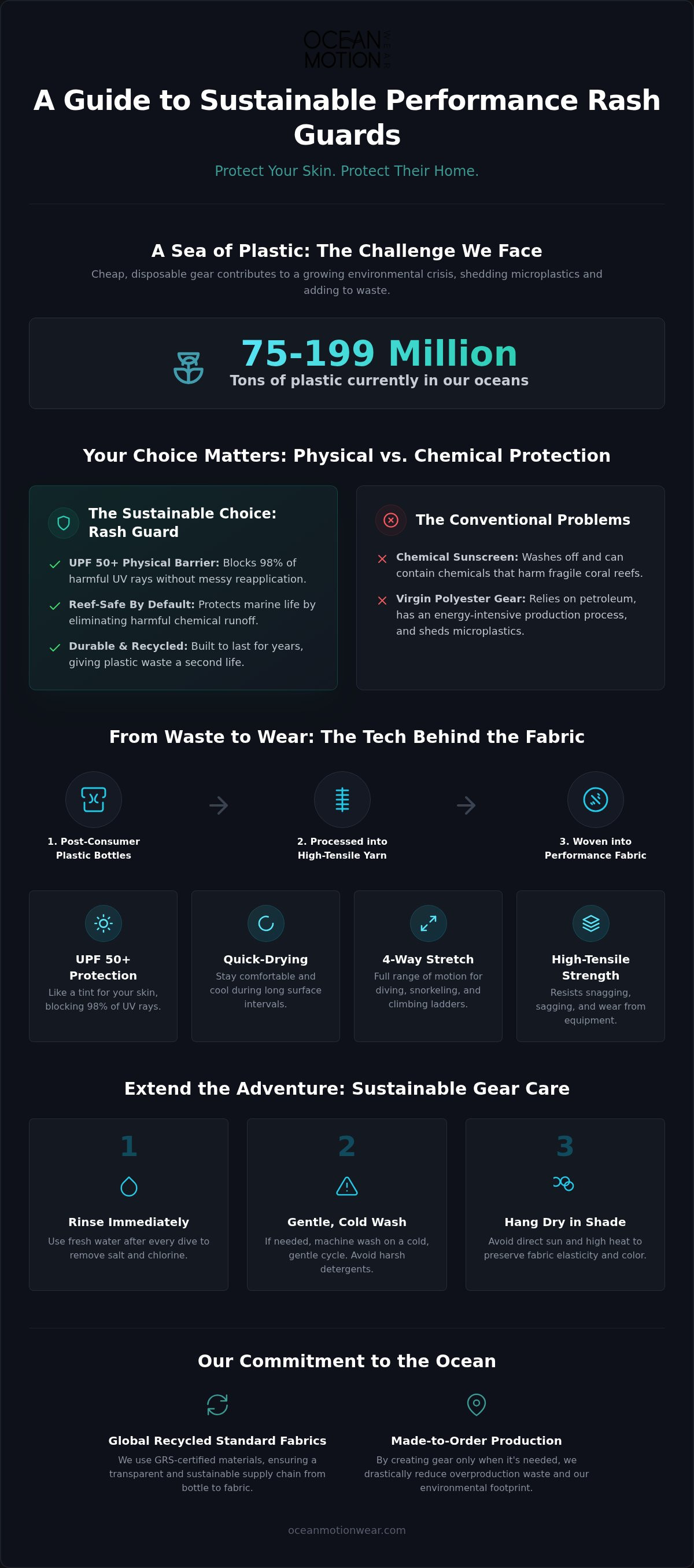
Sustainable Care: How to Make Your Performance Gear Last Seasons
The most sustainable gear is the gear you don't have to replace. We believe that true environmental stewardship involves taking meticulous care of what you already own. When you invest in a sustainable whale shark rash guard, you're buying a piece of technical equipment. Treating it with respect ensures it performs for hundreds of dives rather than just one season.
I've seen too many divers toss their wet gear into a mesh bag and forget about it until the next morning. That's a mistake that leads to fabric fatigue and unwanted odors. Proper care is simple but requires consistency. It's the difference between a garment that stays vibrant and one that loses its elasticity and protective properties.
The Post-Dive Rinse Routine
Salt crystals are the enemy of performance fabrics. Once the water evaporates, those tiny crystals act like sandpaper against the recycled fibers. They grate against the spandex every time the fabric stretches, eventually causing it to thin and fail. If your gear feels like salt-stiff fabric when it dries, you haven't rinsed it well enough.
We recommend a five-minute soak in cool, fresh water immediately after every session. Don't just spray it down with a hose; let it sit so the fresh water can penetrate the weave and dissolve the trapped salt. If you're diving at a spot like the reef at Tunnels on Kauai’s North Shore, use the beach showers or a dedicated rinse bucket as soon as you exit the water. This small habit preserves the integrity of your sustainable whale shark rash guard for years.
Cleaning and Drying
Avoid harsh detergents or bleach at all costs. These chemicals break down the elastic bonds in the spandex and can damage the UPF-rated weave. We suggest using a very mild, eco-friendly soap only when necessary. Most of the time, a thorough fresh water soak is all you really need to keep things clean and functional.
Always air dry your gear in the shade. It's tempting to leave it on the boat deck in the sun, but intense UV rays lead to fabric fatigue and color fading. Hang it inside out or lay it flat in a well-ventilated area away from direct sunlight. This keeps the print looking sharp and ensures the fabric stays supple for your next adventure.
Storage Tips for Off-Season
Before you pack your gear away, ensure it's completely dry. Storing even slightly damp fabric is an invitation for mildew, which is almost impossible to remove without damaging the material. I've lost a favorite rash guard to a "quick pack" before a flight home from Kona, and the mildew smell never truly left the fibers.
Avoid hanging your gear by thin straps or the neck hole for long periods. Over time, the weight of the garment will stretch the shoulder seams and ruin that second-skin fit we worked so hard to design. Lay it flat or fold it loosely in a cool, dry place. If you're ready to add more durable, high-performance pieces to your kit, explore our collection of ocean-inspired gear built to withstand the elements.
Expressing Your Passion: The Whale Shark Collection at Ocean Motion Wear
We designed our Whale Shark collection for those who find peace in the blue. It's for the divers who count down the days until their next descent and the snorkelers who feel most alive in the surf. Every sustainable whale shark rash guard we produce is a reflection of that deep, quiet connection to the water. There is nothing quite like the taste of 6am boat coffee while you're suiting up for a blue water encounter, knowing your gear is as ready as you are.
We take a firm stance against the waste of mass production. Our made-to-order process ensures we only create what is actually needed by the community. This eliminates the "dead stock" that usually ends up in landfills or polluting our coastlines. It might take a few extra days to reach your door, but that's a trade-off we're proud to make for the health of our oceans.
We use premium recycled fabrics that feel soft against the skin even after hours of exposure. I've worn enough scratchy, low-grade gear to know that comfort isn't a luxury; it's a requirement for a professional dive. Every piece is inspired by real encounters with these gentle giants, capturing the rhythm and movement of the sea in every print. Whether you're dodging spray during winter swells or preparing for a long day in 78 degree water, we've got you covered.
Beyond the Rash Guard: Coordinating Your Gear
Full-body protection is often necessary when the jellies are thick or the sun is punishing. You can pair your sustainable whale shark rash guard with our Whale Shark collection leggings for a complete, streamlined kit. Add a dive headband to keep your hair secure during your surface interval or while bracing against the wind. If you want to mix up your look, check out our Abalone collection for more ocean-inspired patterns that celebrate marine life.
Join the Ocean Motion Community
We are a small business dedicated to quality craftsmanship and real authenticity. We don't have a massive corporate team; we have a small group of ocean enthusiasts who care about every stitch and seam. If you're looking to gear up a larger group or a professional team, explore our wholesale options for dive shops and organizations. You can also read our guide on what to wear kayaking for more specialized water sport tips to keep you safe and comfortable.
Gear Up for Your Next Blue Adventure
Selecting a sustainable whale shark rash guard is a powerful choice for both your skin and the sea. It's about finding that rare balance between professional-grade performance and a deep respect for marine life. We use recycled performance fabrics and UPF 50+ sun protection because we know you need gear that stands up to the elements without leaving a footprint behind.
Our made-to-order production in Southern California ensures we only create what's actually needed. This intentional approach prevents overproduction and keeps our focus on quality craftsmanship. Whether you're navigating a winter swell or enjoying a long surface interval, you deserve gear that empowers your adventurous spirit and keeps you protected.
Take the lessons of proper care and technical fit into your next dive. Explore the Whale Shark Collection to find a piece that matches your passion for the blue. We're honored to be your partner in every underwater encounter. We'll see you in the water.
Frequently Asked Questions
Is a sustainable rash guard as durable as a traditional one?
Our sustainable whale shark rash guard is just as durable as any traditional option. We use high-performance recycled polyester that's engineered for strength and flexibility. It resists snagging on dive gear and maintains its shape over time. In my experience, these fabrics hold up better against the harsh salt and sun than many cheaper, virgin plastic alternatives. It's built to last for seasons of active use rather than just one trip.
Can I wear my whale shark rash guard under a wetsuit?
You can definitely wear your rash guard under a wetsuit. In fact, we recommend it. It acts as a smooth base layer that prevents skin irritation and makes sliding into a thick 5mm or 7mm suit much easier. The flatlock seams we use ensure there's no painful bunching or rubbing during your dive, even when you're moving your arms and shoulders constantly. It's a simple way to increase your comfort level.
Does UPF 50+ protection wash out of the fabric over time?
The UPF 50+ protection in our gear is permanent and won't wash out over time. Unlike some brands that use chemical coatings, our sun protection comes from the tight weave and specific weight of the fabric itself. It acts like a physical shield, blocking 98 percent of UV rays. As long as the fabric remains intact and isn't stretched thin from years of heavy use, your protection remains as effective as the first day.
What is the best way to wash my recycled performance gear?
The best way to clean your gear is a thorough soak in fresh water immediately after your dive. This dissolves salt crystals that can act like sandpaper on the fibers. Avoid the dryer at all costs. Air dry your rash guard in the shade to prevent UV damage and fabric fatigue. Using a mild, eco-friendly soap occasionally is fine, but a five-minute soak in cool fresh water is usually enough to keep the material supple.
How do I know if my rash guard fits correctly for diving?
A proper diving fit should feel like a firm, supportive second skin. It needs to be snug enough to stay in place under your BCD without bunching up. However, it shouldn't restrict your breathing or range of motion. If you see deep red marks on your skin after a dive, it's too tight. If it's floating away from your body in the water, it's too loose. Look for that perfect compression feel.
Why is recycled polyester better for the ocean than new nylon?
Recycled polyester is superior because it gives a second life to existing plastic waste. Standard nylon production is incredibly energy-intensive and relies on extracting new petroleum. By choosing a sustainable whale shark rash guard made from recycled bottles, you're helping reduce the 8 to 11 million metric tons of plastic entering our oceans annually. It's a circular approach that protects the habitats we love to explore while maintaining professional-grade performance.
Do I still need sunscreen if I am wearing a long sleeve rash guard?
You only need sunscreen on the skin that isn't covered by the fabric. The UPF 50+ rating provides a reliable physical barrier for your torso and arms, replacing the need for messy lotions in those areas. This is great for the reef, as it keeps harmful chemicals out of the water. Just don't forget to protect your face, neck, and the backs of your hands. It's about being smart and minimizing your impact.
What makes Ocean Motion Wear different from other swim brands?
We're a small, independent business founded by a diver who understands the specific needs of the water. Unlike mass-market brands, we use a made-to-order model to eliminate overproduction and waste. We prioritize recycled materials and technical features like flatlock seams and high necklines. Our designs are inspired by real underwater encounters, making our gear as authentic as the people who wear it. We focus on quality craftsmanship and a deep respect for the sea.
