


What if the whale shark artwork you love also has to earn its place in your swim bag? A Whale shark print performance rashguard should do more than look good on shore. It should feel comfortable for swimming or snorkeling, offer useful coverage from the sun, and move with you in the water.
A bold print can look great, but it doesn’t tell you whether a rashguard will suit your water day. I’d look at fit, coverage, fabric, and care instructions first. UPF 50+ measures how well fabric protects covered skin from UVA and UVB rays. It’s one part of a sun-protection routine, alongside sunscreen on exposed skin and other sensible precautions.
This guide will help you compare the details that matter for diving, swimming, and time at the beach. We’ll look at movement and comfort, what UPF protection means, and how whale shark artwork can bring a personal touch to practical ocean-ready apparel.
Key Takeaways
- Start with your main activity, then choose coverage and a fit that allow comfortable movement in the water.
- Evaluate a Whale shark print performance rashguard by the same practical details as a plain one: fit, UPF protection, and intended use.
- Review fabric details and care instructions so you know how to look after your rashguard after water days.
- Match your priorities to your activity. A snorkeler, diver, swimmer, and beach traveler may want different coverage and comfort features.
- Once the practical details work for you, choose the whale shark artwork that feels personal.
What to Look for in a Whale Shark Print Performance Rashguard
I’d choose a rashguard for what you’ll do in the water first, then for the marine-life artwork you’ll be glad to wear. A performance rashguard is a lightweight layer made for water activities and skin coverage. The Rash guard overview describes its use in activities including swimming and diving. Ocean Motion Wear performance rash guards have built-in UPF 50+ protection, a useful feature to consider alongside fit, comfort, and design.
To keep the choice practical, I use a short checklist:
- Activity: What will you be doing in and around the water?
- Coverage: Which areas of skin do you want the garment to cover?
- Fit: Can you move without the fabric feeling restrictive or distracting?
- Fabric details: What does the item listing say about material and care?
- Design: Does the artwork feel personal to you?
- Care: Can you follow the garment’s instructions after saltwater or pool use?
Which water activities call for a performance rashguard?
Movement and coverage matter in different ways depending on the activity. A snorkeler may want coverage for time at the surface, while a swimmer may focus on easy arm movement through repeated strokes. If you dive, consider how the rashguard fits with your activity-specific gear. For surfing, freedom of movement matters; for beach use, a light layer can be convenient between swims.
A rashguard complements your setup. It doesn’t replace a wetsuit or other equipment your activity requires. Choose the layer for comfort and coverage, and keep your other gear and sun-protection routine in mind.
What does UPF 50+ tell you about a rashguard?
UPF, or Ultraviolet Protection Factor, rates how well fabric helps shield covered skin from ultraviolet radiation. Think of it as window tint for the areas beneath the garment. Ocean Motion Wear performance rash guards have built-in UPF 50+ protection. That protection applies to covered skin, so remember the areas the rashguard leaves exposed.
For a full water day, consider sunscreen on exposed skin and other sun-protection measures suited to your plans. Once you’ve settled on activity and coverage, compare the item’s fit, fabric information, and care instructions. Then choose the whale shark artwork that feels right. Explore the whale shark print collection for ocean-inspired apparel.
How Fit, Coverage, and Fabric Affect Rashguard Performance
I’d judge a Whale shark print performance rashguard by how comfortably it moves with you, not by appearance alone. Fit can affect reaching, stroking, and turning. Coverage describes which areas the garment covers, but it doesn’t replace gear required for your activity or a wetsuit when one is needed.
Ocean Motion Wear rash guards use quick-drying performance fabrics, and many items are made with recycled materials. When comparing a particular rashguard, check its listing for fabric and care details so you know how to look after it.
How should a rashguard fit for swimming or diving?
Compare the item’s size and fit information with the feel you prefer. A closer fit may feel more secure as you swim or snorkel, while a little more room may suit a relaxed beach day. Aim for comfortable movement, without distracting pulling or looseness. If you plan to wear the rashguard with other activity-specific gear, consider how the layers will sit together.
Coverage is practical, not absolute. A long-sleeved top covers more of your arms than a short-sleeved one, for example, but exposed skin still needs consideration. The CDC includes protective clothing in its sun-safety guidance. Think about the conditions and your full sun-protection routine, not just the garment.
Which fabric details matter for time in the water?
Quick-drying fabric is useful when you move between swimming and time out of the water. Comfort matters too, especially during repeated movement. Check the rashguard listing for fabric information and care instructions. A material that sounds appealing still needs to suit how you’ll wear and look after the garment.
Many Ocean Motion Wear items use recycled materials. For a specific rashguard, check its product details for fabric composition and care instructions. Use this table to focus your comparison:
| Priority | What to inspect |
|---|---|
| Movement | Listed fit and size information, considered against your preferred feel. |
| Coverage | Garment cut and the areas you want covered. |
| Fabric and care | Item-specific composition, care instructions, and any stated quick-dry attributes. |
Whale Shark Print Rashguard vs. a Plain Rashguard: What Should Decide?
My rule is simple: choose function first, then the design you’ll enjoy wearing. A whale shark print can make a rashguard feel more personal, but it can’t tell you how the garment fits, what its fabric is like, or what protection it offers. Compare those details before letting either a bold print or a plain finish tip your decision.
That matters in the water, where a rashguard’s role depends on your activity and what else you’re wearing. A diver-focused overview of the functions of a rashguard offers useful context, but the garment’s listed details should guide your choice. Print and colour are style decisions, not proof of performance.
Does a whale shark print change how a rashguard performs?
No. Artwork alone doesn’t establish fit, fabric properties, or protective performance. Judge those from the product details, whether you’re considering a printed rashguard or a plain one. Ocean Motion Wear’s whale shark print collection is a design-led option for ocean lovers, but the print shouldn’t replace a close look at the garment’s stated features.
When does a marine-life print make the better choice?
If whale sharks mean something to you, a marine-life print can make a practical layer feel more like your own. I’m drawn to gear that carries a connection to the ocean, as long as the useful details come first. A plain rashguard may suit you better if you prefer a quieter look or want simple outfit coordination. Neither choice is inherently more functional.
Use the same checklist for both: intended activity, coverage, fit, stated UPF information, fabric details, and care instructions. That keeps the artwork in its proper place: important to personal style, but separate from the garment’s specifications.
The comparison below helps keep those decisions distinct. Confirm the practical details for your water day, then choose the look you’ll be glad to wear.
| Priority | Printed rashguard | Plain rashguard | What to inspect |
|---|---|---|---|
| Activity | Artwork expresses a design preference. | Solid colour expresses a design preference. | Does the listed garment suit your intended use? |
| Sun coverage | The print doesn’t establish a rating. | A plain finish doesn’t establish one either. | Look for stated UPF information and consider exposed skin. |
| Fit | The artwork doesn’t indicate fit. | Colour doesn’t indicate fit. | Review the item’s fit and size guidance. |
| Artwork preference | Choose marine-life art you connect with. | Choose a simple look or easier coordination. | Which style feels right for you? |
| Product details | Check the individual listing. | Check the individual listing. | Review stated fabric, features, and care instructions. |
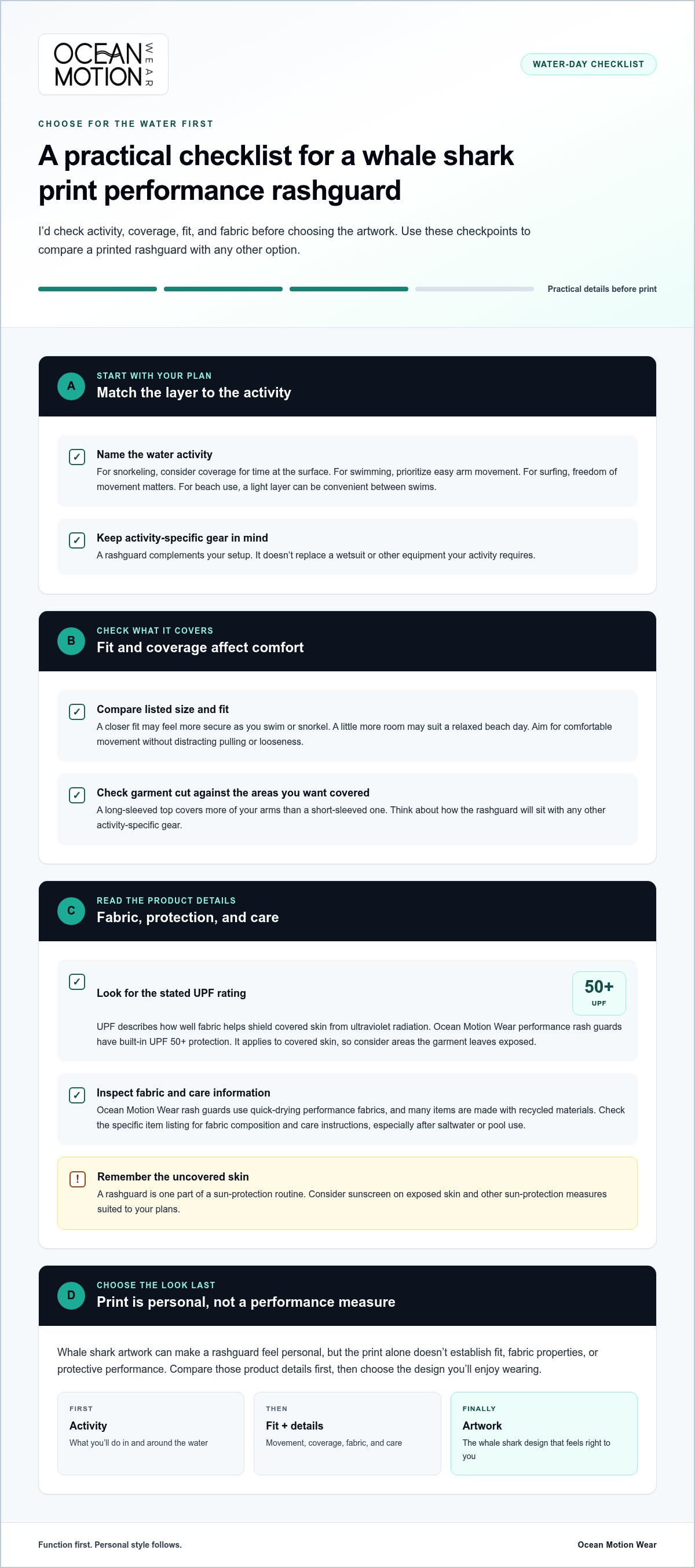
How to Choose a Whale Shark Rashguard for Your Next Water Day
Start with the water day you’re planning, not the print. A Whale shark print performance rashguard should suit the activity, provide the coverage you want, and feel comfortable in motion. Once those needs are clear, check the item’s details. Then choose artwork that feels like you.
- Name the activity. Think about how much you’ll swim, move, or layer.
- Choose your coverage. Decide which areas you want the garment to cover.
- Review fit and size information. Compare the item’s guidance with your preferred feel.
- Read fabric and care details. Check the listing for the garment’s specifications.
- Pick the artwork. Once the practical choices fit, settle on the whale shark design you’ll enjoy wearing.
How can activity help narrow the choice?
For snorkeling, you may prioritize coverage during time at the surface. A swimmer may focus more on unrestricted arm movement, while a diver may consider how the rashguard fits with activity-specific layers and gear. For a beach traveler moving between shore and water, comfort in both settings may matter most. Conditions and personal preferences vary, so use these as decision prompts, not guarantees about performance.
What should you check before choosing a size?
Use the size information for the specific item instead of relying on generic assumptions about rashguards. Consider whether you prefer a closer fit for active movement or a little more room, and how you plan to layer it. Review the care instructions too, since they tell you how to look after the garment. For more on fabric and fit considerations, use a sustainable quick-dry rashguard guide.
Before choosing, confirm the details that matter to your plans: size guidance, coverage, UPF protection, fabric description, and care instructions. Ocean Motion Wear performance rash guards have built-in UPF 50+ protection. A rashguard is one part of your setup, not a replacement for activity-appropriate gear or your broader sun-protection routine.
Then make the design choice. If whale shark artwork reflects your connection to marine life, it can make a practical water layer feel more personal. If you’re ready to compare ocean-inspired apparel, explore the Ocean Motion Wear collection.
Explore Ocean Motion Wear’s Whale Shark Print Rashguard Options
By now, the decision should feel clearer: start with what you’ll be doing in the water, then consider fit, coverage, and the garment’s UPF protection. Choose the artwork last. That order helps make sure a Whale shark print performance rashguard suits your plans as well as your connection to ocean life.
Ocean Motion Wear brings marine-life artwork and water-ready apparel together. Its designs are inspired by real diving experiences and created by women who understand ocean adventures. The goal is apparel that helps you feel comfortable and confident while moving through your day, from time in the water to the moments between swims. Let the item’s information guide your decisions about fit, fabric, and care.
What makes Ocean Motion Wear’s approach distinct?
Ocean Motion Wear performance rash guards have built-in UPF 50+ protection, and the brand offers inclusive sizing. These are helpful starting points. Check each item’s size guidance, fabric information, and care instructions to find the option that suits your activity and preferred feel.
Ocean Motion Wear uses made-to-order production, and many items use recycled materials. The brand’s approach helps limit overproduction, while recycled materials are part of its broader commitment to thoughtful design. Check the product details for information about the specific item you’re considering.
Where can readers explore the Whale Shark collection?
Browse the Whale Shark collection to see Ocean Motion Wear’s whale shark artwork on ocean-inspired apparel. As you explore, keep your shortlist practical: intended use, comfortable fit, UPF protection, fabric details, and care. Then let the artwork make the final choice feel like yours.
If whale sharks are the marine life you’re drawn to, choose a design that reflects that interest and feels at home in your water-day wardrobe. Explore the collection, compare the details for the item you’re considering, and choose with your next swim, snorkel, or dive in mind.
Choose Your Rashguard for the Water Ahead
The right Whale shark print performance rashguard should suit your activity before it wins you over with its artwork. Start with the fit and coverage you want, then review the garment’s fabric and care details. Ocean Motion Wear performance rash guards have built-in UPF 50+ protection, a useful part of a broader sun-protection routine.
Choose ocean-inspired designs created with divers and ocean lovers in mind, and let the whale shark artwork reflect what draws you to the sea. Ocean Motion Wear uses made-to-order production, and many items use recycled materials. Review the product details as you choose.
Your next swim, snorkel, or dive is a good reason to find a layer that feels right for both the water and you. Explore the collection and find ocean-inspired apparel for the adventures ahead.
Frequently Asked Questions
Is a whale shark print performance rashguard suitable for scuba diving?
Yes, a whale shark print performance rashguard can be a comfortable layer for scuba diving when its fit and coverage suit your plans. It can be worn alongside activity-appropriate gear, but it isn’t a wetsuit or a substitute for equipment your dive requires. Check the garment’s sizing, fabric, and care information, then consider how it will feel under any other layers you plan to wear.
Can I wear a performance rashguard for snorkeling and swimming?
Yes. A performance rashguard can work for snorkeling and swimming when it allows you to move comfortably and provides the coverage you want. Snorkeling may involve extended time at the surface, while swimming calls for unrestricted strokes and reaches. Choose based on your activity and preferred fit. For either, remember that fabric covers only the skin beneath the garment, so consider sun protection for exposed areas too.
What does UPF 50+ mean in a rashguard?
UPF stands for Ultraviolet Protection Factor. It rates how well fabric helps protect covered skin from ultraviolet radiation, much like window tint limits sunlight through glass. The protection applies to the garment’s covered areas, not exposed skin, so include sunscreen and other appropriate measures in your sun-protection routine.
How should a rashguard fit for diving or swimming?
A rashguard should let you move freely without feeling distracting or restrictive. Compare the product’s size and fit information with your preferred feel and intended layering. A closer fit may feel more secure during active movement, while a more relaxed feel may suit your preferences better. Pay attention to how the garment sits when you reach, stretch, or raise your arms, not just how it looks at rest.
Does a printed rashguard perform differently from a plain one?
The print alone doesn’t establish how a rashguard fits, what its fabric is like, or what protection it offers. Evaluate printed and plain options by the same details: intended use, fit, coverage, UPF protection, fabric information, and care instructions. Choose marine-life artwork if it feels personal to you, or a plain design if you prefer a simpler look. Let the item’s specifications guide the practical decision.
How do I choose a rashguard for sun protection and water activities?
Start by naming your activity, then decide how much coverage you want and what fit will allow comfortable movement. Check the specific item’s UPF protection, fabric details, sizing, and care instructions. A rashguard can add coverage, but it doesn’t replace activity-appropriate gear or protect skin it leaves exposed. Pair it with a broader sun-protection routine suited to your time in and around the water.
How should I care for a quick-drying rashguard after saltwater use?
After saltwater use, rinse the rashguard with fresh water and follow the care instructions for that garment. Salt and sand left on fabric can make it feel less comfortable, so rinsing soon after your swim is a simple part of post-water care. Check the label before washing or drying it, and don’t assume every fabric or print should be treated the same way.
