


Sitting still at thirty feet while waiting for mantas to glide past is a recipe for the shivers. Most divers assume tropical water means constant warmth, but I've spent enough time on night dives to know that figuring out what to wear diving with manta rays is the difference between a magical encounter and a teeth-chattering ordeal. It isn't just about the wetsuit. It's about a second-skin strategy that balances thermal stability with the agility you need to stay perfectly still. We've all felt that frustrating distraction of a mask leak caused by stray hair or the sting of a sunburn earned during the long boat ride out.
You deserve to feel weightless and focused when those massive wings shadow the lights. I'll help you master the art of layering and streamlining with this expert-led guide to choosing the right performance gear for 2026. We'll explore how to achieve total thermal comfort throughout the dive and secure your hair for a crystal-clear view. I'll also share my favorite sustainable choices that match the ocean aesthetic without the bulk of traditional gear. Let's ensure you're prepared for a seamless, high-performance experience in the deep.
Key Takeaways
- Understand why stationary diving in 78 degree water requires a specific thermal strategy to prevent the shivers during long encounters.
- Shield your skin during the boat ride with rash guards that provide UPF 50+ protection, acting like a car's window tint for your skin.
- Learn exactly what to wear diving with manta rays to eliminate frustrating mask leaks and hair tangles using specialized dive headbands.
- Adopt the 2026 trend of sustainable swimwear that uses recycled materials and ocean-inspired prints to honor the environment you explore.
- Use our professional checklist to test your gear layers before heading to the marina for a perfectly hydrodynamic and comfortable experience.
The Unique Thermal Challenges of Manta Ray Encounters
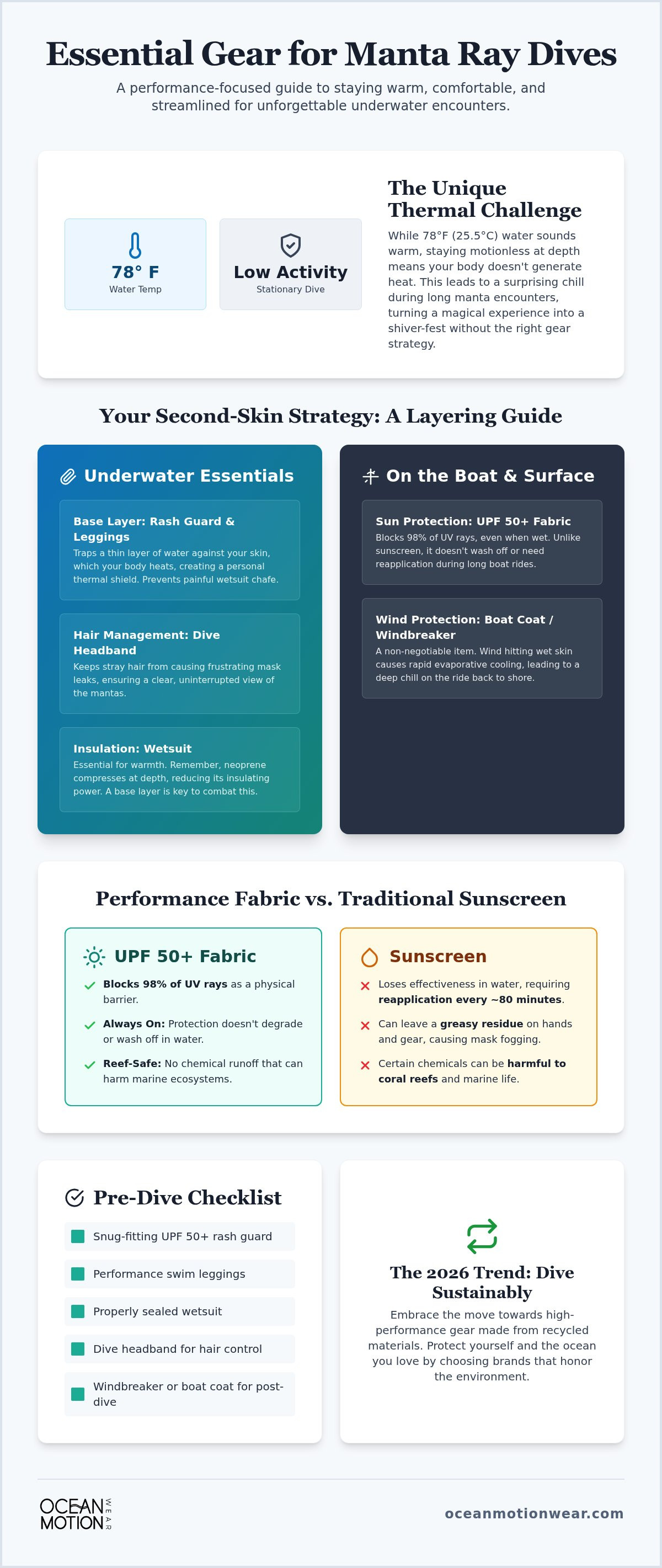
I have spent countless hours in 78 degree water waiting for mantas, and the chill is real. While that temperature sounds like a bathtub on paper, the reality of a manta encounter is very different from a standard reef dive. Most of your time is spent kneeling on the sandy bottom, staying perfectly still to avoid startling the animals. This lack of physical activity means your body isn't generating the metabolic heat it normally would during a drift dive.
Divers lose heat significantly faster than snorkelers. Those on the surface are often kicking to stay in position, which keeps their blood pumping. Divers are also deeper, where the water is denser and more thermally conductive. Understanding Manta Ray Biology helps you appreciate why they frequent these specific areas, but you must prepare for the cool currents they follow. You need a "second-skin" strategy to stay focused on the grace of the rays rather than your shivering core.
A high-performance base layer is your best defense. By wearing a snug rash guard or swim leggings, you trap a thin layer of water directly against your skin. Your body temperature warms this trapped water, creating a personal thermal envelope. It is a simple way to boost your comfort without the need for thicker, more buoyant neoprene. Understanding what to wear diving with manta rays involves planning for these subtle but constant thermal shifts.
Why Depth Changes Your Gear Needs
Pressure changes the physics of your insulation. As you descend, the ambient pressure causes the tiny air bubbles in neoprene to compress. This reduces the material's thickness and its ability to trap heat. A wetsuit that feels cozy at the surface provides much less protection at thirty feet. This compression is a primary factor when deciding what to wear diving with manta rays.
I always wear a performance rash guard under my wetsuit, especially if I'm using rental gear. Rental suits often have stretched-out seals at the neck and wrists that allow cold water to "flush" through the suit. A tight-fitting base layer blocks this movement of water. Additionally, using quick-drying fabrics ensures you don't stay damp and cold once you're back on the boat.
The Night Dive Environment
Tropical destinations offer a unique atmosphere for these encounters. The evening water is usually warm, but the post-sunset winds can be surprisingly sharp. There is a specific rhythm to these trips. It isn't like the calm 6am boat coffee sessions of a morning dive. I remember those early starts; the coffee is always slightly burnt and metallic, tasting of acidic grounds and the steam of a plastic thermos.
The late-night manta boat is high-energy, but the wind chill on the ride back to the marina can be brutal. When wind hits wet skin, evaporative cooling takes over. Even in warm climates, this can lead to a deep, bone-chilling cold that ruins the post-dive high. I consider a windbreaker or a dedicated boat coat to be a non-negotiable part of the kit. Protecting your core temperature after the dive is just as important as your gear choices under the surface.
Performance Layers: Why UPF 50+ Fabric Beats Traditional Gear
UPF 50+ is the gold standard for ocean-based sun protection. Think of it as a car window tint for your skin. It provides a constant, physical barrier that doesn't require reapplication every 80 minutes. When you're deciding what to wear diving with manta rays, choosing high-performance synthetic blends over standard swimwear is a tactical move. Standard bikinis often shift under the weight of a BCD. Performance fabrics stay locked in place.
We reach for these specialized layers because they solve the problem of wetsuit chafe. Saltwater and neoprene can be a punishing combination for your skin. A well-fitted rash guard acts as a protective shield. It prevents the painful friction that leads to raw spots under your arms or on your neck. It's about readiness and maintaining comfort so you can focus entirely on the encounter.
The Science of UPF 50+ Protection
A UPF 50+ rating means the fabric blocks 98 percent of UVA and UVB rays. This protection remains effective even when the material is soaking wet. On long boat days, this is far superior to sunscreen alone. You don't have to worry about greasy hands making your mask fog or chemicals leaching into the water. If you've ever wondered why divers wear rash guards, it's this combination of skin safety and gear management.
Swim Leggings vs. Traditional Wetsuits
Thick wetsuits are essential for warmth at depth, but they can feel like a straightjacket. Swim leggings offer a level of freedom that neoprene simply can't match. They provide a streamlined profile that reduces drag and protects your legs from minor gear abrasion or the occasional jellyfish sting. You can explore our full range of performance ocean apparel to find your perfect layering system.
I often pair these with my primary thermal gear to get the best of both worlds. Using pieces from the Abalone collection allows you to maintain a high-performance ocean aesthetic while staying protected. This mindful approach to gear also aligns with broader Giant Manta Ray Conservation efforts. Choosing durable, sustainable apparel reduces your overall environmental footprint while you explore the deep.
Streamlining for the Giant: Hair and Accessory Management
I learned the hard way that a single stray hair can ruin a manta dive. I was kneeling on the bottom, looking up at the lights, when a slow trickle started at my temple. Because you have to stay still to follow the Manta Tour Participant Guidelines, constantly clearing your mask is a major distraction. It pulls your focus away from the grace of the animals and toward your own discomfort. Deciding what to wear diving with manta rays includes planning for these small mechanical failures before they happen.
Mask leaks usually lead to the frustration of mask squeeze. When hair gets caught in the silicone skirt, it breaks the vacuum seal. You find yourself over-tightening the strap to compensate, which just leads to a headache and deep red rings around your eyes. This is why hair management is a critical part of your overall gear strategy. A secure seal is the foundation of a good dive, allowing you to breathe easy and remain perfectly still.
Traditional headbands are often the first thing people reach for, but they usually fail the moment you hit the water. I've watched countless fabric bands slip off during a giant stride entry, floating away into the dark Pacific. A dedicated waterproof headband is a functional necessity. It keeps your field of vision clear and your mask seal intact throughout the entire encounter. It acts as a protective barrier between your hair and the mask skirt.
The Anatomy of a Non-Slip Headband
Performance fabrics are the secret to a headband that actually stays put. We use a specific blend that creates enough friction against both neoprene and skin to remain secure without being restrictive. Natasha, the founder of Ocean Motion Wear, created our dive headband after identifying this exact gap in the market. She was tired of hair interfering with her own dives and knew other women faced the same frustration. It is a tool designed by a diver to solve a diver's problem.
There is a distinct sense of relief when you feel that secure mask seal. You can tilt your head back to watch a ray barrel-roll right above you without worrying about an incoming flood. It allows you to focus on the majesty of the animal rather than the logistics of your gear. High-performance design should always feel invisible once you're in the water, supporting your movements without demanding attention.
Essential Accessories for Night Dives
Visibility is everything during a night encounter. I always recommend a low-volume mask because it sits closer to your face, providing a wider field of view in the dark. It also requires less air to clear if a leak does happen. Pairing a low-volume mask with a streamlined headband is the ultimate setup for these conditions. It minimizes the volume of air you need to manage and maximizes your visual clarity.
In 78 degree water, a full neoprene hood often feels too bulky and restrictive. Many divers prefer performance headbands for water sports because they offer the hair management of a hood without the added buoyancy. It's the perfect middle ground for staying streamlined while maintaining total comfort. This setup ensures you are ready for the unique demands of a night dive, keeping you agile and focused on the giants gliding through the lights.
The 2026 Trend: Ocean-Inspired Sustainable Performance Wear
I remember when the only option for dive gear was "tactical black." Every diver on the boat looked like they were part of a stealth mission. Today, the shift toward apparel that mimics marine life has changed the energy of the dive deck. It's no longer just about utility. It's about an emotional connection to the creatures we share the water with.
When you're choosing what to wear diving with manta rays, you're making a statement about your values. Wearing a Whale Shark print creates a beautiful visual harmony underwater. It feels right to wear patterns that reflect the ocean's own designs while you're floating alongside these giants. This aesthetic choice bridges the gap between high-level performance and environmental mindfulness.
Why Marine Mimicry is Trending
Divers are using prints to express their passion for specific species. Whether it's the intricate patterns of our Abalone collection or iconic shark motifs, these designs aren't just for show. In underwater photography, ocean-inspired artwork adds a layer of storytelling to every shot. It transforms a standard gear photo into a piece of art that celebrates marine biodiversity.
There's a practical side to these bold patterns too. Dive guides often use unique prints to identify individuals in a group. In the low light of a manta night dive, a distinctive pattern on a rash guard or swim leggings makes you much easier to spot. It's a simple way to increase safety and coordination during complex encounters without sacrificing style.
Sustainability in the Dive Industry
We can't talk about the ocean without talking about how we protect it. Recycled swimwear fabric is a major win for reef health. By using materials like regenerated nylon, we're helping to pull ghost nets and plastic waste out of the water. It's a circular approach that ensures our gear doesn't contribute to the problems we see on the reef. This is the new standard for 2026.
Our commitment to made-to-order production is another key part of the modern gear landscape. Traditional manufacturing often leads to massive textile waste from overstock that ends up in landfills. We only create what's actually needed. This reduces our footprint and ensures every piece is crafted with purpose and craftsmanship.
There's a deep satisfaction in wearing gear that aligns with your conservation values. It makes you feel protective and empowered as an ocean advocate. You can shop our full collection of sustainable performance wear to find gear that works as hard as you do for the planet. Every choice we make about our gear ripple out into the environments we love to explore.
Preparing for the Dive: Your Manta-Ready Checklist
Planning your outfit for a night dive starts long before you reach the marina. I always recommend a "dry run" at the hotel pool. Put on your full layering system to check for any bunching or restrictive seams. It's much better to adjust your fit in a calm pool than on a rocking boat deck in the dark. This preparation ensures your focus remains on the mantas rather than your gear.
When you know exactly what to wear diving with manta rays, you eliminate the stress of equipment distractions. Follow this logical flow to get ready for the encounter. Each layer serves a specific purpose in maintaining your thermal comfort and streamlining your profile in the water.
- Step 1: Choose your base layer. Opt for a swim sports bra or a snug one-piece that won't shift under your wetsuit. Support and stability are the priorities here.
- Step 2: Layer your performance fabrics. Pull on your UPF 50+ rash guard and swim leggings. These provide that essential "second-skin" thermal layer and protect against wetsuit chafe during long periods of stillness.
- Step 3: Secure your hair. Slide on your performance headband before your mask goes on. This keeps stray strands away from the silicone skirt for a perfect, leak-free seal.
Post-Dive Care for Longevity
Saltwater is a performance fabric's greatest enemy. If you've ever felt the scratch of salt-stiff fabric, you know why a thorough fresh water rinse is critical. Rinse your gear immediately after the dive to remove salt crystals that can degrade the elasticity of the material. This simple step preserves the technical features of your apparel for years of adventure.
Drying gear in humid island environments requires a bit of strategy. Avoid hanging your gear in direct sunlight; the UV rays can fade those vibrant marine prints over time. Instead, find a shaded spot with good airflow to prevent any mildew. If you are a professional looking to bring these solutions to your own clients, check out our wholesale opportunities for dive shops.
You are ready for one of the most incredible experiences the ocean has to offer. Trust your gear. Trust your preparation. When that first giant wing glides through the light, you'll be glad you took the time to get every detail right. Dive in and stay present for every moment of the encounter.
Step Into the Deep with Confidence
A manta ray encounter is a transformative experience. It deserves your undivided attention. By mastering your thermal layering and securing your hair against mask leaks, you remove the distractions that clutter a dive. We focus on the harmony between technical performance and environmental respect. Choosing gear made from sustainable, recycled materials is a tangible way to honor the giants we admire. It's about readiness and mindfulness in equal measure.
Knowing what to wear diving with manta rays ensures you stay warm in 78 degree water and protected on the boat ride home. Our pieces are designed by divers for divers. They offer UPF 50+ certified protection and a streamlined fit that feels like a second skin. You can trust your equipment to work as hard as you do. We've tested these designs in the most demanding conditions to ensure your comfort is never in question.
Explore our Whale Shark and Abalone collections for your next adventure and prepare for a seamless encounter. The Pacific is calling. We'll see you in the water.
Frequently Asked Questions
Do I really need a wetsuit for a manta ray night dive?
While water temperatures often hover around 78 degrees, a wetsuit is highly recommended because you remain stationary on the sandy bottom. Without movement, your body doesn't generate heat; the chill sets in quickly. I always layer a performance rash guard underneath to trap a thin layer of warm water against my skin. It provides that extra thermal boost and prevents the wetsuit from rubbing uncomfortably during the long encounter.
What is the best way to keep my hair out of my mask while diving?
A dedicated waterproof headband is the most effective solution for hair management. Our founder, Natasha, designed the Ocean Motion Wear dive headband specifically to solve the problem of stray hairs breaking mask seals. Standard fabric bands often slip off during entry, but a performance-grade headband stays secure against your mask strap. It ensures a clear field of vision so you can focus entirely on the barrel-rolling mantas above you.
Can I wear normal leggings for scuba diving with mantas?
You should avoid standard gym leggings because they aren't designed for the harsh effects of salt water and pressure. Performance swim leggings are made from specialized fabrics that provide UPF 50+ protection and maintain their shape when wet. They also offer the necessary durability to handle gear abrasion from your BCD. Using purpose-built ocean apparel ensures your gear doesn't become heavy or transparent while you're underwater.
Is UPF 50+ clothing better than reef-safe sunscreen?
UPF 50+ clothing is often the superior choice because it provides a constant physical barrier that blocks 98 percent of UV rays. Sunscreen can wash off in the water or be applied unevenly, leaving you vulnerable during the boat ride. When deciding what to wear diving with manta rays, a rash guard offers reliable protection without the risk of chemicals leaching into the reef. It's a more sustainable and effective way to protect your skin.
What should I wear on the boat after the manta dive is over?
A high-quality windbreaker is essential for the ride back to the marina. Once you exit the water, the evening wind hits your damp skin and causes rapid evaporative cooling. I've seen many divers shiver through the entire return trip because they only brought a towel. A lightweight, quick-drying outer layer blocks the wind and helps you retain core heat while you swap stories about the incredible rays you just saw.
How do I prevent my rash guard from riding up under my BCD?
Choosing a snug, performance-fit rash guard is the first step to keeping your gear in place. I also recommend tucking your rash guard into high-waisted swim leggings or shorts for a secure, streamlined profile. This prevents the fabric from bunching up around your waist when you inflate your BCD. A well-fitted base layer stays put throughout the dive; this allows you to move freely without constantly adjusting your apparel underwater.
Are bright colors or dark colors better for manta ray night dives?
Bright colors and bold patterns are much better for safety and identification during a night dive. In the low light of a manta encounter, dark gear blends into the shadows. Wearing ocean-inspired prints, like our Whale Shark or Abalone collections, makes it easier for your dive buddy and guides to spot you. It adds a layer of coordination to the dive while allowing you to express your personal connection to marine life.
What kind of footwear do I need for a manta dive boat?
Most dive boats operate on a barefoot policy once you're on board to keep the deck clean and safe. However, you'll need non-slip sandals or deck shoes for the walk from your car to the marina. Choose something easy to slip on and off that can handle getting wet. I prefer a simple pair of waterproof sandals that I can stow quickly in my gear bag once the boat departs for the dive site.
