


I remember sitting on the boat deck off Kauai's North Shore. Sipping 6am coffee. Dreading the messy sunscreen application. I had already used a mineral lotion, but I knew that after 80 minutes in the 78-degree water at Tunnels Reef, my protection would be gone. It's a common frustration for divers who want to stay safe without harming the coral or dealing with oily residue on their masks. Finding a high-performance long sleeve rash guard women can rely on for a full day of diving is the real game changer.
You likely know the feeling of a cheap swim shirt riding up your torso. Or fabric that feels like a heavy, cold weight during a 45-minute surface interval. We agree that gear should work with you, not against you. In this article, I'll show you why a quality rash guard is the ultimate tool for sun protection, reef safety, and total comfort. We'll explore how UPF 50+ fabrics outperform chemical filters and why my Whale Shark print gear is the first thing I pack for every Kona trip.
Key Takeaways
- Learn why physical barriers provide the only reliable protection for long days on the reef at Tunnels on Kauai.
- Discover how a high-performance long sleeve rash guard women trust works like a permanent window tint for your skin, blocking 98% of UV rays.
- Master the choice between compression and relaxed fits to prevent the gear malfunctions I experienced during boat dives in Kona.
- Explore specialized styles for every adventure, from streamlined layers for scuba diving to breathable protection for snorkeling.
- Support ocean conservation by choosing made-to-order gear crafted from recycled materials that honor marine life.
Why I Never Dive Without a Long Sleeve Rash Guard
I’m holding a warm cup of 6am boat coffee while the sun starts to peak over the jagged green ridges of Kauai's North Shore. We’re heading to the reef at Tunnels. It’s a place of incredible beauty, but it’s also a place where the elements test your gear. On a two-tank day, the physical toll is real. If I’m not wearing a long sleeve rash guard women often overlook the long-term fatigue that comes from constant sun and salt exposure. By the second dive, bare skin feels tight, sensitive, and drained.
In 78 degree water, I don’t always want the bulk of a neoprene suit. I want something lighter. I think of my long sleeve rash guard as the wetsuit's warm-water cousin. It offers a vital barrier against the environment while remaining incredibly breathable. When we’re back on the boat, the quick-drying fabric is a relief. It means I’m not sitting in a soggy, heavy layer during our surface interval. It’s about staying prepared and comfortable for the next drop.
Protection Beyond the Sun
The ocean is a living environment. Even in the clearest water, you’re swimming through a soup of microscopic life. Hydroids and tiny stingers in the water column can turn a 45 minute dive into an itchy, uncomfortable nightmare. A long sleeve layer acts as a physical shield against these invisible irritants. It’s also about the equipment itself. The heavy straps of a BCD can chafe against bare shoulders and ribs as you move through the swell.
By following traditional rash guard construction and design, these performance shirts use flatlock seams to prevent that exact friction. This specialized stitching lies flat against the skin rather than rubbing against it. It keeps your skin intact so you can focus on the sea life, not the irritation under your arms. It is a simple tool that prevents a lot of physical grief.
The Confidence of a Gear-Up
There’s a psychological shift that happens when you pull on high-performance gear. You feel capable. You feel secure. I reach for a long sleeve over a bikini every single time because it signals I’m here for the adventure. Inclusive sizing is a huge part of this confidence. Every woman in the dive community deserves gear that fits her body and her passion for the water.
When I gear up in my Whale Shark print, I feel a direct connection to the marine life I'm diving to see. It’s gear that reflects a deep respect for the natural world while providing the technical edge I need. It makes me feel both protected and empowered before I even hit the water.
UPF 50+ vs. Sunscreen: The Science of Your Swim Shirt
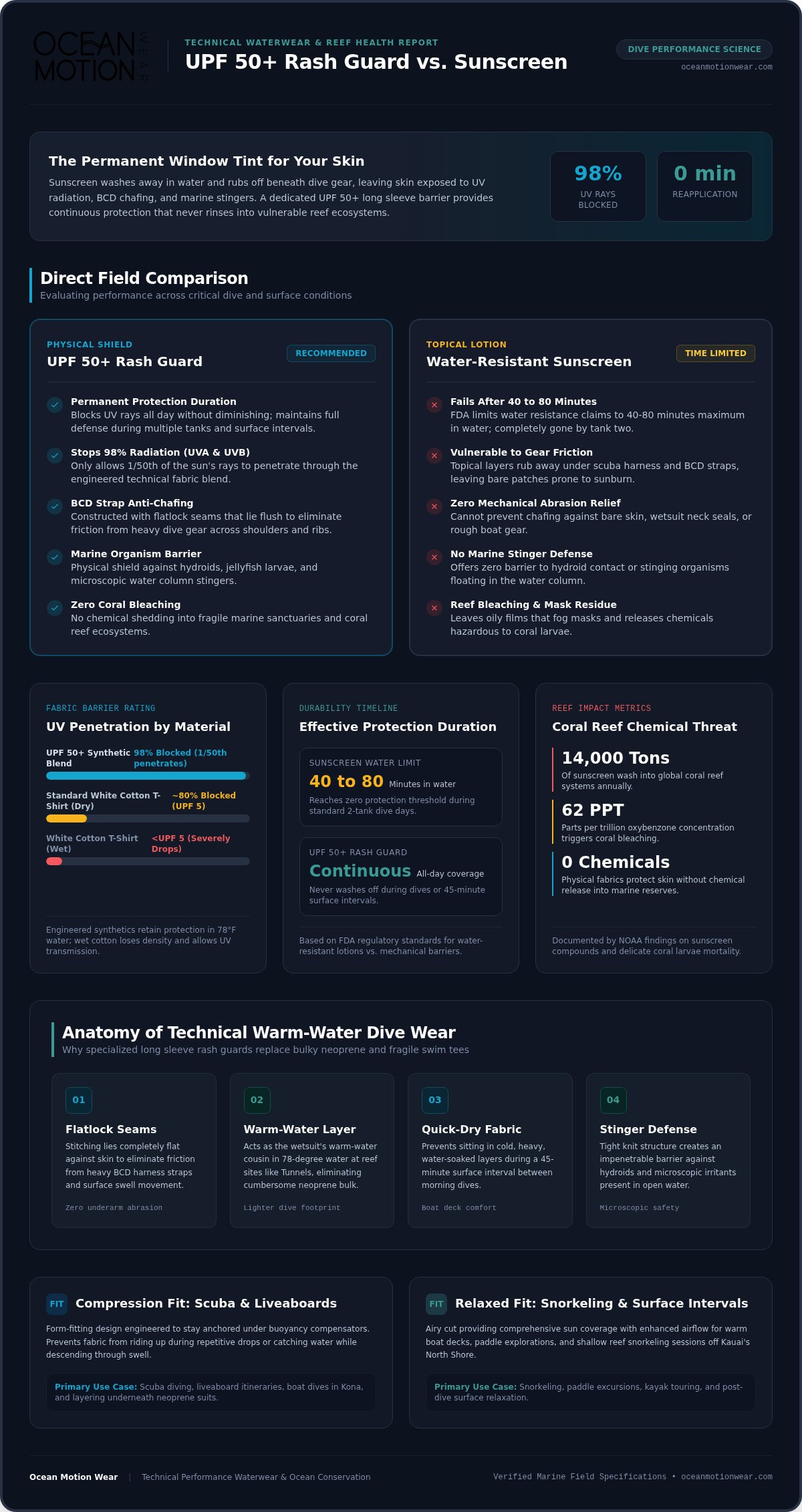
I often see divers lathering up on the boat deck, hoping for the best. But the reality of topical protection is limited by time and water. According to FDA regulations, even the best water-resistant sunscreens only last 40 to 80 minutes before they require reapplication. For a two-tank dive day, that timeline simply doesn't hold up. A long sleeve rash guard women can wear throughout the day provides a constant, physical barrier that never washes off.
Think of UPF as a car window tint for your skin. While sunscreen relies on a chemical reaction or a thin mineral layer that can be rubbed away by your BCD straps, fabric offers a permanent block. UPF 50+ is the gold standard in technical waterwear. This rating means the fabric blocks at least 98% of both UVA and UVB radiation. It only allows 1/50th of the sun's rays to reach your skin. It is the most reliable way to stay protected during long hours on the water.
Why Your Long Sleeve Rash Guard is Reef-Safe
Every time we hit the water, the products on our skin end up in the ecosystem. It is a staggering reality that roughly 14,000 tons of sunscreen wash into global coral reefs every year. Chemicals like oxybenzone can cause coral bleaching at concentrations as low as 62 parts per trillion. By choosing to wear more fabric, you naturally use less product. This simple swap has a massive impact on the health of the reefs we explore.
I feel better knowing my gear is doing the work instead of a bottle of chemicals. We have seen the impact of NOAA's findings on sunscreen chemicals and marine ecosystems, which highlight the damage topical filters can do to delicate larvae. Protecting the marine life we love starts with the choices we make on the boat deck. You can explore our performance collection to see how high-level protection meets ocean-inspired design.
Understanding the UPF Rating
UPF is a measure of the amount of UV radiation that can penetrate fabric and reach your skin. Not all fabrics are created equal. A standard white cotton t-shirt might only provide a UPF 5 rating, which drops even lower when wet. High-quality synthetic blends are engineered to maintain their integrity even when saturated with salt water. They don't become heavy or lose their protective shape.
When you choose a professional-grade long sleeve rash guard women's specific cut, you are investing in a weave that stays tight. Cheap fabrics can stretch out over time, opening the gaps between fibers and letting UV rays through. Look for materials that offer consistent density. This ensures that your shield remains effective from the first splash until you're back at the dock rinsing your gear.
Compression vs. Relaxed Fit: Which Should You Pack?
I learned about the "ride-up" the hard way on a boat trip in Kona. I was wearing a loose, sun-shirt style top under my gear. Every time I hit the water or adjusted my BCD, the hem migrated toward my armpits. It left my midsection exposed and created a bunch of salt-soaked fabric under my straps. It was a distracting mess that led to some painful skin irritation by the end of the day.
For active diving, I always recommend a snug compression fit. A long sleeve rash guard women can rely on needs to stay exactly where you put it. This "second skin" fit prevents the fabric from ballooning underwater, which reduces drag and keeps your movements efficient. If you are spending your day in the shore break or on a boat transit, a relaxed fit is fine. But for the actual descent, compression is king.
Quality fabric plays a huge role in how the gear feels after the dive. We've all felt that salt-stiff discomfort when a cheap shirt dries into a crunchy, abrasive shell. Performance fabrics are designed to stay soft even after a two-tank day. They wick moisture away from the skin, which is essential during those 45 minute surface intervals when the wind picks up and the dampness starts to feel cold.
The Divers Fit Checklist
Before you commit to a piece of gear, run through a quick checklist. Check the sleeve length. You want the fabric to reach your wrists even when your arms are extended. This prevents those painful "sunburn rings" that happen between your glove and your sleeve. Look at the neckline. A higher collar protects your collarbone from the constant rub of heavy equipment. Finally, do a few arm circles. If you feel any pinching or restriction, the fit is too tight.
Style Meets Performance
Your gear should reflect your personality. Performance waterwear doesn't need to look like utilitarian gym clothes. I prefer designs that honor the ocean, like the Abalone patterns. These pieces use high-quality flatlock stitching. This construction method ensures the seams are flush with the fabric, preventing the "waffle-iron" skin marks that come from standard seams. It's a small detail that makes a massive difference for sensitive skin.
Technical apparel is a superior first line of defense. According to The Skin Cancer Foundation's guide to sun-protective clothing, fabric provides a more consistent shield than any lotion. This reliability is why I use the same pieces for other water sports. If you're branching out into different adventures, check out this What to Wear Kayaking for Women: 2026 Gear Guide for more layering tips.
Top Styles for Every Water Adventure in 2026
I’ve spent years refining my travel gear for tropical destinations. A technical long sleeve rash guard women can pack easily is the foundation of a smart scuba capsule wardrobe. It takes up almost no space in a carry-on but provides more utility than a bulky shorty wetsuit. One solid top can transition from a morning dive to an afternoon on a paddleboard. It simplifies the packing process while ensuring you’re ready for any condition the ocean throws at you. It is the first thing I reach for when I’m heading to the airport.
The Scuba Enthusiasts Choice
When I’m diving, I prioritize a streamlined fit. You want a layer that sits perfectly under a wetsuit without bunching at the elbows or waist. I never pack a shorty for liveaboards. Instead, I use a high-quality rash guard paired with swim leggings or under a 3mm full suit. This combination offers better protection against stings and much more flexibility. During a 45 minute surface interval, the quick-drying performance keeps you from shivering as the boat moves. It maintains your core temperature much better than a damp, heavy neoprene vest would. You stay warm and ready for the second drop.
Snorkeling and Surface Sports
Snorkeling presents a unique challenge for sun protection. You are often horizontal on the surface for hours, exposing your entire back and the back of your legs to the direct tropical sun. We call it "snorkeler’s back," and it is a painful mistake I only made once early in my career. The long sleeve rash guard women rely on for snorkeling provides total coverage from the neck to the wrists. This is especially important during the winter swell on north shores when the spray is constant. The water might feel warm, but the wind and mist can sap your heat quickly. Extra coverage keeps you comfortable and in the water longer.
For paddleboarding and kayaking, I look for a balance of stretch and breathability. You need full freedom of movement for every stroke. Fabric that dries fast is a must for the transition from the water back to the boat or the beach. It prevents that salt-stiff feeling that can ruin a long day of exploring coastal mangroves or reefs. High-performance gear should move with your body, not restrict it. You can shop our full range of ocean-inspired styles to find your perfect fit for 2026.
Gear That Honors the Ocean: Sustainability Matters
I’ve spent enough time on the water to see the impact of textile waste first-hand. For any modern ocean lover, recycled materials are the only logical choice. A long sleeve rash guard women can feel good about wearing is one that actively reduces plastic in the system. It is about making a choice that protects the very reefs we travel to see. We use high-performance fabrics derived from post-consumer recycled water bottles. These materials have evolved significantly. They are now tougher, softer, and greener than traditional synthetics. They hold their compression through hundreds of dive cycles while keeping plastic waste out of our marine ecosystems.
We also lean into a made-to-order production model. This approach directly addresses the massive textile waste created by traditional inventory cycles. There is no deadstock sitting in a warehouse waiting for a clearance rack or a landfill. Every piece is created intentionally for the specific person who will wear it. It’s a slower, more purposeful way of manufacturing. It reflects a deep respect for resources and aligns with the intentional rhythm of the natural world. This process ensures that we only produce what is actually needed.
The Whale Shark and Abalone Collections
Artwork is an expression of identity. When I gear up in the Whale Shark collection, I’m carrying a piece of that gentle giant’s story with me. The distinctive white spots and lines are more than just a pattern. They are a tribute to a species that embodies the grace of the deep. Similarly, the Abalone collection draws its iridescent inspiration from the shells found along our coastlines. These prints are natural conversation starters on the dive boat. They allow us to share our passion for marine life with fellow adventurers during every surface interval. It connects us to the creatures we dive to see.
Supporting Independent Ocean Brands
There is a profound difference between corporate mass-market gear and diver-founded craftsmanship. We build our apparel based on real hours spent at Tunnels and Kona. We understand that a long sleeve rash guard women chooses needs to survive salt, sun, and heavy equipment. It’s about more than just a logo. It is gear made by divers, for divers, with a focus on lasting utility. It’s about personal customer service and technical gear that actually performs. We believe in building a community of explorers who value quality over quantity. If you want to bring these values to your local community, you can explore our wholesale opportunities for dive shops. Choosing independent brands ensures that your gear is designed by people who actually live in the salt water.
Ready for Your Next Drop
The right gear does more than shield your skin. It changes how you interact with the water. Choosing a technical long sleeve rash guard women trust ensures you stay focused on the marine life instead of your comfort. We've explored how UPF 50+ sun protection and a streamlined fit prevent the physical toll of long hours in the swell. When you opt for sustainable recycled materials, you make a choice that honors the health of the reefs we love.
Our apparel is designed by divers for divers to handle the real conditions of places like Kona and Kauai. It's about readiness and respect for the natural world. Whether you're layering for a deep dive or spending a surface interval in the sun, you deserve gear that works as hard as you do. Explore our collection of long sleeve rash guards for women and find your perfect match. See you out on the reef.
Frequently Asked Questions
Is a long sleeve rash guard better than a short sleeve one?
I find long sleeves superior for almost every ocean activity. They provide total coverage for your arms, which are most exposed while you are swimming or holding a camera. This design blocks 98% of UV rays and creates a physical barrier against hydroids or microscopic stingers. While short sleeves are fine for quick dips, the long sleeve version is my essential for two-tank days where sun exposure is constant.
Can I wear a long sleeve swim shirt in a swimming pool?
You can absolutely wear our long sleeve swim shirts in a chlorinated pool. The high-quality synthetic blends we use are designed to handle both salt water and pool chemicals without losing their shape. I often use mine for lap swimming or teaching in the pool to stay protected from the sun. Just remember to rinse it in fresh water after every session to maintain the fabric's integrity.
How do I stop my rash guard from riding up while I swim?
To prevent the hem from migrating, you must choose a snug compression fit. I have found that loose shirts often bunch under gear, which I first noticed during boat dives in Kona. A long sleeve rash guard women can rely on should sit flat against the skin like a second skin. Choosing a style with a slightly longer torso also helps keep the fabric secure against your waist while you swim.
What is the difference between a rash guard and a compression shirt?
While they look similar, the technical purpose is different. A traditional compression shirt is designed for land-based muscle support and moisture-wicking. A rash guard is engineered specifically for the water. It features chlorine resistance, salt-water durability, and built-in UPF 50+ protection. Our fabric is a wetsuit's warm-water cousin, meant to protect you from abrasion and UV rays while you are submerged or on deck.
Do I need to wear anything under my long sleeve rash guard?
This is a matter of personal comfort and support. Many women prefer to wear a swim sports bra or a bikini top underneath for added security. Since the rash guard is designed to be a thin, protective layer, it doesn't always provide the necessary bust support for active water sports. I usually reach for a matching swim top to ensure I stay comfortable during entries and exits.
How should a long sleeve rash guard fit for diving?
For diving, the fit should be very snug, almost like a second skin. You want to avoid any excess fabric that could balloon underwater or create drag. A well-fitted long sleeve rash guard women's specific cut will stay in place under your BCD straps without chafing. If it feels slightly tight on land, it's likely perfect for the water. Check the sleeve length to ensure your wrists stay covered.
Does UPF 50+ protection wash out over time?
No, the protection in technical performance fabrics is part of the weave, not a coating. Unlike sunscreen that washes off in 80 minutes, UPF 50+ fabric provides a permanent physical block. However, if the fabric becomes extremely thin, stretched out, or damaged, the rating can decrease. I recommend replacing your gear if you notice the fibers starting to break down or if the fit becomes permanently loose.
Can a long sleeve rash guard keep me warm in cold water?
It is important to remember that these are not neoprene wetsuits. A rash guard won't provide thermal insulation once you are submerged in cold water. Its primary job is to protect your skin from the sun and stings. However, it is excellent for preventing wind chill during a 45 minute surface interval. The quick-drying fabric keeps you much warmer on the boat deck than sitting in a damp cotton t-shirt.
