


I still remember a memorable coastal paddle during a summer swell. The water was a steady 78 degrees, but the sun was relentless. By noon, my thighs were bright red from the reflection off the surface. When beginners ask me what to wear kayaking, they often focus on the PFD. While safety is the priority, comfort and sun protection are what keep you on the water for the long haul.
You've likely felt the sting of a sunburn on the back of your legs after a long day in the cockpit. It's a common pain that makes the next day's paddle miserable. I promise that technical UPF 50+ swim leggings are the superior choice for comfort and performance. They act as a second skin, protecting you from rays and jellyfish without the bulk of traditional gear.
We'll explore why these leggings are a game-changer for your kit. I'll share why I value recycled fabrics and how specific designs support your movement. You'll learn how to stay protected while supporting a sustainable, women-owned business that understands the salt-stiff reality of ocean life.
Key Takeaways
- I'll show you why sitting in a kayak cockpit leaves your thighs vulnerable and how UPF 50+ fabric provides a physical shield that sunscreen can't match.
- Learn exactly what to wear kayaking to stay comfortable in 78 degree water without the bulk of a traditional neoprene wetsuit.
- Discover why I prioritize high-waisted designs to ensure my gear stays secure and comfortable during every torso rotation and paddle stroke.
- Find out how our recycled performance fabrics and ocean-inspired prints, like the Whale Shark collection, turn your gear into a statement for marine conservation.
Why I Traded My Board Shorts for Sun Protective Leggings
I used to think board shorts were the gold standard for what to wear kayaking. That changed after a four-hour paddle along Kauai’s North Shore. The 78 degree water felt perfect, but the sun was relentless. I quickly realized that my favorite shorts left the most vulnerable parts of my legs completely exposed to the elements. By the time I pulled my boat onto the sand, my thighs were a painful shade of crimson.
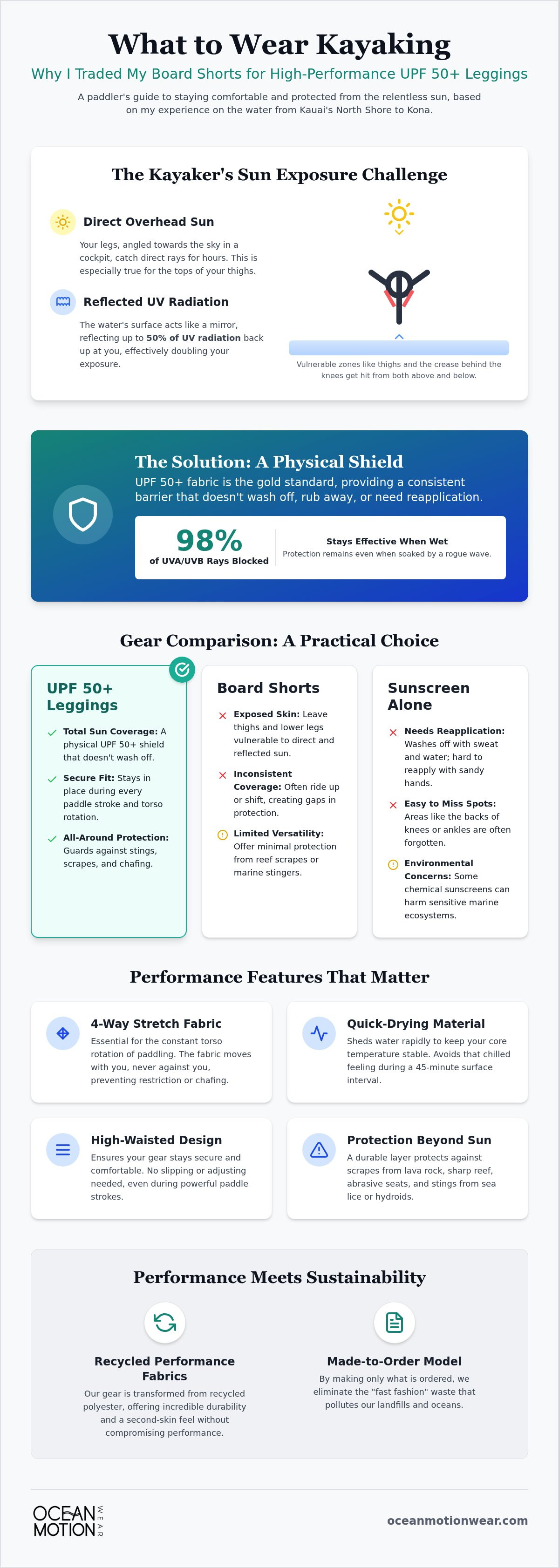
Sitting in a kayak cockpit creates a specific sun exposure challenge. Your legs are angled toward the sky, catching direct rays for hours. Meanwhile, the water surface acts like a mirror. It bounces UV radiation right back at you from below. I've found that reapplying sunscreen with sandy, salt-stiff hands is a losing game. You miss spots. You get grit in your eyes. Leggings offer a permanent physical shield that doesn't wash off.
The Geometry of Sun Exposure on the Water
Water reflects up to 50 percent of UV radiation. This effectively doubles your exposure while you're on the move. Most paddlers forget about the "crease" behind the knees. This area is constantly flexed and exposed to reflected light from the cockpit floor and the ocean. It's a prime spot for a nasty burn that can ruin the rest of your trip.
Understanding The Science of UPF 50+ changed my perspective on performance gear. Fabric is a physical barrier, much like a car's window tint. It provides consistent, gap-free coverage that stays in place regardless of your stroke technique. Board shorts often ride up or shift while you're paddling, but leggings remain secure through every rotation.
Protection Beyond the Sun
Deciding what to wear kayaking also involves planning for shore landings and unplanned swims. I've scraped my shins on lava rock more times than I'd like to admit. Leggings provide a durable layer that protects against abrasive seats and sharp reef edges. They also act as a vital barrier against stinging hydroids or sea lice that might be drifting in the current.
I value gear that transitions with me from the boat to the water. If I see a clear patch of reef near Tunnels, I want to jump in for a quick look. Wearing leggings from our Whale Shark collection means I'm already prepared. I don't have to worry about stings or sun damage while I'm focused on the marine life below. It's about having the confidence to explore without limits.
The Science of UPF 50+ and Recycled Performance Fabrics
When I'm deciding what to wear kayaking, I look for a physical shield. Think of UPF 50+ like a high quality window tint for your body. It provides a constant barrier that doesn't rub off like sunscreen does. While SPF measures how long it takes for skin to burn, UPF measures how much UV radiation actually passes through the fabric. It's the most reliable way to stay safe during a full day on the water.
A UPF 50+ rating is the industry gold standard. It blocks 98 percent of harmful UVA and UVB rays. This protection remains effective even when the fabric is soaked by a rogue wave or a quick dip in 78 degree water. I've found that cheaper fabrics often lose their effectiveness when they stretch. A tight, technical weave is vital to prevent UV "leakage" when you're reaching for a deep, powerful stroke.
Performance Meets Sustainability
We transform recycled polyester into high performance gear because it offers incredible durability. It truly feels like a second skin. The 4-way stretch fabric is essential for the constant torso rotation required when you're navigating a winter swell. It moves with you, never against you, providing the freedom to paddle for hours without restriction or chafing.
Quick drying materials are non-negotiable for me. There's nothing worse than the chilled feeling during a 45 minute surface interval when your clothes are holding onto moisture. Our fabrics shed water quickly, keeping your core temperature stable. This reliable performance is a key part of choosing what to wear kayaking for long days where conditions can change in an instant. It's a fundamental part of an effective sun protection strategy.
The Made-to-Order Difference
We choose a made-to-order model because I've seen enough "fast fashion" waste to last a lifetime. The ocean doesn't need more discarded overstock. Traditional manufacturing often leads to massive piles of unsold clothing that eventually find their way into landfills or the sea. By only making what is ordered, we eliminate that waste and ensure every piece of gear is crafted with individual care.
This intentional approach reflects our commitment to the reefs we explore. Whether I'm paddling near Tunnels or diving in Kona, I want to know my gear isn't contributing to the microplastic crisis. Choosing sustainable swim leggings is a small but powerful way to protect the blue spaces we love. It ensures that our presence on the water is as mindful as it is adventurous.
Leggings vs. Traditional Kayak Gear: A Practical Comparison
I always look for gear that earns its space in my dry bag. Swim leggings are the most versatile layer I own because they bridge the gap between basic swimwear and heavy protection. In 78 degree water, a full neoprene suit is often too much, but a standard swimsuit leaves you exposed. Leggings are my top pick for what to wear kayaking when I need to stay light but protected.
I've put this gear through my personal "BS test" in various conditions. Standard rash guards only cover your torso, leaving your lower half vulnerable to reflected UV rays. Leggings provide a level of utility that most Traditional Kayak Gear lacks for warm water adventures. They are the essential middle ground for paddlers who want to transition from the boat to a quick snorkel session without changing.
Leggings vs. Board Shorts
I used to reach for board shorts, but they create a specific set of problems in a cockpit. Board shorts tend to bunch up under a spray skirt, which creates uncomfortable pressure points during a long crossing. Leggings offer a streamlined, compression-like fit that stays flat against your skin. This lack of bulk is vital when you're focused on your torso rotation and power stroke. It ensures your movement is fluid rather than restricted by loose fabric.
Full-leg coverage also means better protection if you have to step out onto a shallow reef. I've seen too many scrapes from lava rock that could have been avoided with a simple layer of technical fabric. It's a small choice that makes a massive difference in your comfort. Choosing leggings is a smart move for anyone figuring out what to wear kayaking in diverse environments.
The Ultimate Wetsuit Base Layer
Even when I need a 5mm wetsuit for colder conditions, I still wear my leggings as a base layer. We've all dealt with the struggle of sliding into cold, damp neoprene on a humid morning. Leggings make the process effortless by allowing the suit to slide right over your legs. It saves time and frustration when you're trying to hit the water before the wind picks up.
More importantly, they prevent the "wetsuit bite." This is the painful chafing that happens in the sensitive skin behind your knees after hours of repetitive movement. A thin, smooth layer of technical fabric eliminates this friction entirely. Finally, they offer a layer of modesty. Peeling off a thick wetsuit on a crowded beach or boat is much easier when you're already wearing a comfortable, high-coverage layer.
Features That Matter When You Are Navigating a Winter Swell
I've spent enough time in winter swells to know that your gear needs to stay put. When you're deciding what to wear kayaking, you have to consider the mechanics of a power stroke. Constant torso rotation is the core of efficient paddling. If your leggings are sliding down or bunching at the waist, you're losing focus and energy. I look for gear that feels like a part of my body, not a distraction.
I prioritize a high-waisted design for this exact reason. It provides a secure, locked-in feeling that supports your core without digging in. This isn't just about aesthetics. It's about ensuring that your sun protection doesn't shift and leave a gap at your lower back. When you're braced against the foot pegs, that extra coverage is a lifesaver.
We also take the "squat test" seriously. In a kayak, you're often bent at the waist or braced in a way that stretches the fabric to its limit. You need material that remains completely opaque even when it's under tension. Inclusive sizing is just as vital. Every ocean lover deserves to feel capable and protected, regardless of their body type or experience level.
Flat-lock seam construction is another non-negotiable feature for me. These seams lie flat against the skin, eliminating the raised edges that cause irritation during active movement. When you're dealing with salt water and constant motion, even a small seam can become a major distraction. It's the difference between a great day and a painful "salt burn."
Fit and Security in the Surf
Choosing what to wear kayaking in the surf means prioritizing security. A waistband that stays put is essential during a wet entry. If you've ever had to climb back into your boat in choppy conditions, you know the struggle. Light compression helps by supporting your muscles during a long day of paddling. It aids circulation and reduces fatigue. I always choose a full-length legging to ensure my ankles are protected from the sun's reflection.
Durability in the Salt Water
Salt water is incredibly abrasive. It can turn soft fabric into a salt-stiff mess if you're not careful. I look for salt-resistant materials that won't lose their elasticity after a few sessions. Identifying high-quality, recycled fabrics is the first step in building a kit that lasts. A quick freshwater rinse after your paddle is the best way to keep your gear soft and functional for years to come.
I'm particularly proud of how our Abalone collection prints handle the elements. These designs stay vibrant and sharp despite constant UV exposure and salt spray. You can find your next favorite pair in our full performance collection to ensure you're ready for whatever the ocean throws your way.
Ocean-Inspired Performance: The Ocean Motion Wear Collection
Knowing what to wear kayaking shouldn't feel like a compromise between style and safety. I believe your gear should be a reflection of your commitment to the blue world. Our collection is built on the intersection of professional-grade performance and a deep love for the ocean's most iconic residents. Every piece we create is a response to a real need we've discovered while spending time in the salt.
The stories behind our designs come from real encounters. The patterns in our Whale Shark collection and our Eagle Ray prints are more than just art. They are tributes to the creatures we see while diving in Kona or paddling through the winter swells. Every pair of leggings is designed to provide the security you need while celebrating the vibrant life of the reef.
We focus on the specific needs of women because we live this life every day. We've felt the frustration of gear that wasn't made for an active, aquatic lifestyle. I've taken a hard stance on using recycled materials because I want my gear to be part of the solution, not the problem. We use these technical fabrics in our own adventures to ensure they meet the highest standards of durability and comfort.
Art Meets Adventure
I've found that ocean-inspired artwork is a natural conversation starter. It's a great opportunity to talk about marine life and conservation with fellow paddlers. Our designs reflect the real light and colors of the reef at Tunnels or the deep blues of the Pacific. Wearing gear that looks as good as it performs creates a sense of readiness and confidence that carries you through a long day of exploration.
Joining the Ocean Motion Community
We operate as a small, independent business in Southern California with a focus on personal connection. When you reach out to us, you're talking to people who actually have salt water in their hair. Your choice to wear sustainable gear directly supports a cleaner ocean for everyone. If you're ready to upgrade your kit and decide what to wear kayaking for your next trip, explore our full collection of sun protective swim leggings and join us on the water.
Ready for the Salt and the Sun
Choosing what to wear kayaking shouldn't be an afterthought. I've learned that the right gear turns a good day into an unforgettable one. By prioritizing UPF 50+ certified protection and high-performance recycled fabrics, you're investing in your own comfort and the long-term health of our reefs. It's about readiness for every rogue wave and every hidden cove you discover along the coast.
We design these leggings as divers and ocean lovers who understand the specific demands of the salt water. Our gear is made from recycled ocean plastics to ensure we're protecting the blue spaces we love while providing professional-grade utility. Whether you're navigating a winter swell or enjoying a calm surface interval in Kona, you deserve a second skin that moves with you. Every piece is a commitment to quality, movement, and environmental stewardship.
Your next adventure is waiting just beyond the shoreline. Make sure you're prepared with gear that respects the environment as much as you do. Explore our sun protective swim leggings and gear up for your next adventure. See you out past the break.
Frequently Asked Questions
Can I wear sun protective swim leggings under a wetsuit?
Yes, I always wear my leggings as a base layer under a wetsuit. It's a game changer for anyone who struggles to slide into thick neoprene on a humid morning. The smooth fabric prevents the painful chafing often found behind the knees. It's a practical tip for what to wear kayaking when the water gets colder. You'll stay comfortable and maintain your modesty during gear changes on a crowded boat.
Do swim leggings protect against jellyfish stings and sea lice?
Our swim leggings provide a vital physical barrier against jellyfish stings and sea lice. While no fabric is a guarantee against every marine irritant, a full-length layer significantly reduces your skin's exposure. I've found this protection essential when paddling through areas with stinging hydroids. It gives you the peace of mind to focus on your stroke. You don't have to worry about what might be drifting in the current around you.
What is the difference between UPF 50+ and SPF 50 ratings?
The main difference is that UPF measures fabric protection while SPF measures skin protection. A UPF 50+ rating means the material blocks 98 percent of both UVA and UVB radiation. Unlike sunscreen, it doesn't require reapplication every two hours or after a swim. It's a permanent shield that stays effective throughout your entire paddle. I rely on this technical standard to ensure my skin stays safe during long days under the sun.
Are these leggings suitable for surfing or high-impact water sports?
These leggings are built for high-impact water sports like surfing and kiteboarding. The 4-way stretch fabric ensures they move with you during a pop-up or a deep carve. I've tested them in heavy surf and the high-waisted design keeps them perfectly in place. They won't slide down during a wipeout or a duck dive. It's professional-grade gear that handles the intensity of the ocean while providing full-day sun protection.
How do I care for my swim leggings to make sure they last for years?
To keep your gear in top shape, always rinse it with fresh water after every session. This removes salt, sand, and chlorine that can break down the fibers. I recommend hand washing with a mild detergent and hanging them to air dry in the shade. Never put them in the dryer or use bleach. These simple steps ensure your leggings stay soft and vibrant. They will maintain their protective UPF rating for years of exploration.
Are the leggings see-through when they get wet or during movement?
Our leggings are specifically designed to be non-transparent. We use a high-density technical fabric that passes the "squat test" with ease. You won't have to worry about the material becoming see-through when it's wet or when you're moving through a deep range of motion. This coverage is a priority for us because we want you to feel confident and secure. You can focus on the water without any distractions or wardrobe concerns.
Do you offer inclusive sizing for different body types?
We are committed to providing inclusive sizing for every ocean lover. Our made-to-order model allows us to offer a wide range of sizes that celebrate all body types. We believe that everyone should have access to high-performance, sustainable gear. When you're deciding what to wear kayaking, you deserve a fit that feels secure and empowering. Our designs are inspired by real women who spend their lives in the salt water and need gear that works.
How does the made-to-order process help the ocean?
Our made-to-order process is a direct response to the waste of the fast fashion industry. By only creating what is ordered, we eliminate the need for massive warehouses full of unsold stock. This reduces the amount of textile waste that could eventually end up in our oceans or landfills. We choose this methodical approach because we value purposeful craftsmanship. It's a commitment to a cleaner ocean and a more sustainable future for all adventurers.
