


I still remember the smell of boat coffee at 6:00 AM during my last trip to a remote tropical liveaboard. I also remember the regret of packing three heavy hoodies that stayed damp for seven days straight. My tiny cabin was a humid mess. My skin was screaming from a mix of salt spray and sun. It's a common mistake even for seasoned divers.
You likely want to be ready for every scenario without tripping over a massive gear bag in the dark. Deciding what to wear on a liveaboard is a balance of moisture management and thermal protection. I've spent years refining a system that handles 30°C (86°F) surface intervals and the inevitable chill that sets in after your fourth dive of the day.
This guide will teach you how to master the art of packing light using high-performance layers. We'll dive into the best ways to prevent wetsuit chafing. We'll discuss how to manage mask hair with technical headbands. I'll explain why a recycled windbreaker is your best friend during windy crossings. Get ready to streamline your kit for a more intentional, comfortable adventure.
Key Takeaways
- Pack at least three sets of swimwear to ensure you never have to squeeze into a cold, damp suit for that third or fourth dive of the day.
- Master exactly what to wear on a liveaboard by layering performance rashguards to prevent painful wetsuit hickeys and stinging hydroids.
- Protect yourself from the post-dive chill with a lightweight windbreaker designed to block the breeze during surface intervals and crossings.
- Keep your hair tangle-free and your scalp safe from the sun using technical headbands that stay put during giant strides and backrolls.
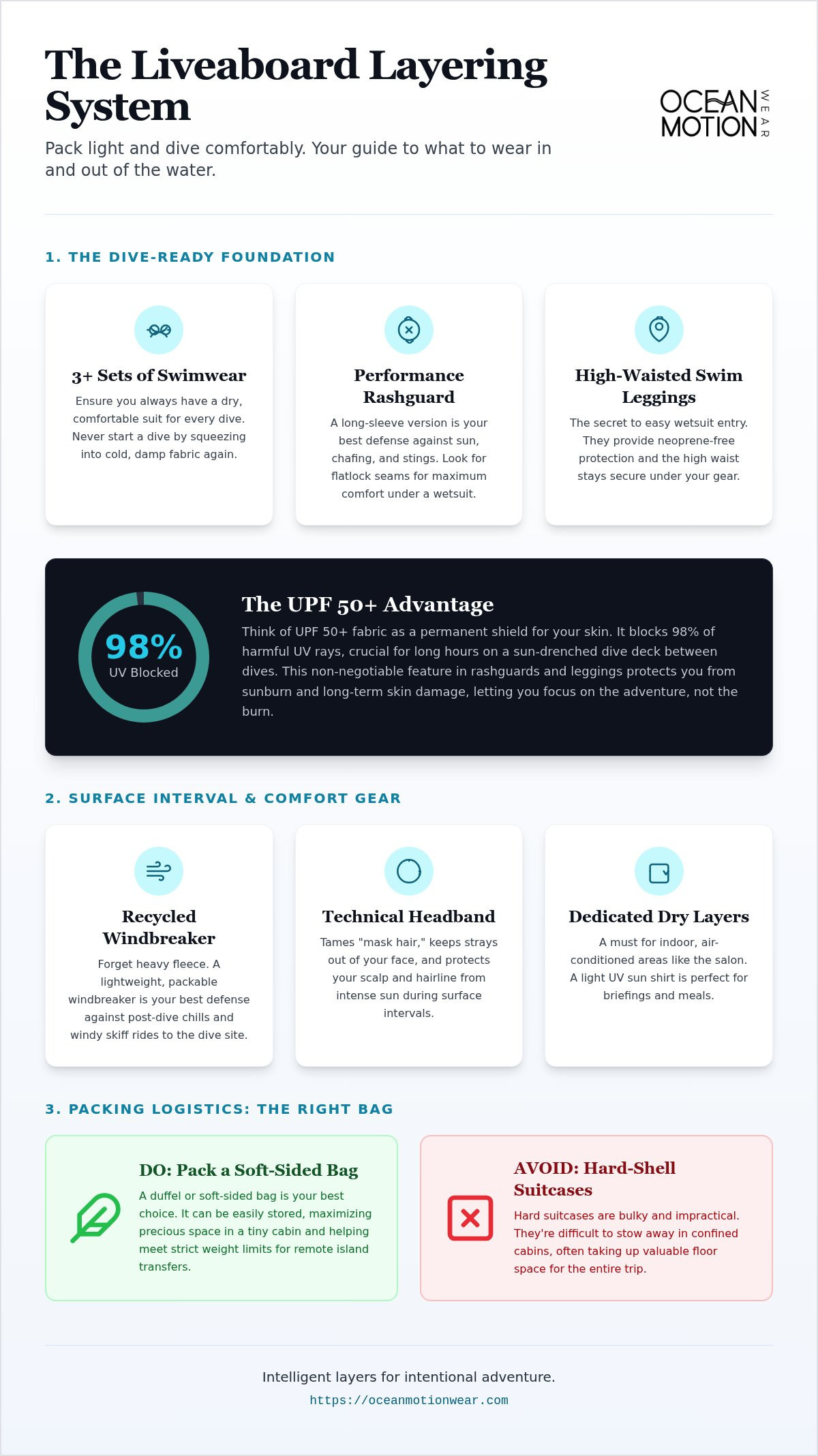
- Trade your hard suitcase for a soft-sided bag to maximize space in your cabin and meet tight weight limits for remote island transfers.
The Dive-Ready Foundation: Performance Swimwear and Base Layers
When you're planning your first trip, it's helpful to understand what a liveaboard is: a floating home where your only commute is from the bunk to the dive deck. On these vessels, the rhythm is relentless. You'll likely hit the water four times a day. If you only bring one or two swimsuits, you'll spend half the trip peeling on cold, soggy fabric. It's a small misery that adds up. I always pack at least three sets of swimwear to ensure a dry rotation for every giant stride.
Choosing what to wear on a liveaboard starts with these base layers. You need pieces that dry fast and stay comfortable under a BCD. Think of UPF 50+ fabric as a permanent car window tint for your skin. It blocks 98% of UV rays, which is vital when you're off-gassing on a sun-drenched deck between dives. To help visualize how these layers fit into your kit, watch this breakdown of packing essentials:
The Power of the Performance Rashguard
I’ve learned the hard way that a standard t-shirt won't cut it in the salt. You need a high-performance rashguard with flatlock seams. These seams lay flat against your skin, preventing the "wetsuit hickeys" caused by friction during long dives. Long-sleeve versions are non-negotiable for me. They protect your wrists from jellyfish stings and keep your forearms from burning while you wait for the skiff in the equatorial sun. Our Whale Shark Collection rashguards provide this protection while using recycled materials that respect the ecosystems we're there to see.
Swim Leggings: The Secret to Easy Wetsuit Entry
If you've ever struggled to pull a 5mm wetsuit over salt-sticky skin, you need swim leggings. They act as a lubricant, letting the neoprene slide right on without the usual gymnastics. I prefer high-waisted designs because they don't roll down under the weight of a heavy BCD or weight belt. In warmer spots like the Red Sea or during the high-energy currents of Socorro, we often skip the wetsuit entirely. A pair of recycled leggings provides enough protection against stinging hydroids and the sun without the bulk of neoprene. It's the ultimate hack for staying streamlined and secure in demanding environments.
Beating the Boat Breeze: Essential Surface Interval Outerwear
Stepping out of a 28°C (82°F) ocean in Raja Ampat feels like a warm bath until you hit the dive deck. The wind hits your wet skin and evaporation takes over. Suddenly, you're shivering. This "chill factor" is the most overlooked part of what to wear on a liveaboard. While a comprehensive packing checklist will cover your base layers, your comfort against the post-dive shiver depends on your outerwear. You need gear that handles the transition from a humid deck to a breezy crossing without staying soggy for hours.
The Recycled Windbreaker: Your Best Friend on a Crossing
Forget heavy fleece. In the tropics, you need a barrier against the wind, not thick insulation. A lightweight, recycled windbreaker is my top pick because it packs down to the size of a mango. This saves precious shelf space in those tiny cabins. It also serves a double purpose during skiff rides. When the boat is bouncing through salt spray to reach the site, a water-resistant shell keeps you dry and focused. It’s about maintaining your core temperature so you're ready for the next descent. I’ve found that a shell with a high collar is essential for protecting your neck from the biting wind during long transits between atolls.
Layering for the Salon and Dining Area
Most boats have a strict "dry zone" rule for the interior salon. You can't sit on the cushions in a wet swimsuit. I keep a dedicated set of dry clothes specifically for these indoor moments. The air conditioning is often set to "Arctic" levels to combat the humidity outside. I usually layer a light UV sun shirt over a tank top. It provides just enough warmth when the AC is blasting during the afternoon briefing. I’ve seen divers try to survive in just a damp towel, but they always end up miserable and shivering by the time dessert is served.
For dinner, keep it simple. I pair my favorite leggings with a breathable top. It looks polished enough for communal meals but feels as comfortable as pajamas. This system ensures you aren't overpacking. Every piece serves a functional purpose, from the dive deck to the sunset deck. If you're looking to build your own versatile kit, you can explore our performance collections to find layers that transition from sea to salon effortlessly. Focus on fabrics that breathe and dry quickly to keep your cabin smelling fresh in the humid sea air.
Taming the Mane: Accessories for Salt and Sun
I've spent many afternoons on the dive deck with a handful of salt-stiff hair and a massive knot at the base of my skull. It's the "mask hair" struggle every diver knows. When you're considering what to wear on a liveaboard, accessories are often the last thing on the list, but they're the first thing you'll miss. Beyond the big gear, small items like headbands and gaiters determine whether you're comfortable or spending your surface interval in a tangle of pain and sunburn. These small layers provide the protection that lotion simply can't maintain in the water.
For those looking for a broader view of essentials, The Ultimate Liveaboard Packing List is a solid resource for gear, but it often misses the nuance of hair and scalp management. I've found that a physical barrier is always superior to chemical protection when you're hitting the water four times a day.
Ocean-Inspired Headbands for Every Giant Stride
Wide headbands are a game changer for anyone with long hair. I used to rely on standard ponytail holders, but they eventually snap or pull out chunks of hair when the mask strap slides around. A wide performance headband stays put and creates a smooth surface for your mask strap to rest on. This prevents the silicone from grabbing and twisting your hair during a backroll or giant stride. We use recycled fabrics that dry quickly between briefings, so you aren't putting a cold, wet band back on your head for the second dive. If you want to coordinate your look with the colors of the reef, our Abalone Collection features patterns inspired by the iridescent shells we see on the seafloor.
UPF Protection for the Scalp and Neck
Sunscreen is vital, but it washes off or gets into your eyes during a dive. When you're on the water for 12 hours a day, you need a physical barrier. This is especially true for bald men or anyone with thinning hair. A scalp burn is a literal trip-ruiner that makes wearing a mask or hood incredibly painful. I always recommend a UPF neck gaiter. It acts like car window tint for your skin, blocking 98% of UV rays without the greasy mess of lotion.
Gaiters protect the "burn zone" on the back of your neck. This is the sensitive area between your mask and the collar of your wetsuit. It’s also a great shield against the wind during those long crossings. Unlike heavy cotton buffs that stay wet and cold, performance gaiters breathe. They keep the spray off your face without making you overheat in the tropical humidity. I've learned that managing salt-stiff hair is easier when you rinse with fresh water and immediately slide on a gaiter or headband. It prevents the wind from whipping salt-crusted strands into a bird's nest during the transit back to the mooring.
Beyond the Bikini: Comfort and Etiquette for Liveaboard Life
Barefoot is the standard. On most boats, from the Bahamas to the Red Sea, you'll hand over your shoes the moment you step onto the gangplank. They go into a communal basket and stay there until the trip ends. When deciding what to wear on a liveaboard, realize that your feet will spend 90% of the time touching teak or non-skid decks. You only need one pair of flip-flops for the occasional island walk, but otherwise, go barefoot or pack a pair of non-slip socks if you get cold feet at night.
The "dry zone" is the most important rule of boat etiquette. The indoor salon is usually a sanctuary of air conditioning and plush cushions. Sitting there in a wet bikini or damp board shorts is a fast way to annoy the crew. I always keep a dedicated dry cover-up or a lightweight sundress handy. It needs to be something you can throw on in seconds over your base layers to keep the common areas dry and comfortable for everyone.
Leave the jewelry and fancy clothes in the safe. There are no gala dinners on a dive boat, and rings or necklaces can easily slide off in the water or snag on gear. Beyond the risk of loss, metal can catch on a ladder or a tank valve during a giant stride. Keep your look functional and minimal while you're on the boat. You’ll find that you wear the same three comfortable outfits for the entire week, and nobody will notice.
The One-Bag Wardrobe Strategy
Packing for a tiny cabin means every item must earn its keep. I look for sports bras that double as swim tops to save space and ensure a dry option is always ready. Focus on versatile pieces that transition from a morning nap in the hammock to the afternoon briefing. A high-quality pair of lifestyle shorts and a few moisture-wicking tanks are all you really need for a seven-day itinerary. This minimalist approach keeps your cabin clutter-free and your mind focused on the next descent.
Eco-Friendly Ethics on the Boat
We live on the water, so our choices should protect it. Choosing apparel made from recycled materials reduces the demand for virgin plastics and shows respect for the reefs we love. Apparel is also the ultimate reef-safe sun protection because it stays put and never washes off into the coral. If you’re a dive professional or shop owner, check out our Wholesale page to see how you can bring sustainable gear to your own community. Every small choice contributes to the health of the ecosystems we travel so far to explore.
Ready to build your minimalist boat kit? You can shop our full range of sustainable dive wear to find pieces that handle the rigors of liveaboard life with ease.
Liveaboard Logistics: How to Pack Light and Smart
I’ve watched many divers arrive at the dock in Male or Sorong with massive, hard-shell suitcases. It’s a mistake you only make once. Most cabins are designed with storage under the bunk or in narrow lockers where a rigid bag simply won't fit. You need a soft-sided duffel that can be squashed flat and tucked away. This isn't just about cabin space. When you're flying domestic legs to reach remote sites, weight limits are strict. Small planes in Indonesia and the Maldives often cap checked bags at 15kg (33 lbs) or 20kg (44 lbs). Knowing exactly what to wear on a liveaboard helps you stay under these limits by focusing on high-performance, low-bulk layers.
Organization is your best defense against the "cabin chaos" that happens after three dives. I use small mesh bags to keep my base layers separate. Mesh allows damp items to breathe, which is critical in the humid sea air. I also prioritize antimicrobial fabrics for all my leggings and rashguards. In a shared space, the "smell test" is real. Performance fabrics treated to resist bacteria stay fresh much longer than cotton. This helps maintain a pleasant environment for you and your roommate throughout the week.
Drying Your Gear Without Losing It Overboard
Every boat has a designated drying area, but the wind can be a thief. I always pack a handful of heavy-duty clothespins or a short bungee cord to secure my items. Never hang your favorite rashguard or headband on the boat railings. I’ve seen the ocean swallow more gear than I can count when a sudden gust hits. Using quick-dry apparel significantly reduces the amount of laundry you have hanging at any given time. It keeps the deck clear and ensures your kit is ready for the next briefing without the soggy weight of damp fabric.
The Essential 'Dry Bag' for the Skiff
Even when the big boat is your home, you'll spend a lot of time on the skiff or RIB. I keep a small 5-liter dry bag ready for every excursion. It holds my windbreaker, a spare headband, and my polarized sunglasses. This bag protects your phone and camera from the inevitable salt spray during the ride to the site. If you're looking for more advice on staying dry during water-based transits, our guide on What to Wear Kayaking for Women offers excellent tips for managing spray and sun. Stay organized, pack light, and keep your focus on the blue.
Ready for the Next Giant Stride
Mastering boat logistics means shifting your focus from bulk to performance. You now know that a successful trip depends on a dry swimwear rotation and the soft bag rule for your cabin. Deciding exactly what to wear on a liveaboard isn't a source of stress once you have a system of high-performance layers. Focus on pieces that dry quickly and protect your skin from both the sun and the salt spray.
We build gear that respects the ocean. Our made-to-order apparel is designed by divers for divers. It features built-in UPF 50+ sun protection to shield you during those long surface intervals on the sun deck. Every piece uses recycled materials to reduce our footprint on the reefs we love to explore. Shop the full Ocean Motion Wear collection for your next dive trip and arrive at the dock ready for anything. The blue is waiting. We'll see you in the water.
Frequently Asked Questions
How many swimsuits should I bring on a liveaboard?
Knowing exactly what to wear on a liveaboard includes bringing at least three swimsuits for a standard seven-day trip. This ensures you always have a dry set ready for the next briefing while your other suits dry on the deck lines. I've learned that peeling on a cold, soggy bikini for a dawn dive is a miserable way to start the day. A three-suit rotation is the sweet spot for comfort and packing efficiency.
Do I need a wetsuit if I'm wearing a rashguard and leggings?
A rashguard and leggings can replace a wetsuit in tropical waters above 28°C (82°F). This combination protects you from jellyfish stings and sun exposure without the buoyancy issues of neoprene. However, if you're doing four dives a day, your core temperature will drop over time. Many experienced divers still wear a thin 3mm wetsuit over their base layers to stay warm during the final night dive of the trip.
What is the best way to protect my hair from salt water damage?
Use a physical barrier like a wide performance headband or a dive hood to prevent tangles. Rinse your hair with fresh water before every dive so the strands are already saturated and won't absorb as much salt. I always apply a small amount of reef-safe leave-in conditioner to create a protective seal. This prevents the wind from whipping salt-crusted hair into a bird's nest during the transit back to the mooring.
Can I wear my dive gear in the boat's salon or dining area?
You must never wear wet dive gear or damp swimwear inside the boat's salon. Keeping the indoor "dry zone" salt-free is a major part of boat etiquette. Salt water ruins upholstery and makes the communal spaces feel humid and sticky. Always dry off and change into a dedicated set of salon clothes before you head inside for meals or to review your photos from the morning dive.
Are there laundry services available on most liveaboards?
Most liveaboards do not offer full laundry services because fresh water is a precious resource at sea. Some high-end boats in the Maldives might provide a limited bag service, but it's rare. Plan on hand-rinsing your performance layers in the freshwater bins on the dive deck. Hanging them in a breezy spot ensures they dry quickly without needing a machine, which is why we prioritize quick-dry recycled fabrics.
What kind of shoes should I pack for a week on a boat?
You only need one pair of flip-flops or sturdy sandals for the occasional island excursion. Most boats operate on a "barefoot only" policy once you step on deck to keep the wood clean and prevent slips. I usually pack a pair of lightweight, non-slip socks for the evenings if the air conditioning in the cabin feels too cold. Leave the heavy sneakers and fancy shoes at home to save precious bag space.
How do I prevent my rashguard from smelling after multiple dives?
If you're wondering what to wear on a liveaboard to stay fresh, choose antimicrobial performance fabrics that resist bacteria buildup. Rinse your rashguard in fresh water after every dive and hang it in a breezy, sunny spot rather than a dark cabin. This prevents the "damp dog" smell that often plagues synthetic gear. Avoiding cotton is essential because it traps moisture and odors much longer than technical recycled materials.
Is UPF 50+ clothing better than waterproof sunscreen for diving?
UPF 50+ clothing is superior because it provides a constant physical barrier that never washes off or needs reapplication. While reef-safe sunscreen is important for your face, clothing acts like car window tint for your skin. It eliminates the risk of oily chemicals entering the water and protects you for the full duration of your surface interval. I've found that wearing leggings and a rashguard is the most reliable way to avoid a trip-ruining burn.
