


I remember surfacing from a long drift dive off a stunning tropical coast with a stinging realization. My "performance" rashguard had ridden up during the safety stop, leaving a bright red stripe of sunburn across my lower back. To make matters worse, the fabric was already pilling from just three days of boat friction and salt spray. Finding truly sustainable activewear for ocean lovers shouldn't feel like a constant battle between durability and ethics.
We all want gear that stands up to the elements without shedding microplastics into the very reefs we travel to see. You deserve apparel that works as hard as your dive computer. I'll show you how to choose high-performance pieces that offer total sun protection and survive years of salt-heavy adventures. We'll explore how recycled materials and made-to-order designs provide a superior fit while protecting marine ecosystems. You'll learn why UPF 50+ fabric is like car window tint for your skin, keeping you safe without the constant need for reef-clogging sunscreen. It's time to invest in gear that reflects your deep respect for the water.
Key Takeaways
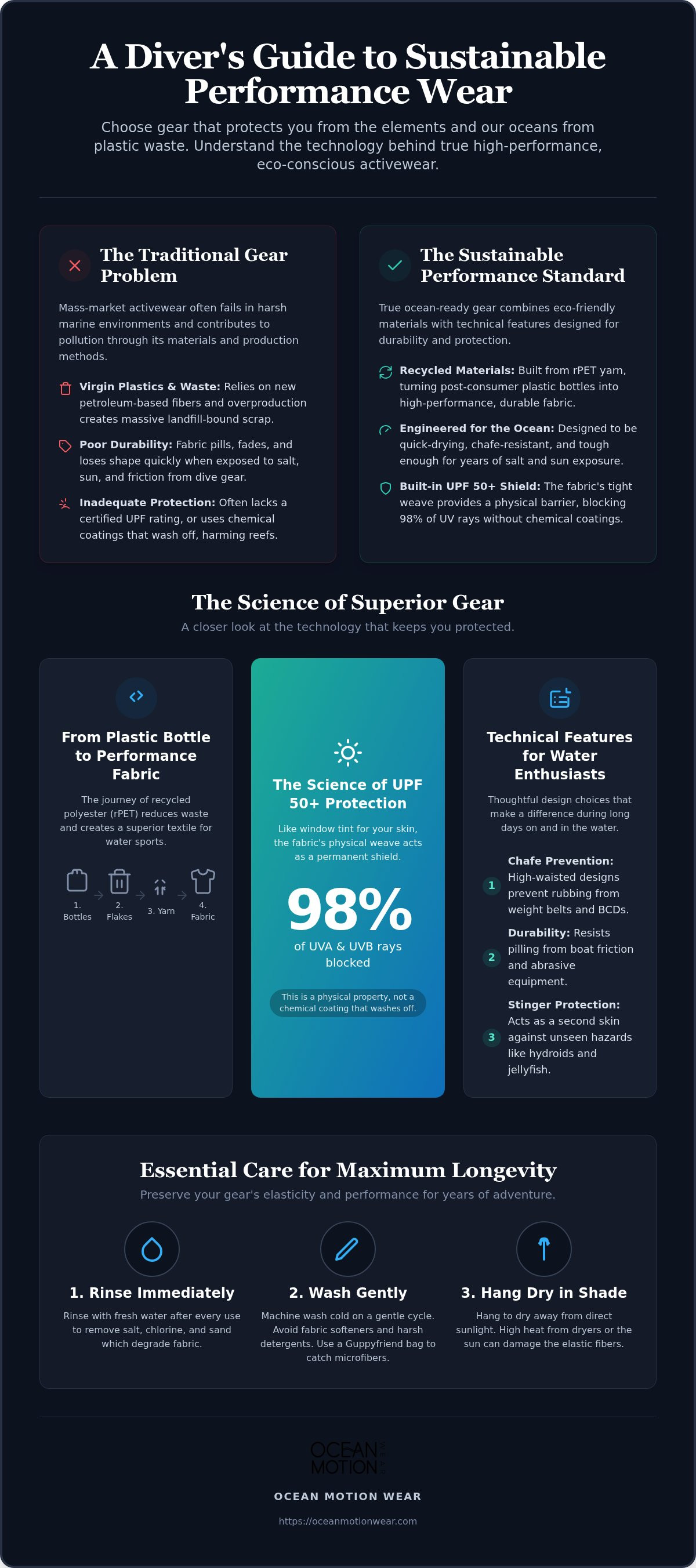
- Learn to identify high-quality sustainable activewear for ocean lovers that uses recycled polyester to reduce virgin plastic production.
- Discover how UPF 50+ fabrics provide a protective barrier for your skin (functioning like window tint) to block harmful rays without the need for reef-clogging creams.
- Find out why technical design features like high-waisted leggings are critical for preventing equipment chafe from weight belts or BCDs during long dives.
- Learn the essential care routine that preserves fabric elasticity and keeps your recycled gear ready for years of heavy salt water exposure.
- Get expert advice on selecting the right weight and style for your specific environment, from tropical snorkeling sessions to windy surface intervals on a boat.
What is Sustainable Activewear for Ocean Lovers?
I have spent hundreds of hours on dive boats, often watching "high-end" gear fall apart after a single season. True sustainable activewear for ocean lovers is about more than just a green-colored label or a marketing buzzword. It is a technical requirement for those of us who live for the water. To understand the foundation of our gear, we have to look at What is Sustainable Activewear in a technical context. We define it as high-performance gear built from recycled polyester to keep virgin plastics out of our seas. But the material is only half the story. It must actually survive the brutal reality of salt water, abrasive sand, and 10-hour days under a tropical sun. We prioritize made-to-order manufacturing because overproduction is the ocean's silent enemy. By only making what is needed, we ensure that no excess fabric ends up in a landfill or drifting into a current.
The Problem with Traditional Sportswear
Standard nylon and polyester often come at a heavy price for the planet. Most mass-market sportswear relies on heavy chemical dyes that can leach into water systems during production. Then there is the waste. Global textile production creates massive amounts of landfill-bound scrap every year. Beyond the environmental cost, generic activewear usually fails the durability test. It loses its shape, pills against the rough texture of a BCD, and fades before you have even finished your first week of diving. I have seen countless cheap rashguards become transparent after just a few exposures to chlorine and salt. That is not just a waste of money. It is a failure of protection that leaves you vulnerable to the elements.
Why Ocean Lovers Need a Higher Standard
When you are sitting on a boat deck between dives, the sun is relentless. Reflection off the water doubles your UV exposure. We need fabrics that act like a second skin, providing a physical barrier against UV rays and stinging hydroids. Our gear interacts directly with sensitive coral reef ecosystems every time we roll off a boat. This is why we focus on durability and protection. A high-quality rashguard must prevent equipment chafing from heavy tanks and eliminate the need for chemical-heavy sunscreens that can harm delicate polyps. Whether you are exploring the Abalone collection for its unique patterns or seeking a rugged pair of leggings, the goal is the same. Performance must include protection. It is about readiness. It is about knowing your gear won't quit when the conditions get rough.
The Science of Recycled Fabrics and UPF 50+ Protection
I love the feeling of high-performance gear that doesn't sacrifice the environment for the sake of utility. When we talk about sustainable activewear for ocean lovers, we are looking at a technical marvel that starts in a recycling bin. Most people don't realize that the plastic bottle they tossed out yesterday could become the rashguard they wear tomorrow. We use recycled polyester, often called rPET, because it provides the rugged durability needed for salt-soaked days while remaining incredibly soft against the skin. It feels like a second skin. This is exactly what you want when you are maneuvering through a tight swim-through or paddling against a strong current.
From Plastic Bottles to Rashguards
The transformation from post-consumer plastic into high-performance yarn is a precise engineering feat. First, plastic bottles are collected, cleaned, and shredded into thin flakes. These flakes are melted down and extruded into a fine filament that is spun into yarn. This recycled polyester is naturally hydrophobic. It doesn't absorb water, which makes it the ideal material for quick-drying water gear. We have found that this process allows us to maintain fabric softness without relying on toxic chemical softeners. It is a cleaner way to build gear that lasts through hundreds of wash cycles without losing its shape or technical integrity.
Understanding the UPF 50+ Rating
Sun protection is a non-negotiable part of our lives on the water. I have learned the hard way that sunscreen washes off, especially during a 60-minute dive or a heavy surf session. That is why we rely on UPF 50+ protection as the gold standard for our apparel. Think of a UPF rating like the window tint on your car. Just as high-quality tint blocks out heat and glare, a UPF 50+ weave blocks 98 percent of harmful UVA and UVB rays from reaching your skin.
This isn't a chemical coating that will eventually wash away into the reef. The protection comes from the physical density and structure of the fabric weave itself. By choosing clothing over creams, you are providing a permanent barrier for your skin and keeping harmful chemicals away from fragile coral polyps. It is a win for your health and the marine ecosystems we are so lucky to explore. If you are ready to upgrade your sun protection, you can explore our full range of recycled performance pieces to find your perfect fit.
Technical Features for Divers and Water Enthusiasts
I’ve spent enough time on boat decks to know that generic "coastal lifestyle" gear doesn't survive a real dive day. Truly effective sustainable activewear for ocean lovers needs to solve specific problems like the "weight belt gap." When you’re wearing a heavy BCD or a lead-filled weight belt, standard leggings tend to slide down. Our high-waisted Eagle Ray Collection leggings are designed to stay put. This prevents that annoying skin-to-metal contact that leads to bruising or salt-burns. We also focus on the small stuff, like ocean-themed headbands. If you have long hair, you know the pain of a silicone mask strap ripping through a knot. A simple headband makes that transition into the water seamless. It keeps your hair from becoming a tangled mess in the wind.
Protection Beyond the Sun
It isn't just about the UV index. I remember a day at Tunnels on Kauai’s North Shore where I was so focused on a sea turtle that I forgot my positioning and grazed the reef. My leggings took the hit, not my skin. Rashguards provide essential shielding against jellyfish stings and minor abrasions. Scientific research on the technical features of sun-protective fabrics shows how tight weaves offer more than just light blockage. They provide a structural defense against biological irritants. Long sleeves are also vital for surface intervals. When the wind picks up and you’re dripping wet, the evaporative cooling can make you shiver even in 80-degree air. Understanding Why Divers Wear Rashguards is a question of both safety and thermal comfort.
Design Inspired by the Deep
We believe gear should tell a story. When I wear the Abalone Collection, it usually sparks a conversation with another diver about reef health. These prints aren't just for show. They celebrate the species we’re working to protect, like the patterns in our Whale Shark Collection Rashguards. Sustainable activewear for ocean lovers should be as beautiful as it is functional. We ensure our gear fits everyone, from the veteran dive master to the first-time snorkeler. Inclusive sizing means every body type is protected and confident on the boat. It is about readiness. It is about gear that works as hard as you do. We want you to feel secure in demanding environments. This purposeful craftsmanship ensures you can focus on the dive, not your clothing.
How to Care for Your Sustainable Gear
Caring for your gear is an act of stewardship. If you want your sustainable activewear for ocean lovers to last through years of boat trips, you must treat it with the same respect you give your regulator. I’ve seen too many high-quality rashguards ruined by simple neglect. Proper maintenance doesn't just save you money. It keeps synthetic fibers out of the water column and ensures your skin protection remains intact. It is about readiness for the next swell.
The Post-Dive Rinse Routine
Salt is a silent destroyer. Once salt water evaporates, it leaves behind sharp crystals. These crystals act like microscopic saws, cutting into the recycled fibers every time the fabric stretches. I make it a rule to hit the rinse tank immediately after surfacing. If a tank isn't available, a gallon of fresh water in the back of the truck does the trick. Always hang your gear in the shade. Direct tropical sun will bleach the vibrant patterns of your Whale Shark collection faster than you might expect. For that stubborn boat smell (that specific mix of diesel and old neoprene), use a mild, biodegradable soap. Avoid harsh detergents. They can strip the UPF-protective qualities of the weave over time.
Preventing Microplastic Shedding
We have to be honest about the gear we love. Even the best recycled polyester can shed tiny fibers during a wash cycle. This is why I always use a specialized mesh wash bag to catch microplastics before they reach the drain. It is a simple step that makes a massive difference for the health of the reef. Stick to cool water settings. High heat breaks down the recycled content and ruins the elasticity of your leggings. I’ve found that washing my gear less frequently actually extends its life. If it isn't visibly dirty or smelling like a wet dog, a fresh-water soak and a thorough air dry are usually enough. This intentional approach preserves the fabric’s integrity for the long haul.
Ready to see the difference that high-quality, durable design makes? Browse our entire collection of ocean-ready gear and start your next adventure with total confidence.
Choosing Your Next Ocean Adventure Outfit
Selecting the right kit for your next trip is more than just a style choice. It is a matter of readiness. I have spent enough mornings sipping lukewarm boat coffee while shivering in a wet rashguard to know that matching your gear to the environment is essential. Truly effective sustainable activewear for ocean lovers must be versatile enough to handle the transition from a deep reef dive to a sunset paddle. You need to consider the local water temperature, the wind chill on the surface, and how much gear you are willing to haul across the globe. We believe in packing fewer, higher-quality pieces that perform multiple roles. It is about being prepared for whatever the tide brings in.
Gear for the Tropical Traveler
If you are heading to Hawaii, don't underestimate the wind. Those boat rides out to the mantas off the Kona coast can be surprisingly chilly once you are wet and the sun goes down. I always pack one of our Recycled Material Windbreakers for the surface interval. It is lightweight, cuts the wind perfectly, and dries in about twenty minutes. For the water, swim leggings are my go-to for versatility. They provide the same protection for kayaking or shore diving at Tunnels as they do for a morning yoga session on the sand. Choosing multi-functional pieces that dry overnight means you can travel with a smaller bag and a lighter footprint. You avoid that heavy, salt-stiff fabric feel in your luggage on the flight home.
The Impact of Your Purchase
Where you spend your money matters for the future of the marine ecosystems we love. We have seen the damage that mass-produced, fast-fashion activewear does to the environment. By choosing made-to-order brands, you are ensuring that no excess inventory ends up in a landfill. It is a more intentional, serene way to shop that prioritizes craftsmanship over volume. We also believe in the power of the local community. That is why we support wholesale partnerships with local dive shops. These shops are the front lines of ocean conservation. When you buy a piece of sustainable activewear for ocean lovers, you are supporting a chain of environmental mindfulness that spans from the manufacturer to the local instructor who guides your dive. It is time to gear up with purpose. Ready to gear up? Explore our full collection of sustainable activewear and find the gear that shares your ocean values.
Gear Up for Your Next Great Adventure
Protecting your skin and the reefs you explore shouldn't be a trade-off. We have seen how high-performance gear, built from recycled bottles, can survive the most demanding salt-water environments. By choosing sustainable activewear for ocean lovers, you are investing in pieces that are dive-tested by real ocean enthusiasts who understand the sting of fire coral and the glare of a Kona sunset. Our gear provides built-in UPF 50+ protection for all-day boat trips, acting like a permanent shield for your skin without the need for reef-damaging chemicals. Because we use a made-to-order model, we eliminate warehouse waste and ensure every stitch has a purpose. It is about readiness, durability, and a deep respect for the blue world. Whether you are prepping for a deep drift or a morning paddle, your gear should reflect your values and stand the test of time.
Shop the Full Ocean Motion Wear Collection today and feel the difference of gear designed with the ocean in mind. See you in the water.
Frequently Asked Questions
Is recycled polyester really better for the ocean than new plastic?
Recycled polyester is significantly better because it repurposes post-consumer waste like plastic bottles instead of relying on petroleum for virgin plastic. This process consumes less energy and keeps existing plastic out of marine ecosystems. We focus on this material because it offers the same technical durability as virgin polyester without the heavy environmental cost. It is a circular approach that reduces the demand for new oil extraction and keeps debris off our beaches.
Do I still need sunscreen if I am wearing a UPF 50+ rashguard?
You only need sunscreen on exposed skin (like your face, hands, and feet) because our UPF 50+ rashguards block 98 percent of UVA and UVB rays. Think of the fabric as a permanent physical barrier. Unlike creams that wash off during a 45-minute dive, the protection in our sustainable activewear for ocean lovers doesn't fade with water exposure. This keeps harmful chemicals like oxybenzone away from fragile coral polyps and sensitive reef structures.
How do I know what size to get in sustainable swim leggings?
We recommend checking our specific size guide and measuring your waist and hips for a snug (second skin) fit. Because our leggings are high-waisted to prevent the "BCD gap," they should feel secure but not restrictive. If you are between sizes, consider your primary activity. For high-intensity surfing, a tighter fit is better. For lounging on boat decks between dives, you might prefer the slightly larger option for total comfort during surface intervals.
What is the best way to wash my rashguard to prevent microplastics?
The most effective method is using a specialized microplastic filter bag and washing on a cold, gentle cycle. Avoid the dryer at all costs. The heat weakens the recycled fibers and increases shedding. We also suggest washing your gear less frequently. A fresh-water rinse after a dive at Tunnels or a day on the boat is often all you need to keep the fabric fresh without over-agitating the delicate fibers.
Can I wear these leggings for hot yoga as well as diving?
Yes, our leggings are designed for high-performance movement across both environments. The recycled polyester is moisture-wicking and quick-drying, which is just as useful in a 105-degree yoga studio as it is on a tropical dive boat. The four-way stretch ensures they won't go sheer during a downward dog or while you are climbing a boat ladder in full scuba gear. They are built for versatility and lasting utility.
Why is made-to-order more sustainable than traditional retail?
Made-to-order manufacturing is more sustainable because it eliminates the "warehouse waste" of unsold inventory that often ends up in landfills. Traditional retail models overproduce by significant margins to ensure shelves stay full. We only create what you actually buy. This intentional process reduces textile waste and ensures that every piece of sustainable activewear for ocean lovers is crafted with purpose and precision for a specific individual who values quality.
What happens if I wear my sustainable gear in a chlorinated pool?
Our gear is built for the ocean, but it can handle pool sessions if you rinse it immediately afterward. Chlorine is a harsh chemical that can eventually break down the elasticity of recycled fibers and fade the vibrant prints. If you are using your leggings for pool training, a thorough fresh-water soak is essential to neutralize the chemicals. This prevents the fabric from becoming brittle and ensures your gear stays ready for the sea.
Does the whale shark print actually help with marine conservation?
Our prints celebrate specific marine life to turn every wearer into a conservation ambassador. When you wear the Whale Shark collection on a boat, it naturally starts conversations about shark finning and habitat protection. We find that people are more likely to protect what they find beautiful. These designs act as visual reminders of why we choose recycled materials and intentional manufacturing to protect the species we love to encounter.
