


I remember surfacing from a long drift dive in a popular tropical destination, only to realize the "reef-safe" sunscreen I had applied hadn't stood a chance against the intense 85-degree sun. By the time we reached the dock, my shoulders were a map of regret and painful BCD strap marks. It's a common mistake many of us make when we're focused on the dive instead of the surface interval.
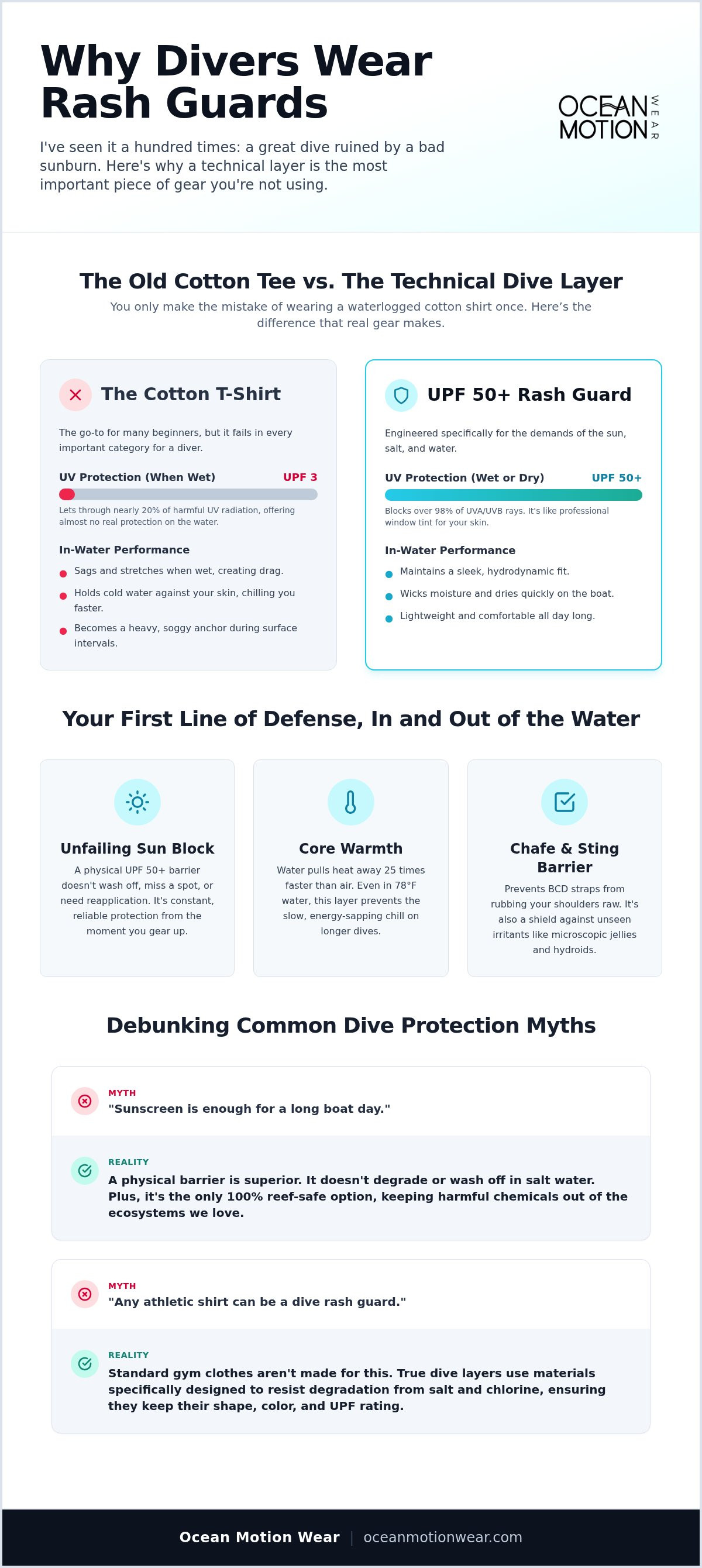
You probably think a rash guard is just for surfers or a way to make a wetsuit slide on easier. While that's true, understanding why divers wear rash guards involves looking at the technical benefits you can't get from a bottle of lotion or a cotton T-shirt. A standard white cotton shirt only has a UPF rating of about 5 to 7, which lets nearly 20% of UV radiation straight through to your skin.
In this article, we'll dive into why a UPF 50+ layer is a non-negotiable piece of gear for every kit. I'll show you how it prevents painful chafe, protects against jellyfish stings, and keeps our reefs healthy. We are going to debunk five common myths about underwater protection and help you find gear that looks as good as it performs.
Key Takeaways
- Discover why divers wear rash guards to maintain core warmth in 78-degree water and avoid the soggy weight of a waterlogged cotton shirt.
- Learn why UPF 50+ fabric provides a consistent shield against UV rays, working like professional window tint for your skin.
- See how a slick technical layer prevents painful BCD strap chafe and helps you slide into a thick wetsuit without the usual struggle.
- Understand the technical difference between recycled ocean-wear and standard gym clothes, specifically regarding salt and chlorine resistance.
- Get tips on choosing the right gear for your specific environment, from the Whale Shark collection for boat days to high-performance leggings for shore dives.
More Than Just a Shirt: Why We Layer Up in 78-Degree Water
78 degrees. On land, that's a perfect summer afternoon. In the water, it's a slow countdown to a chill. Water conducts heat away from your body about 25 times faster than air does. This thermal reality is exactly why divers wear rash guards even when the tropical sun is blazing. You might feel fine for the first twenty minutes, but as your core temperature begins its inevitable dip, you'll wish you had that extra layer of protection against the energy-sapping water.
I've watched plenty of divers jump in wearing old cotton gym shirts. It's a mistake you only make once. Cotton sags when wet, stays heavy, and holds cold water against your ribs long after you've climbed back onto the boat. A technical layer is different. When you understand what a rash guard is, you realize it's a precision tool made from synthetic blends like polyester or nylon. These materials don't stretch out of shape or become a soggy anchor during your safety stop.
My own "aha" moment happened on a morning boat out of Kona. The air was crisp, the boat coffee was hot, and the water looked like glass. I decided to skip my usual layer to feel "free." By the time I surfaced from the second dive, the heavy webbing of my BCD had rubbed my shoulders raw. Salt-softened skin is incredibly fragile. That friction created a stinging burn that made every subsequent dive a test of endurance rather than a joy.
The Reality of Warm Water Diving
"Skinning it" is often a rookie move that ignores the hidden hazards of the water. It isn't just about the BCD rub. Think about stray hydroids or the microscopic jellies that often drift through the water column. A rash guard provides a sleek, hydrodynamic barrier that protects you from these irritants. It also eliminates that uncomfortable feeling of salt-stiff swimwear rubbing against your skin during the long boat ride back to the harbor. This is a core reason why divers wear rash guards as a primary defense against the environment.
Meeting the Whale Shark Collection
We created the Whale Shark collection to celebrate the grace of the ocean's largest fish. These pieces are functional art. When you suit up in a pattern inspired by the starry spots of a whale shark, you carry a piece of the reef with you. It builds a sense of quiet authority and confidence on the dive deck. You aren't just wearing a shirt; you're wearing a commitment to performance and environmental mindfulness that sets the tone for your entire day underwater.
Myth #1: 'Sunscreen is Enough for a Long Boat Day'
We've all been there. You're on the back of a rocking dive boat, trying to rub white cream into your shoulders while the wind whips salt spray into your eyes. You think you're covered, but the reality of a four-hour surface interval in the equatorial sun is brutal. Sunscreen is a chemical filter that degrades over time; it's prone to washing off during your giant stride or being rubbed away by your gear. This is a primary reason why divers wear rash guards. A physical barrier doesn't expire, wash off, or miss a spot.
Think of a high-quality rash guard as professional window tint for your skin. It provides a permanent, consistent level of protection that doesn't require a mirror or a helping hand to apply. I've seen too many divers return from a day at Tunnels on Kauai with a perfect, painful handprint-shaped burn on their back because they couldn't reach between their shoulder blades. Fabric doesn't have that margin for error. It offers a level of certainty that a bottle of lotion simply can't match, especially when you're alternating between salt water and intense UV exposure.
UPF 50+ vs SPF: What Divers Need to Know
UPF stands for Ultraviolet Protection Factor and represents the amount of UV radiation that can penetrate a fabric to reach your skin. While SPF mostly measures how well a product blocks UVB rays (the ones that cause burning), UPF measures both UVA and UVB. This is a critical distinction for long-term skin health. According to The Skin Cancer Foundation's guide to UPF clothing, a wet T-shirt might only have a UPF of 3, while a dedicated dive layer hits UPF 50+. Over a single season, the cost of one durable garment is significantly lower than buying a dozen bottles of high-end sunscreen.
Protecting the Reefs We Love
Even "reef-safe" sunscreens are under scrutiny as we learn more about how chemicals like oxybenzone and octinoxate contribute to coral bleaching. The most environmentally mindful choice is to reduce the amount of product you put in the water. By choosing a piece from our Abalone collection, you're opting for a physical barrier that leaves zero chemical footprint on the delicate ecosystems we travel to see. It’s about more than just your skin; it’s about the health of the entire reef system. You can explore our full range of protective ocean gear to see how style and sustainability work together.
Myth #2: 'Wetsuits Provide All the Protection You Need'
There is a specific kind of frustration reserved for trying to pull a dry 5mm wetsuit over dry skin in 90% humidity. It's a physical struggle that usually ends in broken fingernails and a slightly elevated heart rate before you've even checked your air. A wetsuit is designed to trap water and keep you warm, but its interior texture is rarely skin-friendly. This friction is a major reason why divers wear rash guards as a foundational base layer. A thin, technical fabric acts as a slick interface, allowing the neoprene to slide effortlessly over your arms and shoulders.
Beyond the ease of getting geared up, a rash guard solves the "wetsuit hickey" problem. If you've ever finished a week of diving with raw, red welts around your neck or the back of your knees, you know that neoprene can be a cruel companion. The constant movement of a shore dive or a long drift can turn a small rub into a painful abrasion. I've found that a high-collar rash guard provides the perfect buffer against these friction points. It also offers a layer of modesty and comfort during the surface interval. When you peel your suit down to your waist to catch a breeze on the boat, you aren't left standing in just a bikini top or bare skin.
Solving the BCD Chafe Problem
Even if you skip the wetsuit in tropical water, your heavy scuba hardware won't be as forgiving. The primary rub zones are the tops of the shoulders, the armpits, and the lower back where the tank rest sits. During a particularly long shore dive at Tunnels on Kauai, I made the mistake of diving in just a swimsuit. By the time I navigated the shallow inner reef back to the beach, the weight of my integrated weights and tank had turned my shoulder straps into sandpaper. A performance-fit layer prevents the fabric from bunching under your straps, ensuring that the only thing you're thinking about is the turtle you just saw, not the bite of your gear. Safety organizations agree. I often look to DAN's advice on sun protection for divers to remind my students that protection doesn't stop once the gear is on.
Sting Protection in the Tropical Blue
The ocean is full of life that is beautiful to look at but painful to touch. Microscopic sea lice, drifting hydroids, and even accidental contact with fire coral on a wreck can ruin a trip. This is why divers wear rash guards with long sleeves. It provides a physical barrier against the "invisible" stings that often populate the top few feet of the water column. For total peace of mind, I always pair my top with Eagle Ray Collection Leggings. This full-body coverage ensures that a stray jellyfish tentacle in the surge won't turn your safety stop into a stinging ordeal.
Myth #3: 'Any Athletic Shirt Can Be a Dive Rash Guard'
I've seen plenty of divers walk onto the boat ramp in an old gym shirt or a cotton tee. On land, it feels like a practical choice. Once you hit the water, the difference between general athletic gear and technical ocean-wear becomes painfully clear. Gym clothes are designed to handle sweat and land-based friction, but they aren't built for the relentless chemical assault of salt water and chlorine. This is a core reason why divers wear rash guards engineered specifically for the marine environment.
Cotton is the biggest offender on a dive boat. It absorbs nearly thirty times its weight in water, becoming a heavy, saggy anchor that pulls heat away from your core. It doesn't just feel cold; it sags under your BCD, creating folds of fabric that can get caught in your buckles or weight belt. A true dive layer fits like a second skin. This streamlined fit ensures your gear stays exactly where it should, preventing the fabric from bunching up and causing the very irritation you're trying to avoid.
The Technical Side of Ocean Fabrics
Performance ocean gear uses a 4-way stretch construction. This is vital when you need to reach back to check your tank valve or adjust your regulator. If your shirt doesn't move with you, it restricts your range of motion at the worst possible moments. We also design our cuts with a longer torso to prevent the "ride-up" factor. Nothing is more distracting than having to tug your shirt down every time you surface. To keep your gear performing for years, always rinse it in fresh water immediately after your dive to remove salt crystals that can degrade the fibers.
Sustainability in Motion
We believe that protecting the ocean is just as important as protecting your skin. Our fabric starts as recycled plastic bottles and ghost nets that are processed into high-performance polyester. This circular approach reduces ocean waste while providing the durability needed for demanding dive days. We also use a made-to-order production model to eliminate overstock and waste. If you run a shop and want to bring these values to your customers, you can learn about our wholesale partnerships here.
Ready to upgrade your kit? Shop our full collection of sustainable dive layers.
Gear Up for Your Next Adventure: Choosing the Right Layer
Picking the right layer is the final step in your pre-dive ritual. It's about more than just a pattern. It's about preparing for the specific demands of your day. If I'm heading out for a long boat day in Kona, my priority is maximum UV protection and breathability. If I'm prepping for a chilly shore dive in Southern California, I'm looking for a slick base layer that won't bunch up under my 7mm neoprene. This environmental context is why divers wear rash guards that are purpose-built for their specific needs.
Matching your gear to your passion makes every dive feel more personal. Whether you're drawn to the gentle giants represented in the Whale Shark collection or the sleek movement of the Eagle Ray designs, your kit should reflect the marine life you're there to protect. A high-quality layer is a tool that ensures you stay focused on the reef rather than your own discomfort. Your gear should be as adaptable as you are.
Before you zip your gear bag, run through this essential protection checklist:
- A high-performance rash guard for core and arm protection.
- Full-coverage Eagle Ray Collection Leggings for sting and abrasion defense.
- An ocean-themed headband to keep salt-matted hair out of your mask seal.
From Boat to Beach
One of my favorite things about a well-designed piece is its versatility. You shouldn't have to change in a cramped boat head just to grab lunch at the harbor. Our designs are built with a sophisticated aesthetic that looks as good at a cafe as it does at 60 feet. This transition from performance to lifestyle is another reason why divers wear rash guards that prioritize both style and substance. If your adventures take you above the surface, check out our kayaking gear guide for multi-sport protection tips.
Join the Ocean Motion Community
Wearing our gear is a way to express your identity as a dedicated ocean enthusiast. You aren't just buying a shirt. You are supporting a small, independent, woman-owned business that actually dives. We understand the specific pain of a mask tangle and the importance of a sustainable supply chain. It's about craftsmanship and a shared respect for the blue world we love. Explore the Abalone collection or find your perfect fit in our full range of sustainable gear today.
Prepare for Your Next Giant Stride
We've busted the myths that sunscreen or a wetsuit alone are enough for a full day on the water. A technical layer is about more than just aesthetics. It's a piece of safety gear that protects your skin from friction, stinging hydroids, and the relentless UV rays of a tropical surface interval. Choosing the right fabric means you can focus on the manta rays in the blue instead of the burn on your shoulders.
Understanding why divers wear rash guards helps you make better choices for your comfort and the health of the reef. Our gear provides UPF 50+ sun protection and is crafted from recycled ocean plastics to keep our playground clean. We design these pieces because we are divers who have felt the bite of a BCD strap and the sting of sea lice. We want you to feel both capable and secure every time you roll off the boat.
Don't let gear failure or a preventable sunburn cut your dive trip short. Explore the full Ocean Motion Wear collection for your next dive. I'll see you in the water, protected and ready for whatever the current brings.
Frequently Asked Questions
Do I really need a rash guard if I'm wearing a wetsuit?
Yes, a thin layer underneath makes the process of sliding into a thick 5mm or 7mm suit much smoother. Neoprene often grips dry skin, which leads to tugging and broken fingernails. A rash guard acts as a slick interface, allowing the suit to glide over your limbs. It also adds a vital layer of protection against neck chafe and "wetsuit hickeys" during multiple dive days.
Can a regular t-shirt work as a rash guard for diving?
No, a cotton t-shirt is one of the worst things you can wear on a dive boat. Cotton is highly absorbent and stays heavy and cold against your skin, which can lead to a drop in core temperature. It also sags when wet, causing it to bunch up under your gear. This lack of performance is why divers wear rash guards made from synthetic, quick-drying materials instead.
Is UPF 50+ better than using reef-safe sunscreen?
UPF 50+ is generally more reliable because it provides a permanent physical barrier that doesn't wash off or require reapplication. While reef-safe sunscreen is a great secondary tool, it's easy to miss spots on your back or have it rub off under your BCD straps. A high-quality rash guard offers consistent protection throughout the entire day, ensuring no part of your skin is left vulnerable to the sun.
How should a dive rash guard fit, tight or loose?
Your gear should have a snug, "second-skin" fit to ensure it stays in place under your scuba hardware. If the fabric is too loose, it will bunch up under your straps and cause the very skin irritation you are trying to avoid. A tight fit also improves your hydrodynamics and prevents the shirt from floating up around your waist during your safety stop or surface interval.
What happens if I wear a rash guard in a swimming pool?
You can certainly wear your rash guard in a pool, but you must rinse it thoroughly in fresh water afterward. Chlorine is much harsher on technical fibers than salt water and can eventually cause the fabric to lose its elasticity. To keep your gear performing for years, always wash away the pool chemicals immediately after your session to prevent them from sitting in the recycled fibers.
Can rash guards protect against jellyfish stings?
Yes, they provide an excellent physical defense against sea lice, drifting hydroids, and minor jellyfish stings. While they won't stop a major sting from a Man-o-War, the long sleeves act as a shield against the microscopic irritants that often populate the water column. This protective layer is a major reason why divers wear rash guards when exploring tropical reefs or overgrown wreck sites.
How do I care for my recycled material rash guard after a salt dive?
The best way to care for your gear is to rinse it in cool, fresh water as soon as you get back to the dock. Salt crystals can act like tiny pieces of sandpaper, wearing down the fabric if they are allowed to dry into the weave. Never wring the shirt out; instead, gently squeeze the water out and hang it to air dry in a shaded spot away from direct UV rays.
