


Last November, while enjoying a day at the coast, I watched a friend’s "bargain" bikini top lose its battle with a modest three-foot set. It wasn't just the wardrobe malfunction that stung. It was the realization that her suit would likely end up in a landfill by Christmas because the cheap elastic had already quit. Finding sustainable swimwear that survives a real duck-dive shouldn't feel like a compromise between your ethics and your performance in the water.
We all want to protect the places we play, yet it's frustrating when eco-friendly gear stretches out or lets the sun bake your skin through thin, flimsy fabric. I've spent years testing recycled fibers in everything from invigorating ocean currents to warm, sun-drenched waters to see what actually holds up. This guide will teach you how to spot high-quality recycled materials, understand the impact of the new 2026 textile regulations, and choose pieces that protect your skin as effectively as a professional car window tint. We are diving deep into the technical certifications and construction secrets that keep your gear on your body and plastic out of the food chain.
Key Takeaways
- Prioritize durability as your primary sustainability metric. A suit that survives five years of surf and salt is far better for the ocean than a "green" alternative that fails after one season.
- Demand professional-grade UPF 50+ protection that is built directly into the fabric weave. This blocks 98 percent of harmful rays and eliminates the need for reef-damaging chemical sunscreens.
- Learn to identify high-performance sustainable swimwear by testing for functional details like flatlock stitching and a "Giant Stride" proof fit.
- Discover how recycled ocean plastics are transformed into performance gear. High-quality construction keeps these materials in your wardrobe and out of the microplastic cycle.
- Verify the production model before you buy. Made-to-order manufacturing is a powerful way to reduce textile waste and ensure your gear is created with intention.
Why Your Choice of Swimwear Matters for the Ocean (and Your Skin)
I've stood on many dive decks, rinsing salt-stiff fabric in a communal freshwater bucket while the smell of diesel and boat coffee hung in the air. We've all seen that one diver whose suit has lost its fight with the ocean. The elastic is shot, the colors have faded to a dull grey, and the fabric is so thin it’s practically translucent. It’s a gear failure that usually happens at the worst time, like halfway through a week-long liveaboard. This is the hidden reality of fast fashion in the water. Most sustainable swimwear conversations focus on the "eco" label, but I believe durability is the ultimate metric.
If a suit lasts you five years of heavy surf and sun, it's infinitely better for the planet than a "green" suit that hits a landfill after twelve months. Traditional virgin nylon is a disaster for our reefs. It relies on petroleum and sheds microplastics every time you kick your fins. By choosing gear built for the long haul, we break that cycle of waste. We need equipment that respects the environment as much as it respects our need for performance.
The Environmental Impact of Your Beach Bag
Virgin plastic production is a massive drain on resources. We see the impact every time we find a discarded bottle on a beach like Shipwreck Beach in Lanai. The broader movement of Sustainable fashion seeks to replace these harmful cycles with circular ones. At Ocean Motion Wear, we use made-to-order production to ensure we never create a mountain of unsold stock that ends up in a furnace. Our Whale Shark collection uses recycled materials that actually perform under pressure. This approach ensures that your sustainable swimwear isn't just a purchase, but a contribution to a cleaner ocean.
Skin Protection as a Performance Requirement
I’ve learned the hard way that "reef-safe" sunscreen is often a marketing gimmick. Even the best minerals can wash off or irritate your skin during a long surface interval. Covering up is simply more effective. It's like a car window tint for your body. High-quality long-sleeve rash guards are my gold standard for tropical boat days. They provide a physical barrier that doesn't quit. We also think about the specific needs of different divers. For instance, our technical headbands are a lifesaver for protecting a bald scalp from a nasty burn without the bulk or drag of a hood. This level of protection keeps you in the water longer and safer.
The Tech Behind the Fabric: How Recycled Plastic Becomes Performance Gear
I've spent years testing gear in the field, and I can tell you that "recycled" is only the beginning of the conversation. True sustainable swimwear is defined by the technical weight of the fabric and the precision of the weave. When you're hauling yourself over the gunwale of a dive boat after a long drift, you need fabric that holds its integrity. High-quality recycled fibers feel smooth and cool against sun-warmed skin. They lack the abrasive, scratchy texture found in cheap, mass-produced synthetics. It's a difference you can feel the moment you pull the suit on.
What is UPF 50+ and Why Does it Matter?
I like to think of UPF as a high-end car window tint for your skin. SPF lotions are helpful, but they eventually wash off in the swell or rub away under your gear straps. UPF protection is different because it's a physical property of the fabric itself. It doesn't require re-application, and it won't leave an oily film on your dive mask. This is a game-changer for long boat days where the tropical sun is relentless. UPF 50+ is the industry standard for blocking 1/50th of UV radiation, ensuring that 98 percent of harmful rays never reach your skin.
The Journey from Waste to Wearable
The transition from ocean waste to performance gear is a feat of modern engineering. Discarded plastics, including ghost fishing nets and post-consumer bottles, are processed into soft, quick-drying yarn. We look for materials that provide excellent compression to prevent the dreaded "saggy swimsuit" syndrome. If the fabric doesn't have a high recovery rate, it'll lose its shape after the first few dives. We also believe that sustainable design must include everyone. Inclusive sizing ensures that high-performance gear is available for every body, regardless of where your adventures take you.
Resilience is another critical factor. Performance fabrics must be engineered to withstand both the corrosive nature of salt water and the harsh chemicals found in swimming pools. Chlorine is notoriously aggressive. It often snaps the elastic fibers in standard suits within a few weeks. Technical recycled fabrics are built to resist this degradation through superior material science. You can feel this commitment to durability when you explore our full collection of ocean-ready gear. It's about creating pieces that stay in your kit for years, not just one season.
Function Over Fashion? Why You Need Both for Active Ocean Days
I've stood on the edge of a dive boat in Cozumel, ready to giant stride into the blue, only to see a fellow diver's top shift dangerously upon impact. It’s the ultimate test for your gear. If your bikini can’t handle a four-foot drop into the water, it isn’t ready for the ocean. I have a strong stance on this. Skip the flimsy side-ties and delicate bows. For real ocean work, you need fixed-back sports bras and high-coverage bottoms that stay put when the surge gets heavy.
Finding sustainable swimwear that looks as good as it performs is the sweet spot. I love wearing pieces from our Abalone collection because the intricate, ocean-inspired patterns often start conversations about reef conservation before we even hit the water. It’s gear that carries a message while doing its job. You shouldn't have to choose between looking like a professional and protecting the environment you love.
Diving and Snorkeling Essentials
Rash guards are about more than just avoiding a sunburn. On a recent trip to the Florida Keys, my long-sleeve top was the only thing between me and a stray sea blubber jellyfish. It’s a physical shield against stings and abrasions. For women, a performance headband is a non-negotiable tool. It prevents the dreaded mask-strap tangle that can rip out handfuls of hair after a sixty-minute dive. If you're layering under a wetsuit, our high-waisted leggings are a savior. They prevent "wetsuit chafe" on your waist and knees, making those long days in the water much more comfortable.
Boat Life and Surface Intervals
The ride back to the dock is often the coldest part of the day. When the wind hits your damp skin at twenty knots, you'll be thankful for a recycled material windbreaker. Our fabrics are designed to be quick-drying, moving you from a soaked state to feeling dry in about ten minutes. This versatility is key for packing light. I prefer pieces that can transition from a morning of snorkeling to a beachside cafe without looking like technical dive gear. Choosing multi-functional sustainable swimwear means you carry less and use your gear more often, which is a win for both your luggage and the planet.
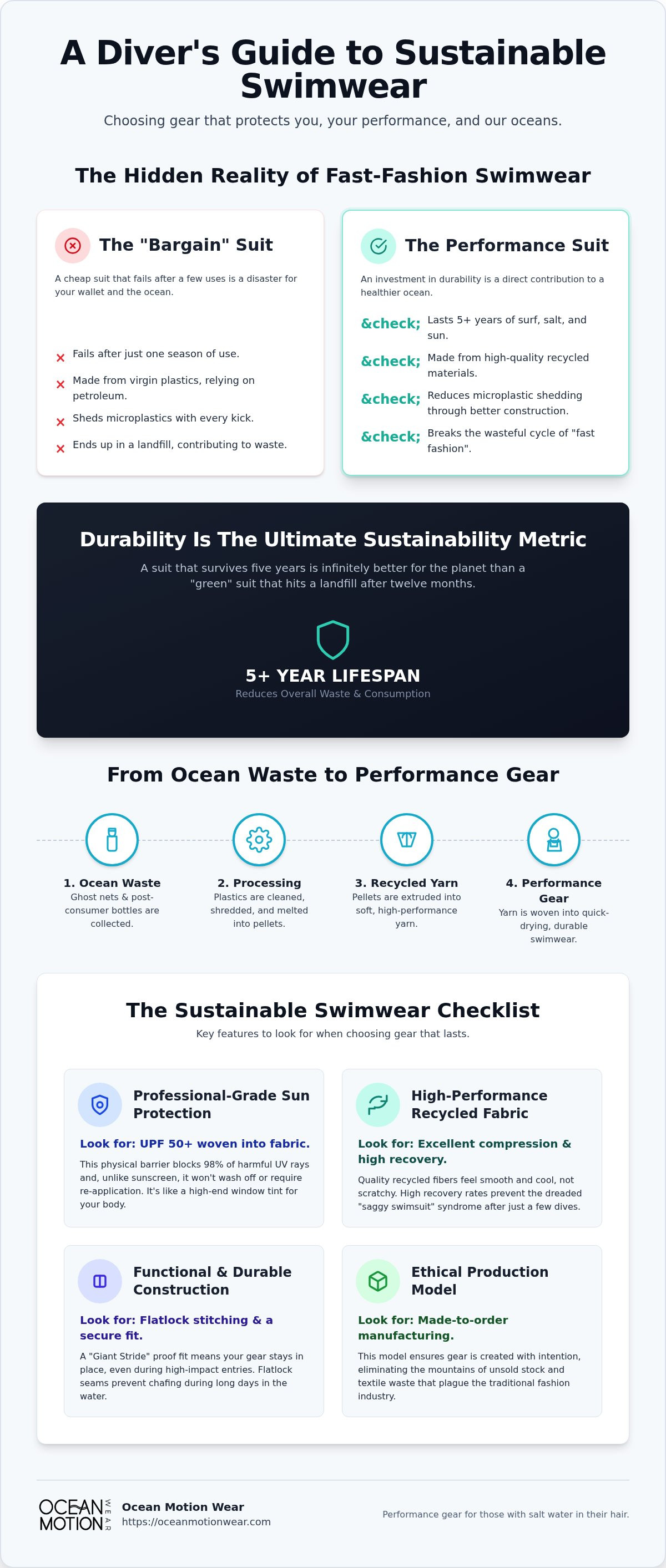
The Sustainable Swimwear Buying Checklist: What to Look for in 2026
I've learned that looking for an "eco-friendly" label on a tag isn't enough. By 2026, new regulations like the California Responsible Textile Recovery Act have pushed brands toward better transparency, but you still need to know how to judge technical quality. Sustainable swimwear should feel like a piece of professional equipment, not a disposable accessory. When I'm prepping for a trip to the reefs of Belize, I run every piece of gear through a specific mental checklist to ensure it won't fail me when the swell picks up.
- Check the UPF rating: If it isn't 50+, it isn't professional grade. This is the difference between a real physical shield and a thin veil that lets UV rays through.
- Inspect the seams: Rub your hand over the stitching. You want flatlock seams that sit flush against the fabric. This prevents the raw, red skin that ruins a three-hour paddle session.
- Verify the material source: Look for specific mentions of GRS-certified recycled content. Brands should be able to tell you exactly where their fibers come from.
- Evaluate the production model: Does the brand hold massive amounts of inventory, or do they use a made-to-order approach? We chose made-to-order because it's the only way to truly eliminate the mountain of unsold stock that plagues the fashion industry.
Professional partners and dive shops can find these same rigorous standards on our wholesale page. It’s about building a kit that respects the water as much as you do.
Sizing and Fit for Performance
Don't size for how you look standing still in a locker room. Size for how you move in the surf. Compression is your friend in the water. If you're between sizes, I always recommend going for the tighter fit to ensure the fabric doesn't sag or shift during a dive. You can find more specific advice on choosing high-intensity fits in our kayaking gear guide. Measuring yourself at home with a soft tape measure is the best way to ensure a made-to-order suit fits like a second skin.
Care Instructions to Extend Gear Life
The "freshwater rinse" rule is non-negotiable. Salt is the enemy of elasticity. It crystallizes inside the fibers and snaps them over time. I always rinse my gear in a bucket of fresh water immediately after a dive, even before I grab a post-dive snack. To minimize microplastic shedding, wash your swimwear in a dedicated wash bag. Air-drying in the shade preserves the UPF-protective fibers better than a hot dryer. If you’re ready to invest in gear that’s built for the long haul, explore our full range of performance apparel.
Investing in Purpose: The Ocean Motion Wear Sustainable Collection
We didn't set out to build a clothing brand. We were simply divers who were tired of watching our gear fail in the middle of a trip. I've spent enough time in the South Pacific to know that salt water and intense UV rays are the ultimate stress tests. When your leggings shred during a shore entry or your top loses its elasticity after three days, it's more than an inconvenience. It's a waste of resources. We created Ocean Motion Wear to provide sustainable swimwear that actually stands up to the demands of an active ocean lifestyle.
Our collections are born from this "human who dives" perspective. The Whale Shark Collection Rashguards celebrate the ocean's gentle giants with artwork that feels as powerful as the animals themselves. For those who prefer a more iridescent aesthetic for boat days or shore dives, the Abalone Collection Swimwear offers elevated style without sacrificing an ounce of performance. Every piece is built to order. This is a stance we're proud to take. By manufacturing only what is requested, we ensure that no garment ever ends up in a landfill as unsold deadstock. It's the most responsible way to create apparel in 2026.
Beyond the Bikini: Full Performance Kits
A single piece of gear is rarely enough for a full day on the water. We design our pieces to work as an integrated system. You can pair our rash guards with Eagle Ray Collection Leggings and an ocean-themed headband to create a complete UPF 50+ shield. This setup is a favorite among professional divers who spend hundreds of hours submerged. It protects against sun, stings, and equipment chafe. When the dive is over, our recycled material windbreakers provide the perfect layer for the coastal breeze. This is gear designed for the reality of the ocean, not just the aesthetic of the beach.
Join the Ocean Motion Community
When you choose our gear, you're supporting a small, independent, woman-owned business. We aren't a massive corporation. We are a team of ocean lovers who believe that the people who play in the water should be its fiercest protectors. Our vision is to equip you with tools that make you feel capable, secure, and ready for any environment. We invite you to explore our full range of performance gear and find the pieces that will accompany you on your next adventure. The ocean is calling. Let's make sure we're ready to answer.
Gear Built for the Blue
Choosing gear that respects the water shouldn't be a compromise. We've seen that the best sustainable swimwear is defined by its ability to survive the salt and the surf while providing technical protection. Remember to look for built-in UPF 50+ rather than relying on chemicals. Prioritize durability and made-to-order production to ensure your equipment stays in your kit and out of the landfill. This approach ensures we protect our skin and our oceans simultaneously.
Our designs are born from hundreds of hours in the water at places like Tunnels on Kauai. We use ocean-inspired artwork to tell a story of conservation and craft every piece with a protective, performance-first mindset. Whether you're prepping for a drift dive or a long paddle, your gear should be as resilient as the ecosystems you explore. We believe that when you feel secure in your equipment, you're free to focus on the beauty of the reef.
Explore our full collection of sustainable performance swimwear and find your next ocean-ready kit. The blue is waiting. We'll see you out there.
Frequently Asked Questions
Is sustainable swimwear actually as durable as traditional swimwear?
High-quality sustainable swimwear is often more durable than traditional options because it uses regenerated fibers engineered for performance. I've found that recycled nylon holds its shape better after 50 dives than standard virgin fabrics. It is specifically designed to resist the corrosive effects of chlorine and salt water. When your gear lasts for years, you reduce the need for constant replacements. This longevity is the most effective way to keep waste out of our oceans.
How do I know if a swimwear brand is truly eco-friendly or just greenwashing?
You can spot authentic brands by looking for third-party certifications like the Global Recycled Standard (GRS). Avoid companies that use vague "eco" buzzwords without providing technical data. Truly responsible brands are transparent about their materials and production models. We use a made-to-order system to prevent overproduction. If a brand cannot tell you where their recycled fibers originate, they are likely just greenwashing their marketing.
What is the best way to wash my recycled swimwear to prevent microplastics?
The most effective method is using a microplastic wash bag to catch synthetic fibers during the cycle. I always wash my gear in cold water and skip the spin cycle to minimize friction. Air-drying in the shade is better than using a hot dryer. Heat is the enemy of elastic fibers and leads to more shedding. A quick freshwater rinse after every session at Tunnels on Kauai is usually all you need.
Does UPF 50+ protection wash out of the fabric over time?
No, the protection is permanent because it is a physical property of the fabric's weave. Think of it as a car window tint for your body. It is not a chemical treatment that can disappear in the wash. As long as the fabric remains in good condition, it will continue to block 98 percent of UV radiation. This makes it a far more reliable shield than sunscreen for long boat days.
Why should I choose a rash guard over just wearing more sunscreen?
A rash guard provides a physical barrier that never needs re-application. Sunscreen can wash off in the swell or irritate your eyes during a dive. Even "reef-safe" options can have a cumulative impact on delicate ecosystems. I choose a long-sleeve top from the Whale Shark Collection because it also protects against jellyfish stings and wetsuit chafe. It is a professional-grade tool that keeps you in the water longer.
Can I wear sustainable performance leggings for activities other than swimming?
Yes, our Eagle Ray Collection Leggings are designed for multi-sport use. The high-compression fabric works just as well for a morning yoga session as it does for a shore dive. They are quick-drying and breathable, which makes them perfect for hiking or kayaking. I've worn mine for hours of coastal exploration without any discomfort. High-performance sustainable swimwear should be the most versatile part of your gear bag.
What makes made-to-order swimwear more sustainable than traditional retail?
Traditional retail creates massive amounts of unsold inventory that often ends up in furnaces or landfills. Our made-to-order model ensures we only manufacture exactly what our community needs. This eliminates waste and reduces our overall environmental footprint. It requires a bit more patience, but it represents the future of responsible manufacturing. Every piece is crafted with purpose rather than being part of a mountain of deadstock.
How do I choose the right size for a performance-fit rash guard?
You should choose a size that feels snug and supportive like a second skin. If a rash guard is too loose, it will ride up or cause drag while you're swimming. I always use a soft tape measure to check my dimensions before ordering. If you find yourself between sizes, I recommend sizing down for a true performance fit. This ensures the fabric stays in place during high-intensity activities like surfing or diving.
