


Most quick-dry claims in activewear rely on chemical finishes that wash away after a dozen saltwater sessions, leaving behind soggy fabric and toxic runoff. Finding a truly sustainable quick-dry rashguard for women requires looking past greenwashed marketing and choosing garments engineered with mechanical, fiber-level moisture wicking.
We have all spent 45-minute surface intervals shivering in clammy synthetics while salt crystals and BCD straps grind against bare shoulders. You need gear that moves with your body, shields against harsh tropical sun, and eliminates reef-damaging chemical lotions without breaking down or shedding microfibers after one season.
You do not have to compromise on athletic performance to protect marine ecosystems. In this guide, I share how recycled poly-spandex textiles deliver permanent UPF 50+ sun protection, shed water rapidly through capillary action, and prevent chafe on long dive days. Here is our 2026 breakdown of fabric standards, fit considerations, and real-world durability to help you invest in water wear that lasts.
Key Takeaways
- How to spot a true sustainable quick-dry rashguard for women engineered with grooved capillary fibers that shed water rapidly without wash-off chemical coatings.
- Why tight-weave UPF 50+ recycled textiles provide dependable UV protection while keeping chemical sunscreen washes off delicate coral reefs.
- Ergonomic cut features, including extended torso lengths and smooth flatlock stitching, that prevent riding up and chafing under scuba BCD harnesses or surfboard decks.
- How to balance second-skin performance compression with relaxed cuts based on your ocean sport, from high-friction surfing to deep-water diving.
- The four-step post-session care routine that stops salt crystallization, protects stretch elasticity, and keeps technical swimwear out of landfills.
What Defines a High-Performance Sustainable Quick-Dry Rashguard for Women?
A technical rash guard is not just a glorified swim shirt. Originally designed to protect surfers from wax scrape and board friction, a high-performance rash guard serves as an eco-engineered barrier against severe UV rays, mechanical abrasion, and evaporative heat loss. Premium post-consumer recycled polyesters and nylons match or exceed virgin petroleum synthetics in saltwater durability. They resist salt degradation, hold tensile elasticity through hundreds of submersion cycles, and provide reliable defense against jellyfish stings and abrasive scuba harnesses.
The real enemy on open water is evaporative wind chill. When you climb onto a skiff after a dive, breeze sweeping over drenched fabric pulls core heat away instantly. A thoughtfully constructed sustainable quick-dry rashguard for women sheds surface water swiftly, breaking that evaporative cooling cycle so you stay warm through long intervals without having to peel off tight layers.
Wearing dense barrier textiles also directly protects fragile ecosystems. Topical sun lotions, even those claiming to be reef-safe, can wash off into marine environments and stress coral reefs. Dense protective knits eliminate the need for chemical sunscreen across your torso, arms, and neck entirely.
Hydrophobic Fibers vs. Chemical Surface Coatings
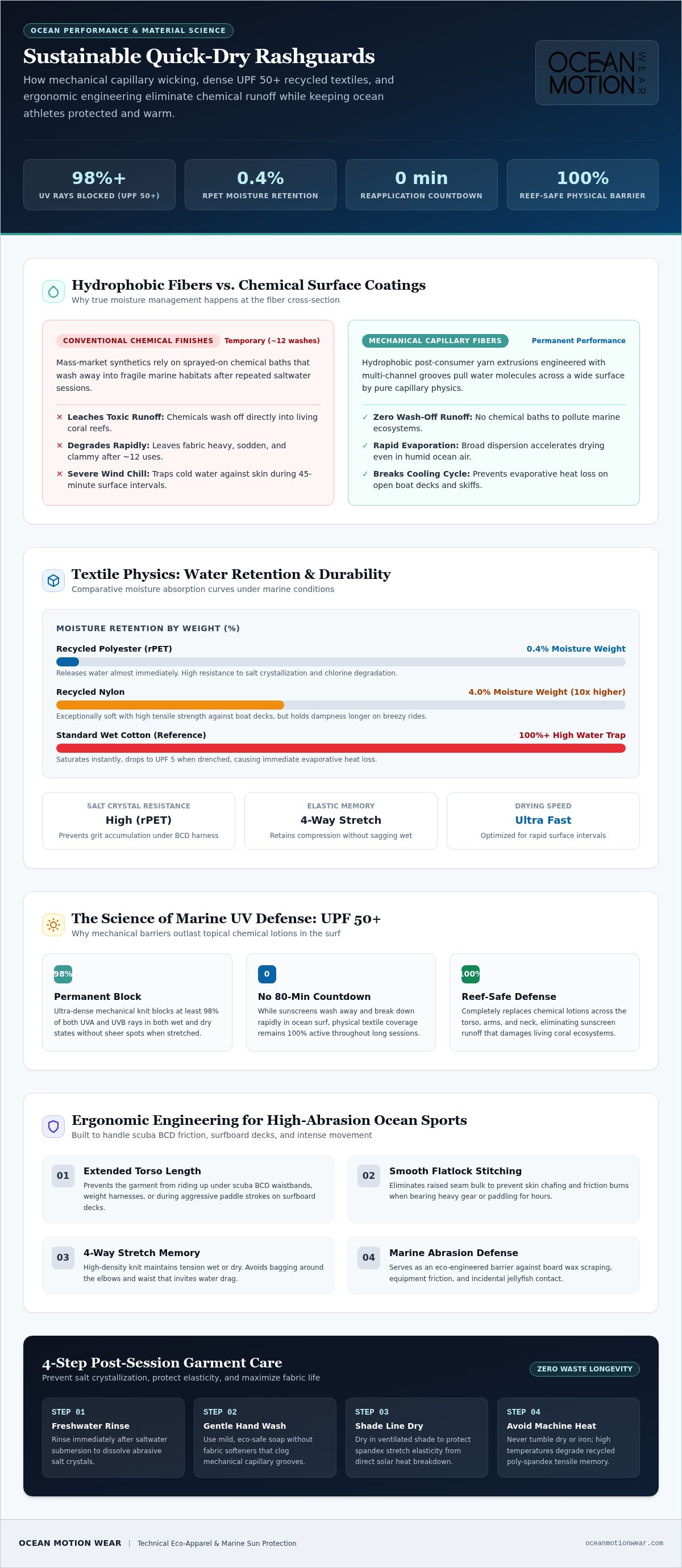
Fast drying should come from fiber physics, not chemical additions. Many mass-market brands spray synthetic shirts with chemical finishes to force moisture run-off. These surface baths inevitably leach out into reefs after repeated washes, leaving the shirt sodden and heavy. True quick-dry performance relies on inherently hydrophobic, post-consumer yarn extrusions. These grooved micro-channels pull moisture droplets across a broad surface area by pure capillary force, speeding up evaporation without shedding chemical residues into the sea.
The Reality of Marine Sun Protection: UPF 50+ Science
Ultraviolet Protection Factor (UPF) measures how effectively a textile blocks both UVA and UVB radiation, tested across both wet and dry fabric states. Unlike a thin cotton tee that drops to an unsafe UPF 5 when drenched, a true sustainable quick-dry rashguard for women relies on an ultra-dense mechanical knit that naturally blocks at least 98 percent of harmful ultraviolet rays.
- No degradation from salt or sweat: The physical weave does the blocking, meaning your UV shield cannot wash away mid-session.
- Zero 80-minute countdowns: Sunscreens break down rapidly in ocean surf, while woven UPF 50+ defense remains fully intact for the entire day.
- Reef-friendly security: Physical coverage bypasses complex sunscreen regulations while preserving living reefs.
Evaluating Technical Features: Materials, Drying Speeds, and Seam Construction
A high-performance sustainable quick-dry rashguard for women relies on the physics of capillary action rather than chemical trickery. When fabric gets soaked, grooved multi-channel yarn cross-sections draw water molecules away from your skin through microscopic channels, spreading the moisture across a vast exterior surface area. This broad dispersion accelerates evaporation even in salty, humid ocean air, keeping you warm between sets.
Four-way stretch textiles ensure that once wet, the garment retains its memory. Low-grade synthetics bag out and sag around your elbows and waist when submerged, inviting water drag and friction burns. High-density knit construction keeps the garment firmly fitted to your frame wet or dry, maintaining verified UPF clothing standards without sheer spots when stretched over the shoulders.
Recycled Polyester vs. Recycled Nylon Performance
While both materials dominate sustainable swimwear, their water-absorption curves differ sharply in open water:
- Recycled polyester (rPET): Holds roughly 0.4 percent moisture by weight. It releases water almost immediately, resists salt crystallization, and holds color vibrancy against harsh chlorine and intense sun.
- Recycled nylon: Absorbs roughly 4 percent of its weight in water, which slows evaporation times. While exceptionally soft with high tensile strength against gritty boat decks, it stays damp longer during breezy boat rides.
- Our preference: Recycled polyester-spandex blends consistently outperform nylon when quick surface-interval drying is your primary objective.
Chafe-Free Seams and Anatomical Panel Architecture
Stitching makes or breaks water wear. Overlock seams leave raised, abrasive ridges that press hard into your skin when clamped beneath a snug scuba harness or surf wax. In contrast, flatlock stitching interlocks threads flat against the fabric surface. This eliminates raised ridges entirely and prevents painful friction burns on tender areas like inner biceps and ribs.
Panel design matters just as much as stitch tension. Ergonomic raglan sleeves eliminate standard shoulder seams, letting your arms rotate cleanly through surf paddling and freestyle strokes without restriction. Strategic seam placement keeps thread lines completely off high-wear pressure points under the arms and across the collarbones.
If you need dependable ocean gear designed by female divers for heavy saltwater use, explore our complete line of technical rash guard women tops built with chafe-free construction.
Versatility Across Ocean Sports: From Scuba Layers to Paddleboarding
A single well-crafted top should carry you from dawn patrol on a surfboard to an afternoon two-tank boat dive. For active water women, versatility comes down to how well apparel handles high-load contact zones. A functional sustainable quick-dry rashguard for women must withstand mechanical friction, whether that means rubbing against a coarse deck, paddling prone against textured wax, or carrying thirty pounds of scuba gear.
One critical construction detail separates dedicated ocean wear from generic fashion tops: torso length. Standard athletic shirts ride up the moment you reach forward to paddle or twist your torso. An extended hem stays tucked neatly beneath a scuba buoyancy compensator or weight belt. This extra coverage prevents direct contact between bare skin and heavy nylon webbing, stopping raw chafing before it starts.
Heading back to the marina at twenty knots creates instant evaporative chill. When your top sheds water quickly, the fabric acts as a physical wind barrier rather than an icy compress against your ribs. Layering this piece beneath a neoprene suit also makes pulling on stiff sleeves effortless, creating a silky slip layer that prevents painful skin tugging during gear-up.
Scuba Diving and Snorkeling Equipment Integration
Scuba diving exposes apparel to intense local pressure. Heavy tank bands and harness shoulder straps grind salt and sand directly into your skin. A durable rash guard cushions these contact zones without adding positive buoyancy to your dive profile. It also provides peace of mind around coral bommies, acting as a second skin against stray hydroids or stinging jellyfish tentacles floating in warm currents.
Surface Water Sports: Kayaking, SUP, and Surfing
Surface disciplines demand upper-body rotation and lasting chest protection. Surfers need dense fabric across the rib cage to block abrasive wax scrape during hours of paddling out through the break. For sit-inside kayaks and stand-up paddleboards, broad shoulder cuts prevent seam friction while managing heat exposure under full sun. To explore dedicated layering strategies for sit-on-top boats and coastal touring, check out our guide on what to wear kayaking for women.
- High-collar protection: Shields the delicate base of your neck from paddle drip and back-glare.
- Salt-resistant elasticity: Keeps its close contour even when subjected to heavy whitewater turbulence.
- Universal utility: Transitions seamlessly from wet reef exploration to drying out on the beach.
How to Choose the Right Fit, Coverage, and Design for Your Body
Dialing in the right cut transforms technical ocean wear from a drawer ornament into your favorite piece of gear. When evaluating a sustainable quick-dry rashguard for women, prioritize how the garment behaves in turbulent water over how it sits on a dry hanger. Fabric relaxes slightly once submerged. If a top fits loosely on land, it balloons in the surf, billows around your shoulders, and traps drag during swim strokes.
Inclusive tailoring means accommodating athletic lats, fuller busts, and longer torsos without pinching bands or suffocating compression. High-grade four-way stretch allows the garment to hug your curves smoothly while maintaining continuous contact with your skin. Ocean-inspired prints do more than celebrate pelagic life. Vibrant designs break up harsh salt lines and mask cosmetic sunscreen transfer across multiple dive sessions.
Compression Fit vs. Relaxed Sun Shirts
Your primary water sport dictates your fit profile:
- Second-skin performance fit: Ideal for scuba, freediving, and surfing. Snug compression locks fabric against your skin, eliminating excess material that chafes under dive gear or drags while paddling. Size down if you are between sizes for high-movement sports.
- Semi-relaxed sun shirt: Better suited for casual paddleboarding, sailing, or beach intervals. Gives you breathing room while keeping skin protected, though loose sleeves flap in high wind and balloon if you take an unexpected spill.
- Sizing checklist: Measure your chest and torso length accurately. Focus on shoulder mobility and torso reach so the hem stays securely down when arms are overhead.
Necklines, Sleeves, and Hem Security
Small tailoring choices make a massive difference under tropical sun. A snug, mock-crew neckline sits higher than standard fashion collars, shielding the vulnerable base of your neck while you float prone on the surface looking down at coral reefs. Low scoop necks expose upper chest and trap muscles to brutal UV rays that reflect off the sea.
Full-length sleeves protect delicate wrist joints, forearms, and elbows from deck abrasion and constant sun. Look for a curved, drop-tail hem that adds an extra two inches in the rear. This slight extension stays tucked into your swim shorts or leggings, ensuring zero gap exposure even when bending down to adjust your fin straps.
Ready to upgrade your warm-water gear with cuts tested for actual ocean movement? Shop our women's technical rash guards to find your ideal fit.
Caring for Sustainable Swimwear: Maximizing Fabric Longevity and Ocean Health
A technical garment only stays high-performing if you protect the microscopic structure of its fibers. When sea water evaporates from unrinsed activewear, sharp microscopic salt crystals form inside the yarn weave. As you move, those jagged crystals act like tiny knives, cutting internal elastane filaments and permanently destroying elastic recovery. Taking five minutes to care for a sustainable quick-dry rashguard for women preserves tensile snap and prevents premature textile disposal.
High temperatures are the fastest way to ruin recycled synthetics. Machine dryers and scorching water melt poly-spandex bonds, turning flexible fabric stiff and brittle. Heat damage also loosens tight knit weaves, compromising the garment's built-in UPF 50+ barrier. Treating ocean gear with gentle, heat-free habits extends its functional lifespan over hundreds of dive hours.
Step-by-Step Saltwater Gear Care Routine
Rinsing gear after a long day on the water is muscle memory for divers. Treat your technical apparel with the same discipline you give your regulators:
- Rinse immediately: Submerge in cold fresh water right after peeling off your gear to dissolve salt crusts, sunscreen oils, and gritty beach sand.
- Press gently: Never twist or wring the sleeves aggressively. Rolling the top in a dry towel and pressing firmly extracts water without snapping internal threads.
- Dry flat in the shade: Direct tropical sun bakes wet synthetic fibers. Hang your top over a wide rail in a breezy, shaded spot away from direct UV exposure.
- Filter your wash: When machine washing is necessary, use a gentle cycle with a specialized microfiber-catching wash bag to stop synthetic filaments from reaching coastal waterways.
Responsible Manufacturing and the Power of Made-to-Order
Extending garment life is only half the ecological equation. Conventional fashion manufacturers churn out massive seasonal runs, burning or dumping unsold deadstock into overflowing landfills. Choosing made-to-order production cuts manufacturing waste at the root, ensuring fabric is only dyed, cut, and assembled when an adventurer actually needs it.
Conscious production pairs technical utility with ocean reverence. You can see this intentional approach across our pelagic-inspired gear, including the fluid patterns in the Whale Shark collection, designed to honor the world's largest fish. For those who love the iridescent shimmer of mollusk shells, our durable Abalone collection delivers lasting color retention through rigorous salt exposure. We also equip eco-focused dive shops and charter operators directly through our wholesale program, helping water professionals outfit their crews in purposeful, long-lasting gear.
Equip Your Next Ocean Adventure with Confidence
Your gear should work as hard as you do in the water. Choosing a true sustainable quick-dry rashguard for women means investing in mechanical capillary wicking, verified UPF 50+ sun protection, and seam architecture that eliminates harness chafe for good. It also means taking a stand for ocean health by keeping chemical sunscreen runoff off fragile reefs and cutting textile overproduction out of the manufacturing cycle.
At Ocean Motion Wear, we create handmade dive apparel and accessories designed by female ocean divers who know what long days at sea require. Our made-to-order production model ensures zero warehouse overstock ends up in coastal landfills, while our recycled performance fabrics deliver rapid surface evaporation and lasting shape retention dive after dive.
Do not let soggy synthetics or strap burns cut your surface intervals short. Explore our collection of sustainable UPF 50+ rashguards to find comfortable, eco-engineered protection built for real ocean motion.
Frequently Asked Questions
Does a sustainable quick-dry rashguard dry as fast as traditional synthetics?
Yes, a sustainable quick-dry rashguard for women made from recycled polyester dries just as fast as virgin synthetics. Both utilize identical polymer chemistry and engineered yarn cross-sections. Because recycled poly blends absorb less than one percent moisture by weight, surface water spreads outward via capillary action and evaporates rapidly in coastal air without relying on chemical wash-off coatings.
Can I wear an eco-friendly rashguard for scuba diving under a wetsuit?
Yes, wearing a smooth eco-friendly rashguard under a wetsuit makes slipping in and out of tight neoprene effortless. The low-friction fabric glides smoothly against suit interiors, eliminating skin tugging while gearing up on rocking dive boats. It also adds an extra barrier against internal wetsuit seam rub around your neck, shoulders, and chest across multi-dive days.
What is the difference between a rashguard and a sun shirt?
Rashguards feature an athletic, second-skin fit designed specifically for high-movement ocean sports, while sun shirts offer a loose, casual drape for dry land. A rashguard hugs your body to eliminate water drag, prevent board abrasions, and stay tucked under dive gear. Sun shirts billow, scoop water, and pull heavily on your shoulders once you submerge.
How does UPF 50+ fabric protect skin differently than sunscreen?
UPF 50+ fabric provides a continuous physical barrier that never washes off, dilutes, or needs reapplication after eighty minutes. While lotions can rinse away into fragile coral reefs and leave gaps in your coverage, tight textile weaves physically block 98 percent of UVA and UVB radiation. You stay protected through long surface intervals without chemical runoff.
Why is recycled polyester better than virgin nylon for water sports?
Recycled polyester absorbs significantly less water than nylon, which accelerates surface evaporation and helps prevent boat-ride wind chill. Nylon absorbs up to 4 percent of its weight in water, causing it to sag and hold chill when wet. Recycled polyester retains its structural memory, resists salt crystallization, and holds color vibrancy longer under direct tropical sun.
How should a women's performance rashguard fit across the shoulders and chest?
When trying on a sustainable quick-dry rashguard for women, look for a compressive, second-skin fit that allows unhindered arm rotation without pinching your chest. The neckline should lie flat against your collarbones without gaping, and the hem should reach below your hip bones. Fabrics relax slightly once submerged, so a snug dry fit prevents underwater ballooning.
Will chlorine from swimming pools ruin recycled quick-dry fabric?
Recycled polyester naturally resists chlorine degradation much better than traditional nylon, but prolonged chemical exposure can eventually break down internal spandex fibers. You can prevent premature breakdown by rinsing the top in cold fresh tap water immediately after your swim. A prompt rinse removes harsh pool chemicals, preserving fabric elasticity and print vibrancy for years.
