


A tighter fit isn’t automatically a more comfortable swim. The right waterproof headband should sit securely without pressing uncomfortably around your ears, and a band alone won’t keep your ears dry: pair it with earplugs.
It’s easy to focus on whether a band stays in place, but comfort matters just as much. Pressure or shifting fabric can distract you from the water, and how the band sits over your ears can affect how well your earplugs stay in place.
Compare common headband styles by ear coverage, feel, and how they can help hold earplugs in place. Check the fit, consider how a swim cap affects your setup, and choose an option suited to your activity.
A small gear choice can make a noticeable difference to your swim. Paying attention to fit can help you settle in, move freely, and focus on the water.
Key Takeaways
- Choose a band that sits securely without uncomfortable pressure around your ears.
- A swim band alone won’t keep water out of your ears; earplugs are part of the setup.
- Material and construction affect how a headband performs in swimming, rain, and other water activities.
- Compare coverage, fit, and compatibility with a swim cap to find a style that suits your routine.
- Ocean Motion Wear offers a waterproof headband made with recycled materials and built-in UPF 50+ protection.
Ear band fit and comfort
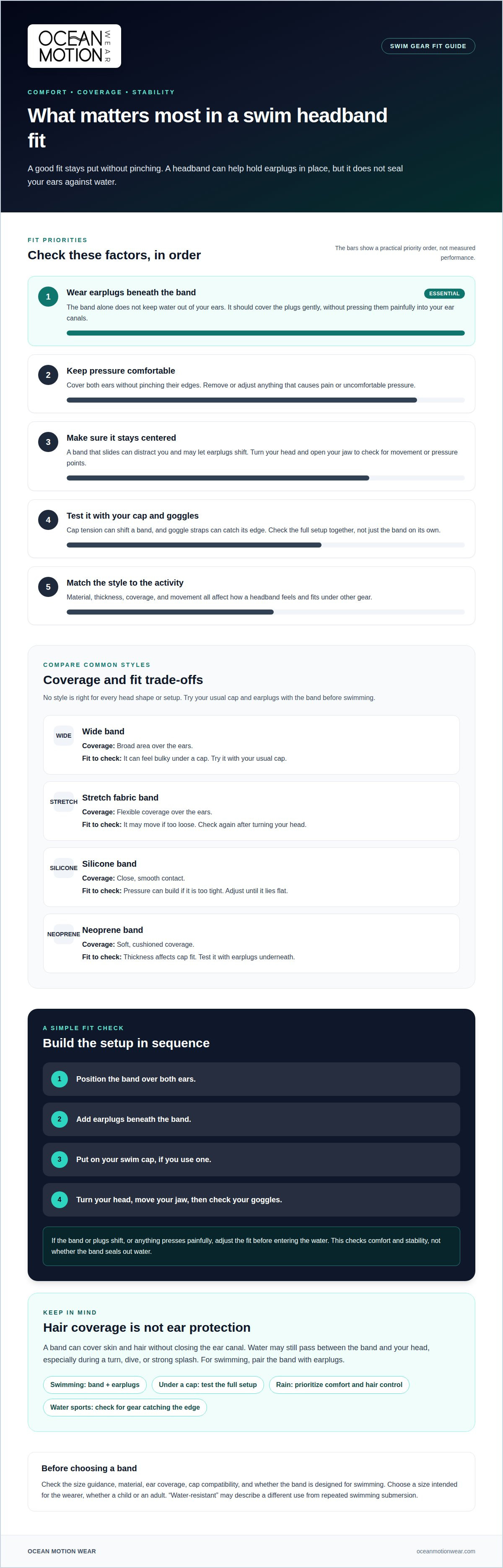
A comfortable band covers your ears without pinching their edges or sliding toward your crown. Try it on dry: center it across both ears, then turn your head and open your jaw. If it shifts or creates a pressure point, adjust its position or try another shape.
A headband can help hold earplugs in place while swimming, but it doesn’t keep your ears dry by itself. Wear earplugs beneath it. The band should cover them without pressing them painfully into your ear canals. A swim cap can go over the band to help limit movement.
Choose a band sized for the wearer, whether a child or an adult, rather than relying on a similar-looking style. For a child, select a size intended for children and make sure it stays in place without feeling tight. Adults should check for the same signs of pressure and slippage.
Before buying online or in a swim-gear shop, review the size guidance, material, ear coverage, and compatibility with a swim cap. Read the return terms and check whether the band is designed for swimming. “Water-resistant” may describe a different use.
Check the fit in sequence: position the band, add earplugs, then put on your swim cap if you use one. Turn your head and move your jaw to see whether the band or plugs shift. Remove anything that causes pain or uncomfortable pressure.
| Option | Coverage | Fit consideration | Useful setup |
|---|---|---|---|
| Wide band | Broad area over the ears | Can feel bulky under a cap | Try with your usual cap |
| Stretch fabric band | Flexible ear coverage | May move if too loose | Check after turning your head |
| Silicone band | Close, smooth contact | Pressure can build if too tight | Adjust until it lies flat |
| Neoprene band | Soft, cushioned coverage | Thickness affects cap fit | Test with earplugs underneath |
Choose a style that covers both ears, holds your earplugs gently, and feels comfortable under your swim cap.
Fit depends on head shape, hair, and cap tension. Thick hair beneath a cap, for example, can lift a narrow band, while a wider style may stay centered. Check the fit again after putting on goggles, as their straps can catch the band’s edge.
Are waterproof headbands actually waterproof or just water-resistant?
The word “waterproof” may describe a headband’s intended use, but it doesn’t mean the band seals your ears. Fabric or silicone can cover skin and hair without closing the ear canal. Water can still pass between the band and your head, especially during a turn, dive, or strong splash. For swimming, wear earplugs with an ear band rather than relying on the band alone.
Water resistance describes how a material handles contact with water. A band may tolerate splashes or wet hair without acting as a barrier during repeated submersion. Stretch, edges, seams, and fit all affect how water moves around it. A snug fit can limit shifting, but it isn’t the same as a waterproof seal.
Match the product description to your activity. A band worn under a swim cap may stay more secure, while a loose headband can shift during laps. Rain on a walk is different from water pressure during a swim. A band that keeps hair back through light spray may still let water reach your ears in the pool.
- Swimming: Pair an ear band with earplugs; the band alone doesn’t keep ears dry.
- Rain: Consider whether the fabric stays comfortable when wet and keeps hair clear.
- Water sports: Check whether movement or equipment could catch the band’s edge.
- Under a cap: Try the full setup together, since cap tension can shift the band.
For a practical fit check, put in your earplugs, position the band, then add your swim cap. Turn your head and move your jaw. If the band slides or presses unevenly, adjust it before entering the water. Check again after fitting your goggles, as their straps may tug at the band’s edge. These steps check comfort and stability, not whether the band seals out water.
Read product descriptions closely. Check the stated activity, material, and whether the design covers your ears or holds your hair back. “Water-resistant” and “waterproof” alone don’t tell you how a band performs during swimming. Let the stated use guide your choice, and treat ear protection as separate from hair coverage.
What are the best waterproof headbands for swimming, rain, and water sports?
The best choice depends on the water, movement, and coverage you need. A 2 mm neoprene diving band offers a different feel from a silicone band worn beneath a swim cap. For rain, a lighter band may keep hair away from your face without adding bulky coverage. Match the design to the activity, not just the word “waterproof.”
For pool swimming, a silicone style designed to sit under a cap can add coverage over the ears. One such design is made from 100% silicone, pulls down over the hairline, and provides additional water protection over the ears. It is described as durable. A swim cap can go over it, helping keep the band in place. The cap-and-band combination can feel too snug, so test both together.
A 2 mm neoprene diving headband is a thicker option for water sports. Its material gives it a more substantial feel than a thin fabric band. That thickness may suit active sessions where a narrow band could shift, but it can also feel bulky beneath other gear. Try it with any equipment you wear around your head before heading out.
For light rain, prioritize comfort and hair control over ear coverage. A simple fabric or twist style can keep strands back without the close fit of a swim-focused design. A twist headband is also described with UV 50+ protection, a useful distinction for outdoor water activities. That rating describes its stated sun-protection feature, not a guarantee against water entering your ears.
- Lap swimming: Choose a cap-compatible silicone design for coverage over the ears.
- Diving or active water sports: Consider a 2 mm neoprene band and test it with your gear.
- Rain or shoreline walks: Pick a lighter style that keeps hair clear comfortably.
- Outdoor sessions: Consider a twist style described with UV 50+ protection.
Compare material, coverage, and how the band moves with you. Raise your arms, turn your head, and check whether straps or cap edges catch. A secure fit should stay in place without pinching. For swimming, remember that an ear band alone won’t keep your ears dry; wear earplugs beneath it.
For pool laps, a cap-compatible style is a practical choice because the cap can help limit shifting. For rain, choose a lighter band. If diving, test neoprene with your other headgear before a longer session.
The Hair Guard Swim Headband is designed to be worn under a swim cap to help keep hair dry while swimming. It can be pulled down over the hairline to help seal out water, so check that its edge lies smoothly before putting on the cap. This makes it an option for swimmers looking for a layer beneath their cap rather than a standalone band. The Hair Guard Swim Headband is described as durable. Try it with your cap before a longer swim and make sure the fit feels comfortable, so it doesn’t distract you in the water.
What sizes and styles of waterproof headbands are available?
Headbands vary in width, material, coverage, and intended use. A narrow band mainly keeps hair away from your face. A wider style can cover more of your ears but may feel bulky beneath a swim cap. Choose based on how the band fits with your cap and earplugs, not appearance alone.
Size labels vary between designs. Check the product’s sizing guidance and intended wearer, then assess the fit on your own head. The band should stay centered over both ears without pinching. Thick hair can change how it sits beneath a cap, while a close-fitting cap can press its edges down.
Material affects both feel and profile. Silicone styles sit close to the head and can cover the ears. Neoprene feels thicker, while fabric styles may suit lighter use. Each behaves differently under a cap: a thick band can add pressure, while a loose one may shift during turns.
Color can help coordinate a layered setup. Some silicone swim headbands come in colors designed to match or blend with a swim cap. A contrasting band can be easier to spot in a gear bag, while a matching shade creates a more understated look.
- Narrow styles: Keep hair back with less material around the ears.
- Wide styles: Offer broader coverage, but test them under your cap.
- Silicone styles: Sit close to the head and suit cap-based swimming setups.
- Neoprene styles: Feel thicker, so check the fit with other headgear.
- Twist styles: Create a gathered shape and can work for outdoor wear.
A twist headband described with UV 50+ protection adds a sun-protection feature to the style comparison. That detail doesn’t tell you its size or swimming fit, so assess those separately. Match the design to the activity and how it sits with your other gear.
Use this fitting sequence: lay the band flat, position it over your ears, then put on your cap. Turn your head and check whether the edges ride up or press against your skin. If you wear earplugs, make sure the band covers them without pushing them inward.
Choose by coverage, material, and compatibility with your cap. A comfortable band stays in place without creating pressure.
How much do waterproof headbands cost in the United States
In the United States, compare headbands marketed as waterproof by their purpose and construction, not their label alone. A simple hair band and a swimming style with ear coverage serve different needs. Materials, width, and design affect how each works. First decide whether you need hair control, coverage beneath a swim cap, or comfort in the rain.
Material is one useful comparison point. Silicone, neoprene, and fabric each feel different against the skin and fit differently under other gear. A thicker style may take up more room beneath a cap, while a lightweight band may suit a rainy walk. Compare designs intended for the same activity before judging their value.
Construction matters too. Consider the width, ear coverage, and how the band stays in place. A design meant to sit beneath a swim cap serves a different purpose from a twist band worn outdoors. Check whether the description specifies swimming or only general water resistance to compare like with like.
Use this checklist when reviewing a United States listing:
- Purpose: Match the stated use to swimming, rain, or another activity.
- Material: Compare silicone, neoprene, and fabric for feel and bulk.
- Coverage: Note whether the design covers ears or mainly holds hair back.
- Layering: Consider how it fits with your swim cap and earplugs.
- Purchase terms: Read shipping, return, and exchange details before checkout.
Consider the full purchase, not only the displayed item amount. Shipping and applicable taxes can affect the checkout total. Policies also matter if sizing or fit isn’t right. A lower-listed style may be poor value if it shifts under your cap or doesn’t suit your activity.
Think about how you’ll use the band over time. One worn for regular pool sessions faces a different routine from one kept for occasional rain. Review the care instructions and construction, then consider how often you expect to wear it. A suitable fit matters more than features you won’t use.
Compare swim and outdoor styles by their stated use and fit. Explore swim and water-ready styles as you narrow your choice.
Listed prices offer concrete comparison points, but they don’t establish the full price range for headbands marketed as waterproof in the United States. These examples show why it helps to compare a product’s stated purpose and design rather than rely on a general label. A higher listed price alone doesn’t show which option offers better value for your activity or fit.
When comparing an offer with other listings, consider its stated price alongside the product type, coverage, and intended use. Review purchase terms before checkout, since shipping, applicable taxes, and return or exchange policies can affect overall value. Prices are useful reference points, but your choice should still suit where and how you plan to wear the band.
Ocean Motion Wear: waterproof headband
Ocean Motion Wear offers a dive headband for people choosing accessories for time in the water. Consider how it fits your routine and other gear. A headband can be part of your swim setup, but it doesn’t replace earplugs for keeping water out of your ears.
Ocean Motion Wear also offers a swim headband. Consider its coverage and fit when choosing headwear for swimming. If you wear a cap, try the two layers together to see how they feel.
Ocean Motion Wear makes products using recycled materials. That may matter to shoppers weighing material choices alongside function and style. Keep fit, coverage, and intended use in mind when choosing a headband for water activities.
For a coordinated swim kit, Ocean Motion Wear also offers swim leggings, women’s swim shorts, and women’s rash guards. These apparel options aren’t substitutes for earplugs or equipment designed to protect hearing. Consider your swimming conditions and preferred clothing coverage, then build your outfit around your headwear and other gear.
Start with practical details: where the band sits, whether it feels comfortable beneath a cap, and how it works with your earplugs. Choose for your routine rather than assuming one style suits every swimmer. If ear comfort is your main concern, test the full setup before a longer swim and adjust anything that shifts or presses.
Ocean Motion Wear is a place to explore if you’re choosing a swim headband alongside ocean-inspired swimwear. Its headwear and apparel offer pieces to consider for a swim-ready wardrobe. Keep the distinction clear: a headband can support your setup, while earplugs provide separate ear protection.
Contact Ocean Motion Wear if you’d like to learn more about its headband and swimwear offerings.
Make your next swim setup feel considered
Before your next swim, think about the moments when headwear tends to shift: pulling on a cap, adjusting goggles, or turning to breathe. A quick fit check at home can help you notice pressure or movement before you’re in the water. Choose a waterproof headband that works with the gear you already use, rather than building a setup around a label alone.
Your routine may shift from pool laps to a beach day, so let the activity guide your choice. Comfort is personal. Adjusting the band’s position can change how it feels, and finding your preferred fit may take some experimentation.
When you’re ready to explore ocean-inspired swimwear and accessories, browse Ocean Motion Wear’s swim-ready styles. Take your time, choose what suits your routine, and head into the water feeling prepared.
Frequently Asked Questions
What is a waterproof headband, and what materials are used?
The term usually describes a headband intended for wet conditions, not a sealed barrier against water. Styles may use silicone, neoprene, or fabric, each with a different feel and thickness. Ocean Motion Wear’s Whale Shark Dive Headband is made from 88% polyester and 12% lycra. Its front measures about 4 inches wide and tapers to 1.5 inches at the back.
How do waterproof headbands compare for comfort, fit, and keeping hair dry?
Comfort depends on width, stretch, and how a band sits with your other gear. Ocean Motion Wear’s Whale Shark Dive Headband has an approximately 18.5-inch circumference and stretches to 23 inches; it’s designed to fit most head sizes, from kids to adults. Its non-slip fit and quick-dry fabric are useful design details, but a headband alone can’t promise dry hair or ears.
