


A lighter shell may be a smarter choice than a fully waterproof jacket when you mainly need wind protection, freedom of movement, and easy packing. An eco-friendly windbreaker for outdoor activities should suit your sport and the conditions, with room for layers but no unnecessary bulk. Traditional waterproof-breathable rain shells often use three-layer construction, but that isn’t automatically the right choice for a windbreaker.
Fabric claims and pack size are easy to focus on. Both matter, but only if the shell also suits your activity and feels comfortable while you move. A closer fit may work for a breezy walk, while extra room can make layering easier when the weather changes.
This guide covers shell construction, materials, packability, activity needs, fit, and layering, so you can weigh each feature against the conditions you expect. You’ll have a clearer way to choose a windbreaker that supports comfort outdoors and reflects your environmental priorities.
Key Takeaways
- Choose a shell for the weather you expect: wind protection and water resistance are different needs, so weigh each feature against your activity.
- Think beyond packed size. A lightweight jacket is most useful when it’s easy to carry and comfortable to wear in motion.
- Match the cut and details to your sport, since cycling, hiking, running, and climbing call for different movement and coverage.
- Test the fit with the layers you plan to wear; enough room to move matters more than a loose or close fit on its own.
- Compare recycled polyester, organic cotton, and plant-based fabrics by how they perform, feel, and suit your intended use.
1. PFC-free waterproof-breathable shell construction
Start by separating three functions: blocking wind, shedding rain, and releasing body heat. A windbreaker can block gusts without being a fully waterproof rain jacket. When choosing an eco-friendly windbreaker for outdoor activities, match the shell to the expected weather rather than treating every protection claim as interchangeable.
Traditional waterproof-breathable rain shells often use three layers: an outer fabric, a membrane, and an inner backing. The membrane helps keep liquid rain out while allowing some water vapor to escape. This construction can suit prolonged wet weather, but may feel warmer or pack less easily than a simple wind shell. Choose according to your exposure, effort, and the layers underneath.
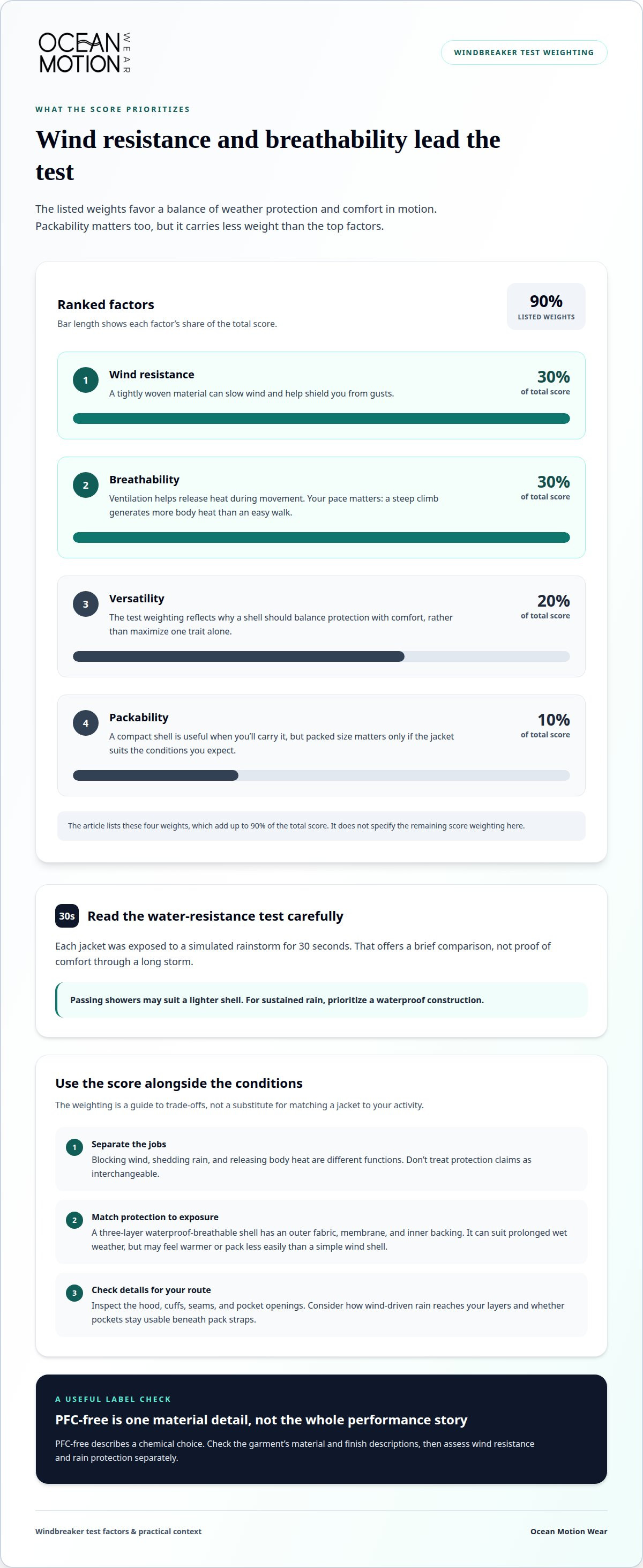
PFC-free describes a chemical choice, not the whole environmental story or a guarantee of waterproof performance. Greenpeace launched its Toxic Threads campaign in 2012 to test outdoor gear for PFCs. For a practical check, read the garment’s material and finish descriptions. Look for a clear PFC-free claim, then assess how the jacket performs in wind and rain separately.
Waterproof and breathability ratings can help you compare shells, but the test method matters. Waterproof ratings often describe resistance to water pressure; breathability ratings describe how moisture vapor moves through a material. Different methods can make figures hard to compare directly. Check which test a label uses, then consider your pace: a steep climb generates more body heat than an easy walk.
Wind resistance and breathability also compete in real weather. A tightly woven material can slow wind, while ventilation features help release heat during movement. In one windbreaker test, wind resistance and breathability each account for 30% of the total score; versatility accounts for 20%. Those weights show why a shell should balance protection with comfort, not maximize one trait alone.
Water resistance tests offer another useful clue. The windbreaker tests assessed water resistance by exposing each jacket to a simulated rainstorm for 30 seconds. Treat that as a brief comparison, not proof of comfort through a long storm. For sustained rain, prioritize a waterproof construction; for passing showers, a lighter shell may better suit your pace and pack.
Before choosing, inspect the hood, cuffs, seams, and pocket openings. These details affect how wind-driven rain reaches the layers beneath. A pocket under a pack strap may be awkward to use on a hike, while a snug cuff can limit drafts. Match each feature to your route, forecast, and expected movement.
2. Packability and lightweight design
A packable shell earns its place when you’ll carry it more than wear it. On a day hike, a jacket that compresses neatly can leave room in your backpack for water, food, and an insulating layer. Packability accounts for 10% of the windbreaker test’s total score weighting. Still, a small packed size is only useful if the jacket suits the conditions you face.
Judge weight by purpose, not in isolation. A lightweight wind shell can feel comfortable on a trail run, while a heavier layer may feel cumbersome during steady movement. On a long walk in changeable weather, coverage and useful features may matter more than saving weight. Check whether essentials are easy to reach and whether pockets remain usable beneath pack straps.
Test how the jacket packs before heading out. If it has a stuff pocket, try packing it at home. If not, fold it into a compact rectangle and place it beside your other gear. See whether it fits a side pocket, top compartment, or the space left after packing lunch. This quick trial shows how it will fit in your actual backpack, rather than an idealized packing list.
Lightweight, packable rain shells can involve tradeoffs. Thin material may reduce bulk, while a more substantial construction may feel reassuring in exposed conditions. A water-resistant coating can help shed passing moisture, but doesn’t automatically make a shell suitable for prolonged rain. Match the jacket to your route: a breezy walk and an all-day wet-weather hike demand different levels of protection.
Check how the jacket holds up to repeated packing. In a crowded bag, a tightly packed shell can press against buckles, keys, or other hard objects, so keep sharp gear separate. After trips, inspect the coating and fabric, especially where shoulder straps or hip belts rub. Follow the care label’s cleaning and storage instructions to help preserve the material’s intended performance.
Use this quick comparison before choosing:
- Trail run: Prioritize low weight, easy access, and freedom of movement.
- Day hike: Balance a packable shape with pockets you can reach while wearing a backpack.
- Unsettled forecast: Choose protection suited to expected weather, not packed size alone.
Pack the jacket with the rest of your kit, then try retrieving it without unpacking everything. A shell that’s easy to reach is more practical than one buried beneath gear, especially when the wind picks up mid-route.
4. Jackets for cycling, hiking, running, and climbing
For hiking, running, and camping, look for a hood that stays put, cuffs that limit drafts, and a hem that doesn’t ride up. Breathable material and pockets you can reach while wearing a backpack also help. For cycling or climbing, check your range of motion in riding position or with your arms raised overhead.
A cycling jacket should cover your lower back when you lean toward the handlebars. A close-fitting hood or collar can reduce flapping, while a zippered pocket keeps small essentials secure. For a trail run, prioritize low bulk and easy arm movement; a jacket that holds too much heat can feel clammy on a steep climb.
Hiking jackets need to work with pack straps. Try the jacket with your backpack on, reach for a chest pocket, and raise your arms as if stepping over a log. Check whether straps cover pockets or rub the shoulder seams. For camping, a roomier cut can fit over a warm layer when you’re stationary after sunset.
On a climbing route, fabric may brush against rock, while a harness presses across the waist. Look for reinforced or well-finished high-contact areas, articulated sleeves, and a hem that sits comfortably above the harness. These details can reduce bunching as you reach for a hold. Durability depends on the fabric, seams, closures, and how you use and care for the jacket.
When comparing sustainable waterproof jackets for hiking, assess the environmental claim separately from the weather claim. Recycled material describes the source of some fibers; by itself, it doesn’t establish how waterproof the finished jacket is. “Recyclable” refers to a possible end-of-life pathway, which can depend on the garment’s construction and available recycling systems. Consider weather protection and material information as distinct factors.
Judge women’s outdoor jackets by movement and coverage, not just the size label. Try one over your usual hiking layer, then twist, reach, and bend as you would on a trail. Check that the shoulders don’t pull, the hem stays in place, and the sleeves cover your wrists when you reach forward. A fit that works through these movements is more useful than one that only looks right standing still.
- Cycling: Check lower-back coverage in riding position.
- Hiking: Test pockets beneath pack straps.
- Running: Prioritize easy movement and low bulk.
- Climbing: Test arm reach and fit above a harness.
Start with the activity you do most. A jacket designed around the right movements and contact points can serve you more reliably than one chosen for its recycled label alone.
5. Comfort, fit, and layering
Test the fit with the layers you’ll actually wear, not just a T-shirt. Put on your base layer and midlayer, zip the shell, and reach forward as if gripping hiking poles. The shoulders shouldn’t pull, and the hem shouldn’t lift above your waist. A jacket that feels comfortable standing still can bind when you move your arms.
Try a simple movement test before choosing. Raise both arms overhead, twist your torso, and bend as if tying a boot. Check the sleeves, cuffs, and back panel through each movement. On a mountain trail, a tight shell can restrict long strides; excess fabric that bunches under a backpack can also become irritating.
Layering works best when each garment has a clear role. A base layer moves moisture away from your skin, an insulating layer adds warmth, and the windbreaker shields those layers from moving air. Before a brisk morning hike, try the full combination at home. If the shell compresses your midlayer or limits your reach, adjust the fit or layers.
Consider ventilation as well as warmth. During a steady climb, your body generates heat; opening the front zip or adjusting the cuffs can help regulate comfort without removing every layer. A technical shell should be easy to adjust while moving. Try the zipper pulls with the gloves you expect to wear, especially if cold hands make small hardware hard to grip.
Check hand pockets in the positions you’ll use outdoors. Put your hands inside while wearing a backpack, then see whether the hip belt blocks access. A low pocket may sit beneath the belt; a high pocket may be easier to reach but awkward with a climbing harness. Try both with your actual equipment.
- Hiking: Reach forward with poles and check for shoulder pull.
- Running: Jog in place and notice bouncing fabric or sleeve drag.
- Climbing: Raise your arms and check the hem above a harness.
- Layering: Zip the shell over your planned midlayer and bend comfortably.
A versatile fit supports movement without leaving excess fabric to catch or bunch. For example, check sleeve length with your wrists extended over handlebars. If the cuffs pull back, wind can reach the layers beneath. If the sleeves cover your hands, they may interfere with poles or zippers. Use movements from your main activity as the final fit test.
5. How do recycled polyester windbreakers compare with organic cotton or plant-based fabrics?
Start with the jacket’s purpose. Recycled polyester can be made into a lightweight, tightly woven shell, while organic cotton is often comfortable in dry, everyday conditions. Plant-based fabrics include different fibers and constructions, so the label alone won’t tell you how a jacket handles wind or rain.
For a windbreaker on a damp morning hike, polyester’s low water absorption can help it dry more readily than cotton. That doesn’t make every polyester jacket waterproof. The weave, seams, and surface finish also affect a shell’s weather resistance. Check performance details separately from fiber content.
Organic cotton has a softer feel, which can suit a casual walk or campsite. In sustained rain, cotton can absorb water and feel heavier against your layers. It isn’t a good choice as your main weather barrier on a wet trail, but may work as a comfortable layer in dry, mild conditions.
Apply the same scrutiny to plant-based options. A jacket made with a plant-derived fiber may feel different from polyester, but that material source doesn’t guarantee wind resistance, quick drying, or waterproof protection. Compare the finished garment’s construction and intended use. A tightly woven shell and a loose cotton overshirt serve different purposes, even if both carry lower-impact material claims.
Recycled polyester reuses existing plastic feedstock, but that alone doesn’t describe a garment’s full environmental impact. Consider how long you expect to wear it, how sturdy its seams and closures feel, and whether you can follow its care instructions. A jacket that remains useful for everyday walks and weekend hikes may serve you better than one chosen for its label alone.
Use these checks before deciding:
- For wet, active use: Look for shell construction and weather-performance details, not just recycled content.
- For dry, casual wear: Compare cotton or plant-based options for hand feel and comfort.
- For frequent trips: Inspect seams, zipper operation, and areas that rub against backpack straps.
- For lower-impact choices: Read the material description, care directions, and durability details together.
Compare jackets for the same use, such as a recycled-polyester shell and a cotton overshirt on a dry walk. Notice how each moves, layers, and feels after activity. For a rainy hike, choose according to the shell’s stated protection; on a calm day outdoors, comfort and easy care may matter more.
Ocean Motion Wear: waterproof headband
Ocean Motion Wear offers a quick-dry headband that’s fade-resistant in saltwater and chlorine. It’s a useful accessory for ocean-focused days and water activities, while an outdoor windbreaker serves a different purpose.
Match each piece to its role. A windbreaker helps with wind and changing outdoor weather; the headband adds a quick-dry accessory to your water-activity kit. Choose gear for the conditions and activity, then pack it together for a day that moves between trail and shore.
If you’re planning time in the ocean, explore oceanmotionwear.com or contact Ocean Motion Wear.
Make your next outing your test
Put your gear choices to work on your next trip. Before leaving, picture the route, the weather, and what you’ll wear beneath your shell. This pause helps you prepare for the day you’re actually planning.
Choosing an eco-friendly windbreaker for outdoor activities is one part of building a kit for days that move between land and water. For ocean time, Ocean Motion Wear offers a quick-dry headband that’s fade-resistant in saltwater and chlorine, along with swim headbands and swim leggings. Choose pieces that suit your plans and keep your kit ready for the next stretch of coast or trail.
Explore Ocean Motion Wear’s ocean-inspired pieces and find a useful addition for your next adventure. Step outside prepared, stay curious, and let the conditions guide you.
Frequently Asked Questions
What materials make a windbreaker eco-friendly and durable?
Look for recycled fibers paired with construction made for regular use. Tightly finished fabric, secure stitching, and sturdy zippers can matter as much as the fiber label. Check high-wear areas such as shoulders, cuffs, and pocket openings, where pack straps and repeated movement create friction. Clear care instructions also help keep a jacket in use longer, a practical part of choosing thoughtfully.
Can eco-friendly windbreakers be recycled or repaired at the end of their useful life?
Repair is often the most direct first step: a small tear, loose seam, or damaged zipper pull may be fixable before you discard the jacket. Recycling depends on the garment’s materials and local textile collection options. Mixed fibers, coatings, zippers, and trims can complicate processing. Check the care label, repair what remains useful, and use a textile program that accepts the garment’s construction.
How should I wash and care for a sustainable windbreaker to extend its life?
Follow the care label’s cleaning and storage instructions to help preserve the jacket’s intended performance. After trips, inspect the fabric and coating, especially where shoulder straps or hip belts rub. Keep sharp gear separate when packing.
