


A swimsuit can cover your skin and still let ultraviolet rays pass through. Performance swimwear with UPF 50+ uses fabric that allows less than 2% of UV radiation through. According to the Skin Cancer Foundation, UPF 50 fabric blocks 98% of the sun’s rays.
That added coverage can make long stretches at the beach, pool, or outdoors easier to plan for. Performance swimwear with UPF 50+ can cover skin through the fabric itself, while sunscreen remains useful on exposed areas.
I’ll explain what the UPF rating means, how sleeve length and garment coverage affect movement in and out of the water, and what to weigh when comparing swimwear. You’ll also learn what can influence prices, how UPF fabrics are tested, and how washing and wear can affect their performance. As you compare Performance swimwear with UPF 50+, focus on comfort, coverage, and the activities you have in mind.
Key Takeaways
- Choose UPF-rated swimwear for more than swimming: covered skin stays protected during beach days and other outdoor activities.
- Match sleeve length and garment coverage to your plans, balancing sun coverage with comfortable movement.
- Understand how fabric protection differs from sunscreen so you can build a more practical sun-protection routine.
- Learn what to consider when fabric gets wet, stretches, or goes through repeated washing.
- Explore Ocean Motion Wear’s water-ready accessories and swimwear for coverage that fits your time in and around the water.
Can I wear UV protection swimwear for activities other than swimming?
Yes. Wear UV-protective swimwear for beach walks, paddling, or time outdoors, as well as swimming. Its fabric protection covers the areas the garment covers, whether you’re in water or on shore.
Protection During Water Sports
UPF describes how effectively clothing blocks ultraviolet radiation, including both UVA and UVB rays. A UPF 50 fabric blocks 98 percent of the sun’s rays, according to The Skin Cancer Foundation. That makes a sun-protective shirt useful for kayaking, snorkeling, or swimming, when exposed skin can be difficult to cover with sunscreen alone.
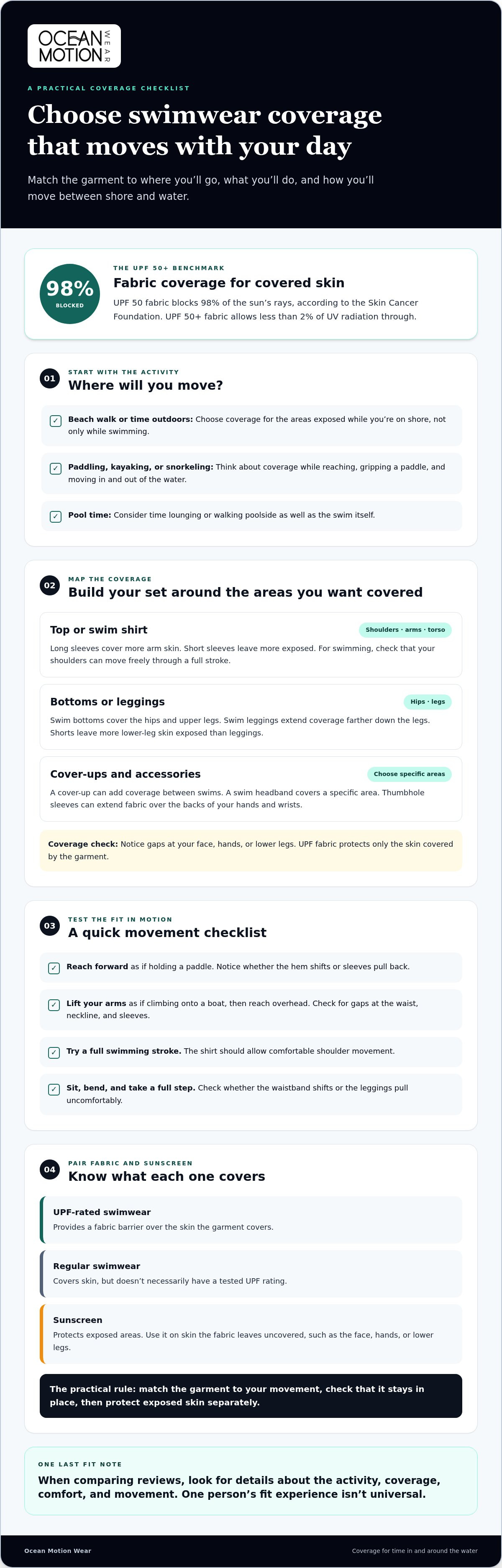
For a practical fit check, reach forward as if holding a paddle, then lift your arms as if climbing onto a boat. Notice whether the hem shifts or the sleeves pull back. Customer reviews can reveal recurring comments about coverage, comfort, or movement, but weigh them against your own activities and fit needs rather than treating one person’s experience as universal.
Garment and Accessory Options
A UPF 50 swim shirt or top can cover your shoulders, arms, and torso during a beach day or water sport. Choose sleeve length and coverage around the activity: a long-sleeve top covers more arm skin, while a shorter sleeve leaves more exposed. For swimming, check that the cut lets you move your shoulders freely through a full stroke.
Sun-protective clothing can also include leggings or shorts, while accessories such as a swim headband cover specific areas. Think through your day from shore to water. A top paired with swim leggings, for example, offers different coverage from a short-sleeve shirt and swim shorts. Neither replaces sunscreen on skin the fabric leaves uncovered.
Comparisons and Wearing Considerations
Regular swimwear covers skin but doesn’t necessarily have a tested UPF rating. Sunscreen protects exposed areas, while UPF-rated clothing provides a fabric barrier over covered skin. Using both protects more of your body than relying on a swimsuit alone. Notice gaps, such as your hands, face, or lower legs, and protect those areas separately.
Are there drawbacks or safety risks when wearing UPF 50+ swimwear? The main tradeoffs are coverage and comfort: fabric protects only covered skin, and a top that restricts movement may be a poor choice for active swimming. It isn’t a substitute for sunscreen on exposed areas.
When reading customer experiences, look for details relevant to your plans, such as whether a shirt stayed in place while paddling or felt comfortable on a beach walk. Reviews are most useful when they describe the activity and fit, not just whether someone liked the garment. Also consider breathability and how much coverage you want while moving between water and shore.
For a simple decision, match the garment to the movement first, then check the coverage it provides. A UPF 50 top can suit a long outdoor session, while a more open swimsuit may feel easier for brief pool time. Either way, pair fabric coverage with sun protection for exposed skin.
Coverage for beach, pool, and outdoor activities
Plan coverage around where you’ll move, not just how a swimsuit looks. A beach walk, pool session, and paddle outing expose different areas as your posture changes.
Swimsuits and Cover-Ups
A swimsuit may leave your shoulders, arms, or thighs exposed, depending on its cut. A rash guard or swim shirt adds coverage over the torso and arms, while a cover-up can extend that coverage between swims. For example, pair a swimsuit with a shirt for a walk along the shore, then keep the shirt on while launching a kayak.
Check the garment during the movements you’ll make. Reach overhead as if climbing onto a boat, then bend forward as if adjusting a beach bag. Look for gaps at the waist, neckline, and sleeves. A ruched design changes how fabric gathers across the body, but appearance alone doesn’t tell you its UPF rating. Choose a garment with a stated protection level that suits your needs.
For poolside use, consider time out of the water as well as swimming. A shirt that covers your shoulders while you lounge can reduce exposed skin compared with a swimsuit alone. Drying time can also affect comfort between swims, so consider whether you’ll keep the garment on while moving from the pool to the changing area.
Bottoms and Leggings
UPF 50+ swim bottoms extend coverage over the hips and upper legs. Swim leggings cover more of the legs, which can suit paddleboarding, snorkeling, or a long stretch on the sand. Ocean Motion Wear’s swim leggings are one option for readers who want leg coverage as part of their swimwear.
Check the waistband and leg openings while standing, sitting, and bending. For example, a waistband that shifts while you’re seated on a paddle may expose skin at your lower back. Leggings should let you take a full step and bend your knees without pulling uncomfortably. Coverage helps only where the fabric stays in place.
Pair bottoms with a top according to the areas you want covered. A swimsuit with swim shorts leaves more of your lower legs exposed than leggings. A longer top can meet the waistband with less skin showing when you reach or stretch. These simple fit checks help you choose for real movement, not a static mirror pose.
Thumbhole sleeves can extend fabric over the backs of your hands and wrists. If a shirt has this feature, try it with your arms extended and hands gripping a paddle. Make sure the opening doesn’t pull or limit movement. Gloves and sleeves can feel different during swimming, so decide whether you want hand coverage for shore activities or time in the water.
For beach, pool, or outdoor plans, map coverage from shoulders to legs before choosing a set. UPF 50+ swimwear is most useful when the garment’s cut matches your activity and stays positioned as you move.
Long- and short-sleeve swim shirts
Choose a swim shirt by matching its sleeve length and torso coverage to your day. A pool lap, paddle session, and time on shore call for different cuts and freedom of movement.
Sleeve Length and Swim Tops
A long-sleeve rash guard covers more of your arms than a short-sleeve shirt. The extra fabric can suit snorkeling or an outdoor day with extended time in the sun. For pool laps, short sleeves may feel less restrictive through repeated shoulder movements. Check the UPF label and how the garment fits across your shoulders.
Swim tops and crop tops offer different amounts of torso coverage. A crop top may leave skin exposed between its hem and your bottoms when you reach overhead. Try raising your arms fully and bending forward before choosing. For example, if your shirt rides up while you mimic a paddle stroke, a longer cut may suit the activity better.
Rash Guards and Swim Jackets
A rash guard is a close-fitting swim shirt, while a swim jacket adds a layer that can be opened or removed. The right choice depends on your movements and the conditions you expect. For active swimming, test your shoulder rotation and check whether seams or fabric bunch when you extend both arms. A looser layer may feel easier to take off between activities.
Don’t assume every jacket or shirt is sun-protective based on appearance. Look for a stated UPF rating in the garment information. Then check the neckline, sleeves, and hem to see which areas they cover. A high collar and long sleeves offer a different coverage pattern from a low neckline and short sleeves.
Build the rest of your outfit around the shirt. Swim shorts cover less of your legs than full-length bottoms, while a skort combines shorts underneath with a skirt-like outer layer. For a beach walk followed by swimming, consider whether the hem stays comfortable while walking and doesn’t interfere with your stroke. Fit matters as much as garment type.
Try the shirt with the bottoms you plan to wear. Sit, bend, and reach forward, then notice whether a gap opens at your waist. A longer top can meet high-waisted bottoms more securely during movement. If you prefer shorts, test whether the shirt stays tucked or in place while you stretch to reach for a beach bag.
Drying time also affects how comfortable a top feels between swims. A damp long-sleeve shirt may cling differently from a dry one, changing how easily you move your arms. Try reaching overhead and turning your shoulders while wearing the garment wet, then repeat when it’s dry. This simple comparison helps show whether the cut works for swimming and shore time.
For a final fit check, raise your arms, rotate your shoulders, and bend at the waist. Look for pulled seams, shifting hems, or exposed skin. These signs can show where a sleeve, rash guard, shorts, or other bottoms may need a different cut for your activity.
How does UPF 50+ swimwear compare with regular swimwear and sunscreen?
Start with what each rating measures. UPF applies to fabric and accounts for both UVA and UVB rays. SPF applies to sunscreen and measures protection against UVB. They describe different forms of sun protection, so an SPF number can’t tell you how much UV a shirt blocks.
A UPF rating gives you a way to compare protective clothing with regular swimwear. A swimsuit without a UPF label doesn’t tell you its tested ultraviolet protection. By contrast, a UPF 50 fabric blocks 98 percent of the sun’s rays and allows two percent to penetrate, according to The Skin Cancer Foundation. The rating applies to the fabric, not every uncovered area around it.
UPF 50+ indicates a higher protection category than basic swimwear without a rating. The Skin Cancer Foundation classifies UPF 30 to 49 as very good protection and UPF 50 or more as excellent protection. A UPF 50 fabric allows 1/50th of the sun’s UV rays to pass through. Fabrics letting less than two percent through receive the UPF 50+ label. These distinctions help you compare labels, rather than judging a garment by color or thickness alone.
Sunscreen and UPF clothing work differently in a beach-day routine. Fabric creates a barrier over covered skin; sunscreen is applied to exposed skin, such as your face, neck, and hands. Chemical sunscreens must be fully absorbed for 30 minutes before they perform optimally. That timing matters before heading into the water or starting an outdoor activity. A long-sleeve shirt can cover arms and shoulders, while sunscreen handles the skin left exposed.
Use both approaches to cover different areas. For example, wear a UPF-rated top with a swimsuit, then apply sunscreen to uncovered skin. Check the neckline, sleeve openings, and hem for gaps as you move. A shirt that shifts during a swim may expose skin that seemed covered while standing on shore. Regular swimwear can still be comfortable and useful, but without a UPF rating, you can’t compare its fabric protection using that label.
Think about the whole session, not just the swim. Between water activities, you may sit on a sunny pool deck or walk along the beach. UPF clothing provides a fabric barrier over covered skin, while sunscreen protects only where it’s applied. Choose rated clothing for the areas you want covered, and use sunscreen on the rest. Neither approach covers every area of skin by itself.
Does UPF 50+ protection change when swimwear is wet, stretched, or worn?
Wetness, fit, and fabric condition all matter when assessing swimwear coverage. The UPF label describes the fabric’s rating, while the garment’s position on your body determines which skin it covers during movement.
Water changes how a swimsuit feels against your skin, but wetness alone doesn’t tell you its protection level. Check the garment’s care and product information for details about its rating. Then consider how you wear it: a shirt that rides up during a swim leaves skin uncovered, whatever its label says. Coverage depends on both fabric and fit.
Take a close look at stretch. Swimwear stretches across the shoulders, elbows, hips, and knees during ordinary movement. Gently pull the fabric across those areas, then reach overhead and bend as if climbing onto a boat. Notice where the garment becomes very taut, shifts, or exposes skin. A label can’t protect an area the garment no longer covers.
Wearing and washing can also affect a garment’s condition over time. Salt, sand, and repeated use can leave fabric feeling rough or elastic feeling less secure. Rinse swimwear after saltwater or pool use, follow its care label, and avoid storing it damp. Before another outdoor session, check the seams, hems, and waistband for damage or looseness.
Use this quick check after washing and before swimming:
- Look for thinning, snags, or damaged seams.
- Move through a full reach and bend, then check for shifting hems.
- Confirm the garment still fits securely at shoulders, waist, and leg openings.
- Follow the care instructions rather than guessing about heat or detergent.
For example, a rash guard may feel secure while standing but pull away from the waistband during a paddle stroke. Recheck the fit during movements your day involves. If a panel is damaged or the garment no longer stays in place, choose another piece for that session. Keep sunscreen on exposed skin, including areas revealed by movement.
When choosing replacement swimwear, compare its UPF information, fit, and care instructions together. Explore swimwear options and consider which garment coverage suits your time in the water.
Ocean Motion Wear: waterproof headband
Ocean Motion Wear offers a waterproof headband for days that move between water and shore. If you want headwear alongside protective swimwear, its swim headband is another option. For more body coverage, consider swim leggings, women’s swim shorts, or a women’s rash guard. These pieces are made from recycled materials and feature built-in UPF 50+ protection.
Choose according to the coverage you need and how you’ll move. A dive headband covers your hair, while a rash guard or leggings cover more skin during outdoor activities. Match each piece to your plans, then follow its care instructions to maintain its condition. Explore Ocean Motion Wear’s ocean-inspired swimwear and accessories for time in and around the water.
Make your next water day your own
Let your plans guide the final choice. Think about where you’ll spend time, how freely you need to move, and which areas you want covered. Then choose performance swimwear with UPF 50+ that feels right for your routine, whether that means a quiet pool session or a full day between shore and water.
Small fit details can shape your experience. A waistband that stays put, a sleeve that allows an easy reach, or an accessory that suits your time in the water can make getting ready feel simpler. Choose with your real activities in mind, and care for each piece according to its instructions.
Explore the available options and find the pieces that fit your next outing. Explore Ocean Motion Wear swimwear and accessories, or contact Ocean Motion Wear to discuss your options. Head for the water feeling prepared, comfortable, and ready to enjoy the day.
Frequently Asked Questions
What is UPF swimwear?
UPF swimwear is clothing you can compare using its stated fabric rating and design. Before buying, check the product details and consider whether you want a separate top and bottom or a single piece. For example, a two-piece setup lets you choose different cuts for your upper and lower body. Review the garment’s care instructions too, so you know how to maintain it.
How do I choose the right size for UV protection swimwear?
Use the garment’s size guide, then check the fit through the movements you’ll make. Raise your arms, bend forward, and rotate your shoulders to see whether hems shift or seams pull. A top that rides up can leave skin uncovered. The Whale Shark Crop Top Rashguard from Ocean Motion Wear runs small, so its product guidance recommends ordering a size up. Check each garment’s fit guidance before choosing.
Is UV protection swimwear suitable for all skin types?
Yes, UPF-rated clothing can be worn by people with any skin type. Its rating describes the fabric’s ultraviolet protection, not a person’s skin tone or sensitivity. For example, a long-sleeve top covers the areas beneath its fabric whether you’re fair-skinned or have a deeper complexion. It doesn’t protect uncovered skin, so include exposed areas such as your face, hands, and lower legs in your sun-protection plan.
What features should I look for in UV protection swimwear?
Look for a clearly stated UPF rating, a cut that covers the areas you want protected, and a fit that stays in place as you move. Check the sleeve length, neckline, hem, and waistband. For example, a shirt for paddleboarding should let you reach forward without exposing your lower back. Review the garment’s care instructions too, since they explain how to wash and maintain the fabric.
What is UPF?
UPF stands for Ultraviolet Protection Factor. You’ll see it in clothing specifications and product descriptions, where it helps distinguish sun-protective apparel from garments without a stated rating. For example, compare the UPF information on two swim shirts before deciding which suits your plans. Then consider the cut, fabric feel, and care directions, since the acronym alone doesn’t tell you whether a particular shirt suits your activity.
What other ways can you protect yourself from the sun’s rays?
Combine clothing with shade and sunscreen on uncovered skin. Seek shade especially between 10 a.m. and 4 p.m., when UV rays are strongest. A beach umbrella can help while you’re resting, but it won’t cover you as you walk or swim. For those transitions, wear clothing that covers the areas you want protected, and apply sunscreen to exposed skin according to its directions.
What does UPF 50+ mean for swimwear?
It’s a fabric-rating category to use when comparing swimwear. Treat it as a starting point for narrowing your choices, not a description of the garment’s style or construction. For example, two shirts may have the same rating but differ in sleeve length, neckline, or fit. Compare those details with your intended activity, then review the care directions before choosing.
How much does UPF 50+ performance swimwear cost?
Prices vary by item. These are examples of listed product prices, not a general market estimate. Compare the garment type and coverage you need with its listed price before choosing. The right fit and design matter alongside the cost.
